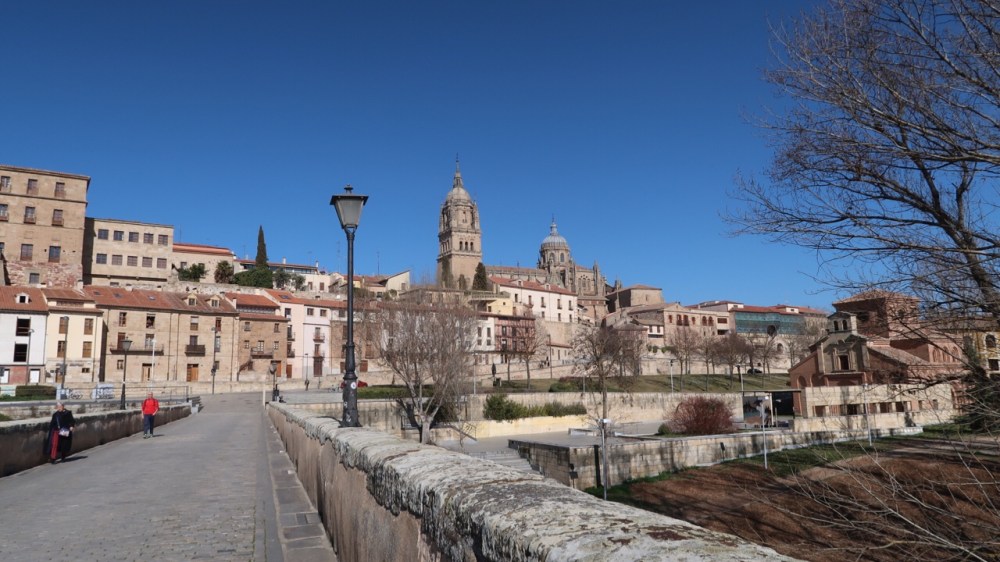
Salamanca is in the central area of Spain, 212 kilometres from Madrid, and has been designated a World Heritage Site by the UNESCO.
Salamanca is a university city par excellence. Besides being one of the oldest in Europe, its university is also one of the country’s best examples of Renaissance architecture. In its heyday it was one of the most highly regarded European universities. For this reason it has been attended by some of the greatest Spanish thinkers, artists and writers. In 2018 the University celebrated its 800th anniversary.
In the 15th century, Salamanca saw the production of the first Grammar of the Castilian Language, which would become an essential tool for its expansion throughout the world. The city is also a favourite destination for foreign students wanting to learn Spanish. As you would expect, Salamanca is one of the most important stops on the Route of the Spanish Language. The Vía de la Plata (Silver Way), the old Roman road linking northern and southern Spain, passes through Salamanca.
Salamanca is rich in history, but it’s also modern, lively, and fun. Thanks to the students, this city is full of life and movement 24 hours a day.
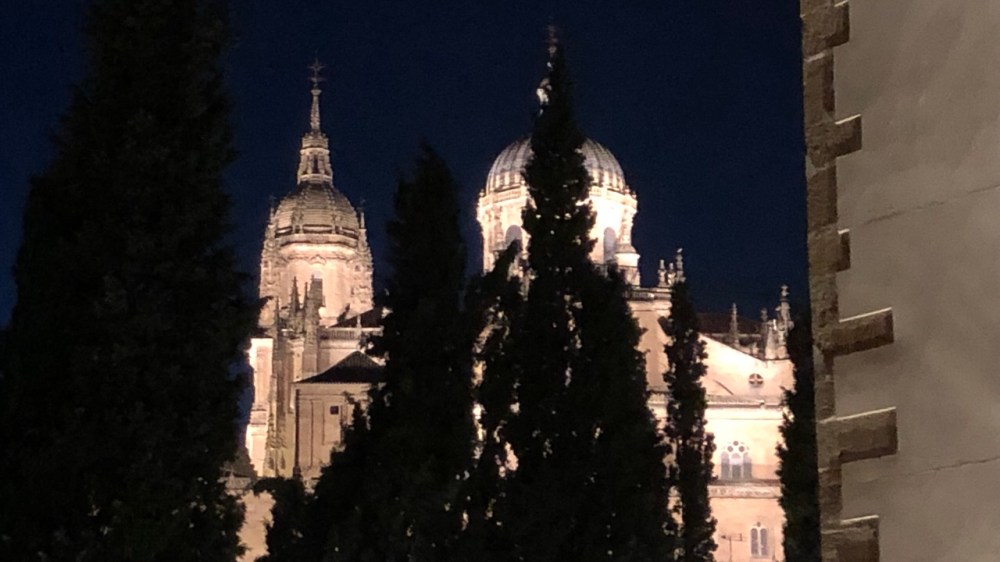
The Old Cathedral and the New Cathedral
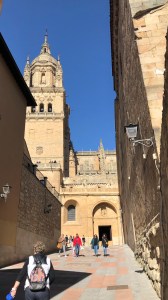
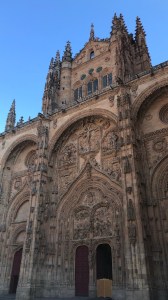
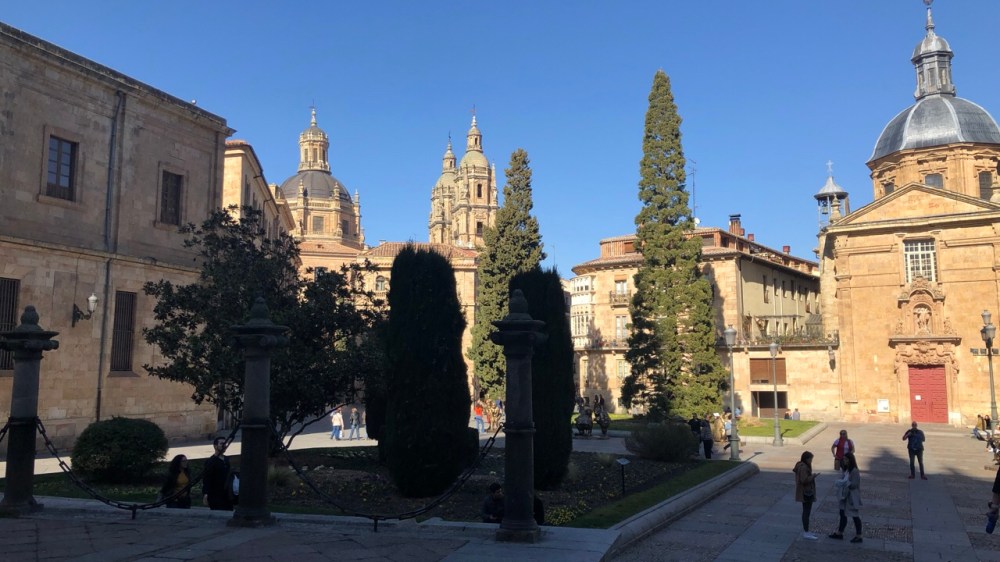
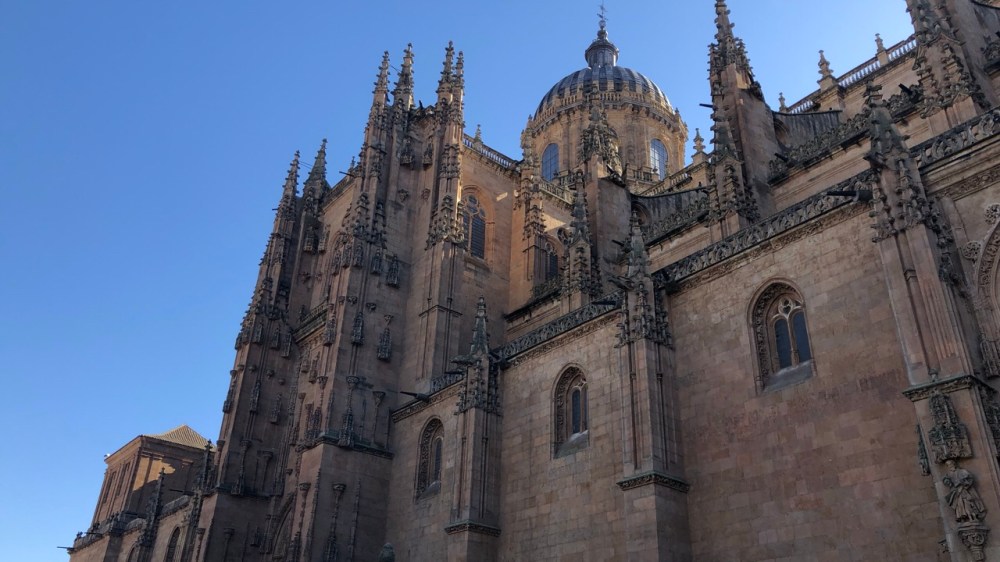
The Cathedrals in Salamanca caused us great confusion, not helped by a poor understanding of the guy selling us the entry tickets! We understood that we were entering the Old Cathedral and that our ticket would also work for the New Cathedral. So you can imagine what twats we looked when we were wandering around looking for the New Cathedral. The kind woman at the Catholic University put me right when she told me that the Old and New were in fact two churches joined together!! First, there is the old cathedral dating from the 12th-13th centuries; and then the new one from the 16th century.
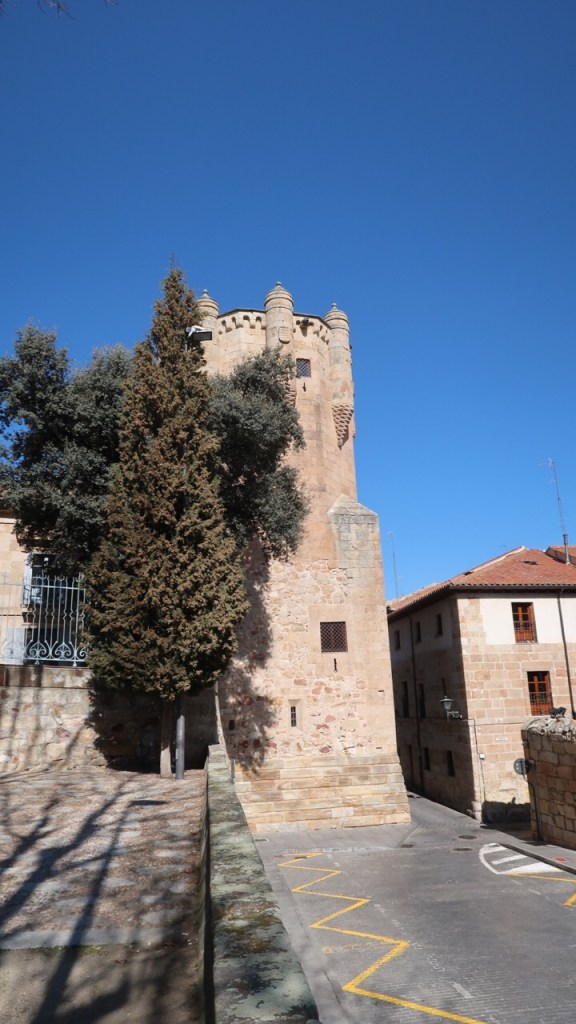
The Old Cathedral is in the Romanesque style with the outstanding Gallo Tower the beautiful tombs of the bishops’ and members of the nobility. The New Cathedral, built in the 16th century and completed in the 18th century by Churriguera, houses the image of the Virgin of the Assumption, carved in 1626 by the sculptor Esteban Rueda. The temple’s Baroque retrochoir is very beautiful and contains Renaissance images such as that of The Virgin of Loreto and those of Saint John the Baptist.


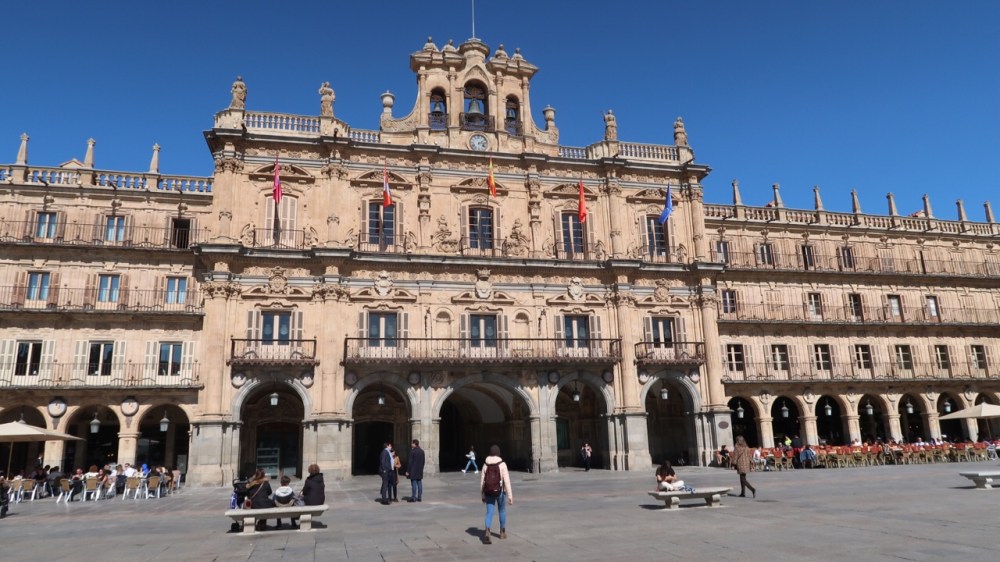
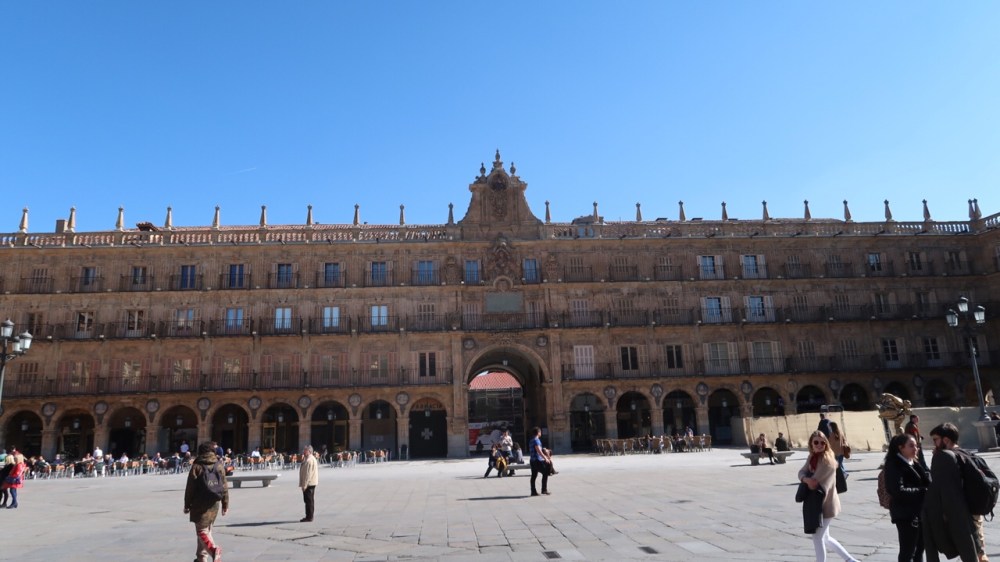
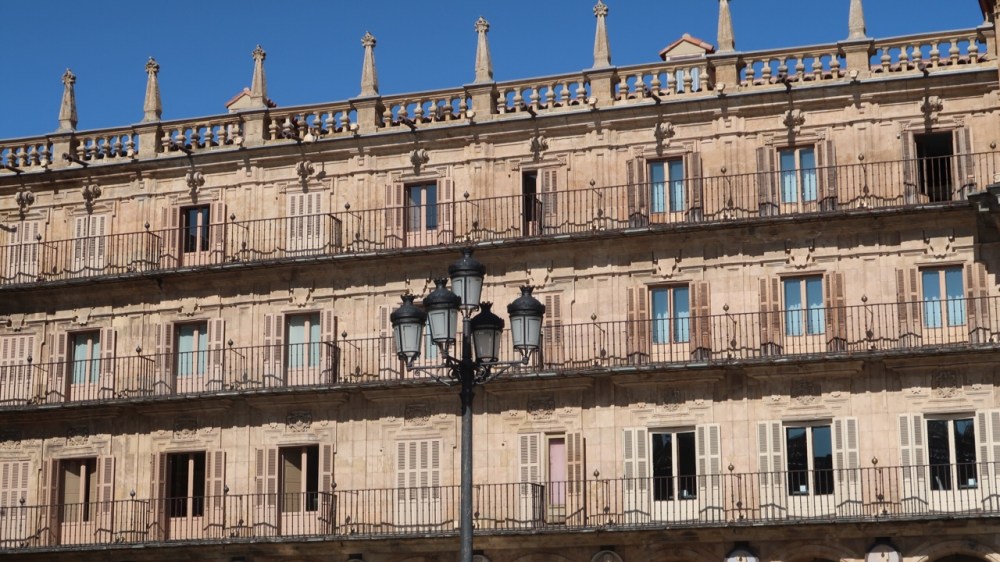
Plaza Mayor
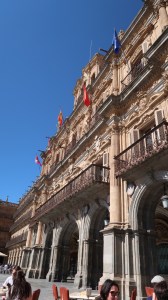
Plaza Mayor is one of the most beautiful squares in Spain. It was built in Baroque style according to the plans of Alberto Churriguera. On the north side is the City Hall, a Baroque building that has five granite arches and a steeple decorated with allegoric figures. In its decoration several medallions stand out, including those of Charles I, Alfonso XI, Ferdinand VI, Cervantes and St. Theresa. The façades of the buildings are three storeys high, with semicircular arches and balustrades. Today, this square is one of the most lively and popular places in Salamanca.

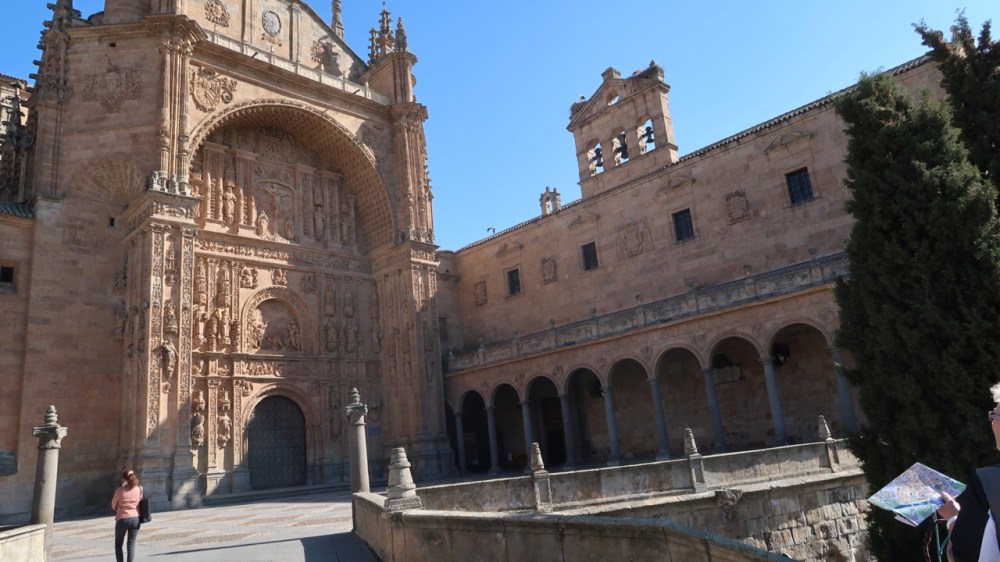
Convento de San Esteban
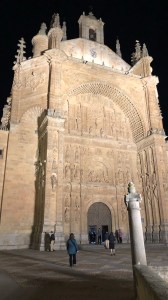
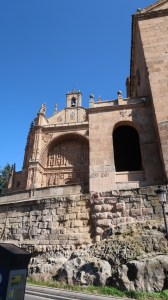
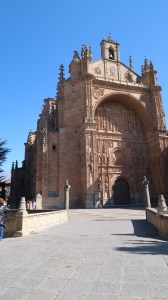
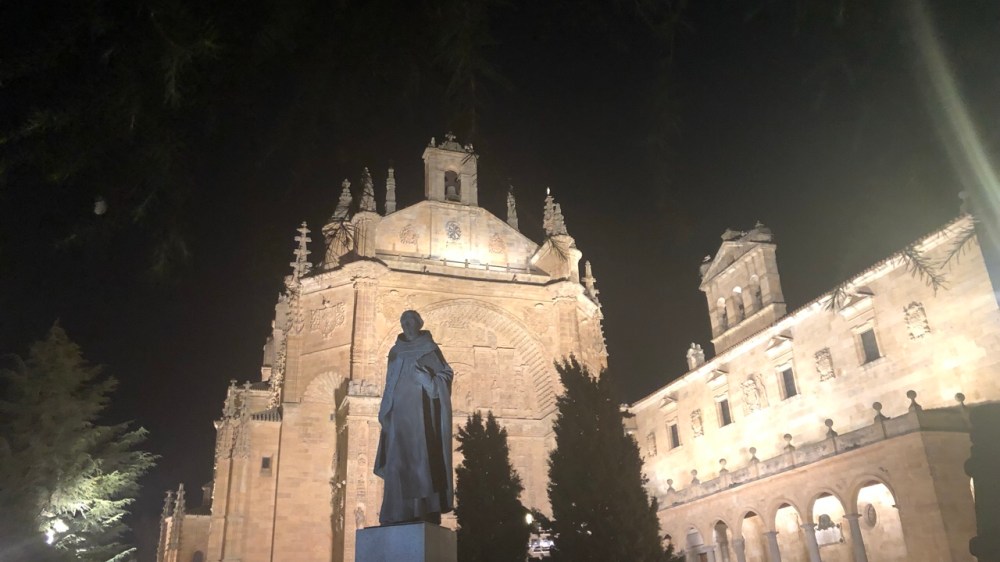
A convent of the Order of the Dominicans. It was built between the 16th and the 17th centuries. Though it is a Gothic building, its decoration is Plateresque and Baroque. This church has a Latin-cross plan, with only one nave with a Baroque reredos flanked by spiral columns, made by José de Churriguera. Its main panel depicts a scene from the martyrdom of San Esteban, painted by Claudio Coello. The building has three cloisters, the most interesting of which being the Royal Cloister.


Roman Bridge
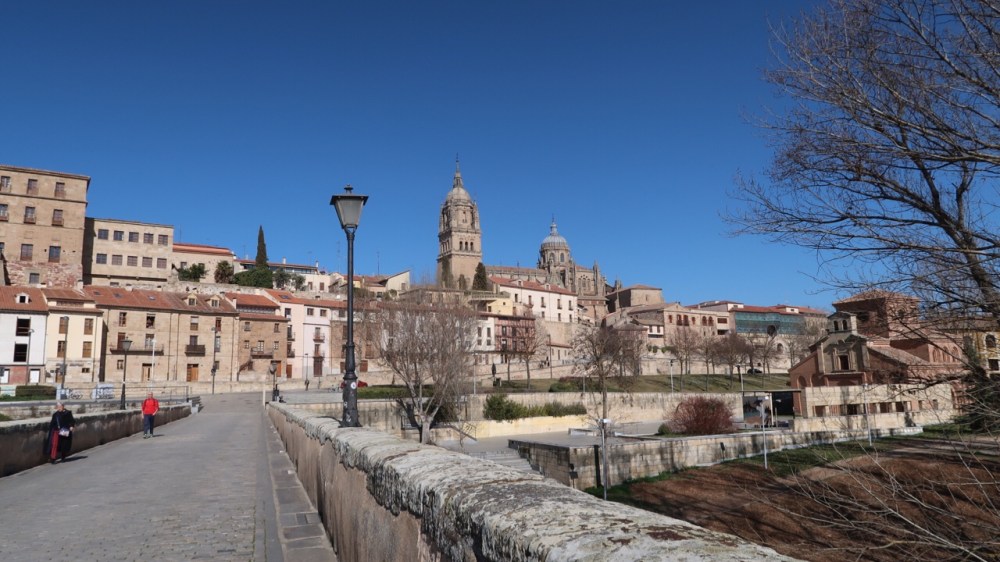
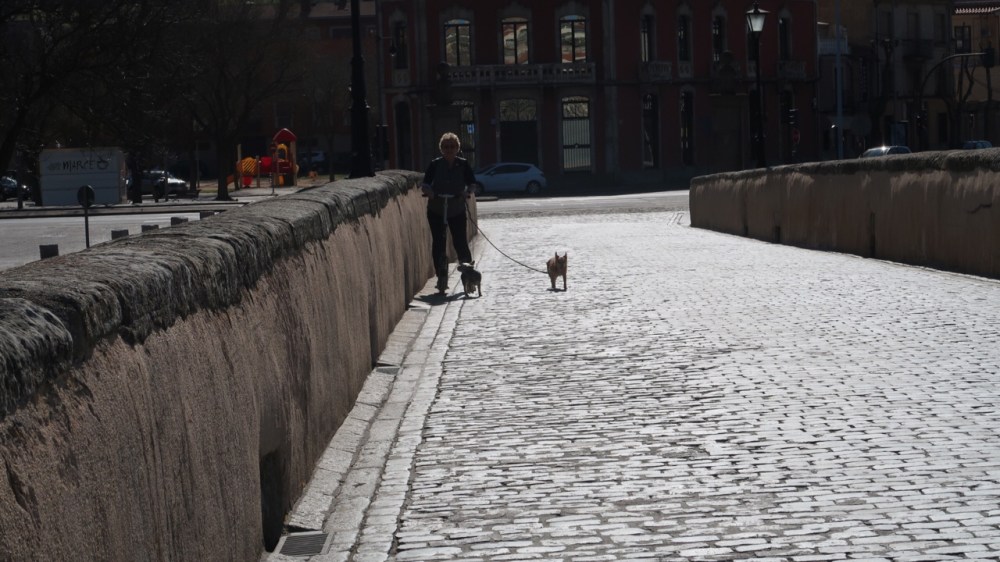
Some historians believe that the bridge was built in the first century A.D. during the reign of Marcus Ulpius Traianus. The bridge crosses the river at one of its widest points and lies on a rocky subsoil. It measures 176 metres long by 3.70 metres wide. It is blessed with 26 semicircular arches and robust pillars. It forms part of the ‘Plata’ (Silver) Roman road, that linked Merida with Astorga.


Salamanca University
Founded in 1218, and gained great prestige outside Spain as a centre for teaching and culture. The university building has a square floorplan with a central courtyard and surrounding galleries. Its most interesting feature is its Plateresque façade. The Escuelas Menores buildings stand beside the University and have façades in a similar artistic style, and in one of their classrooms you can still see the ceiling painted by Fernando Gállego.
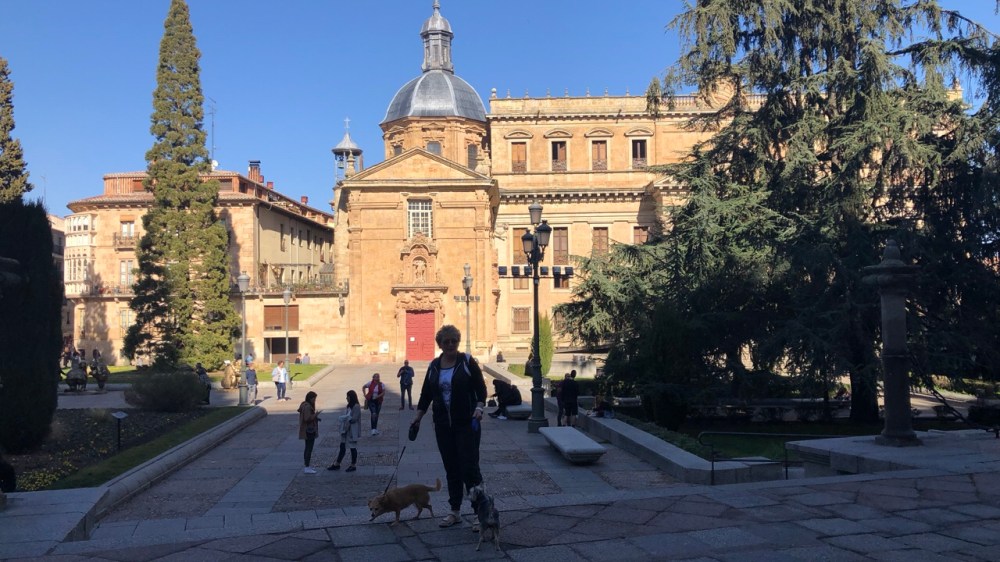
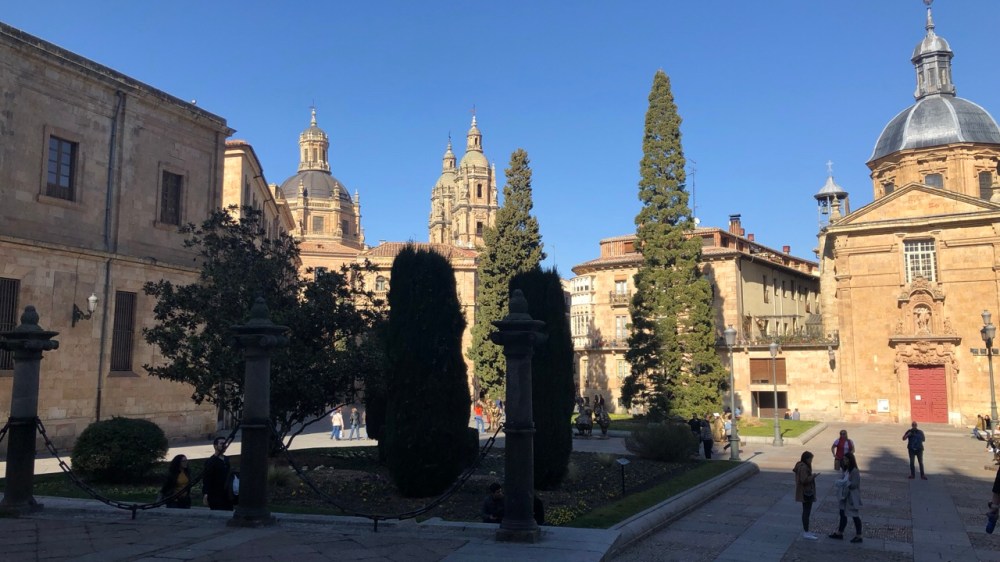

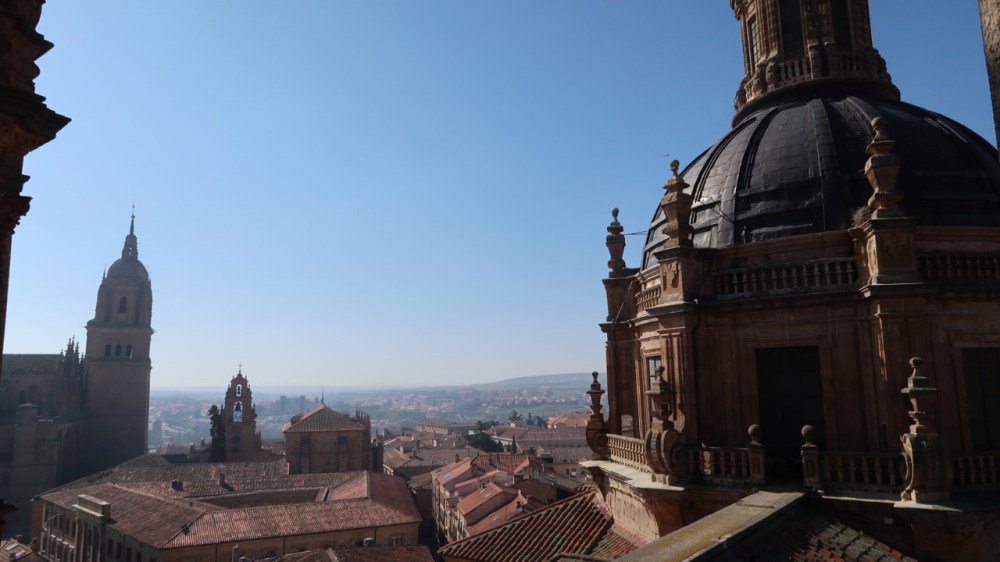
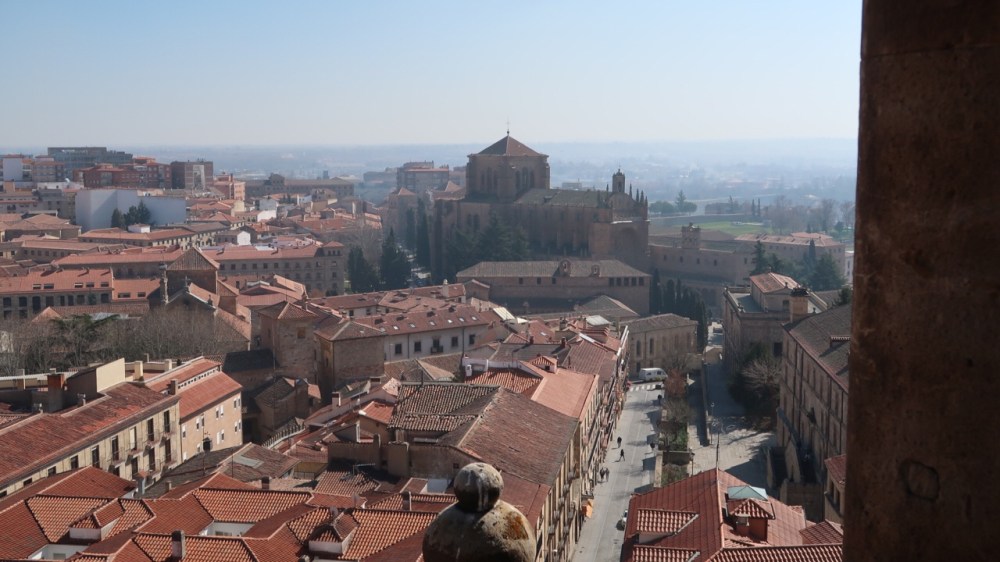
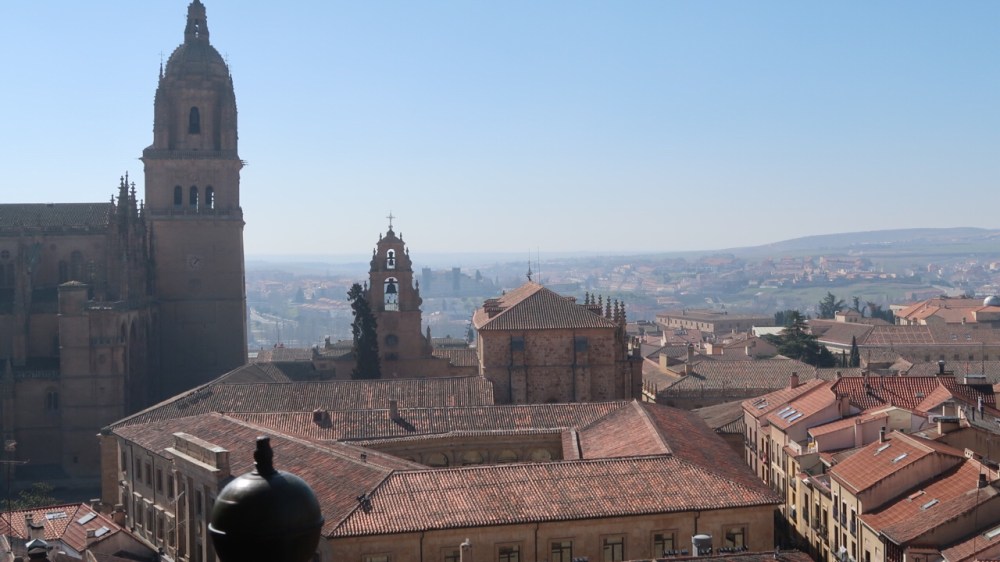
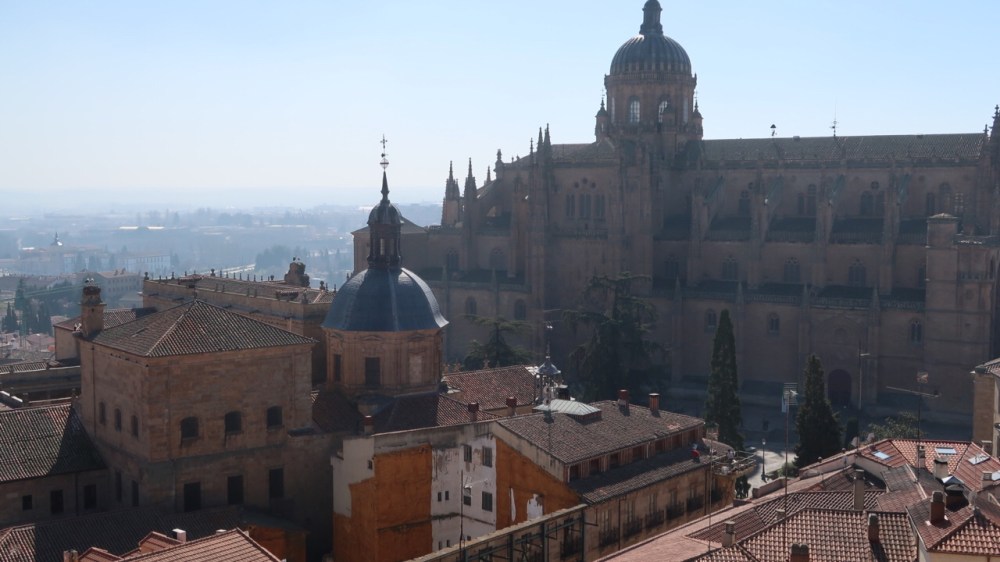
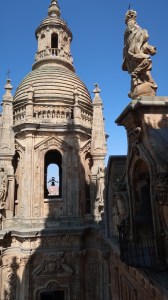
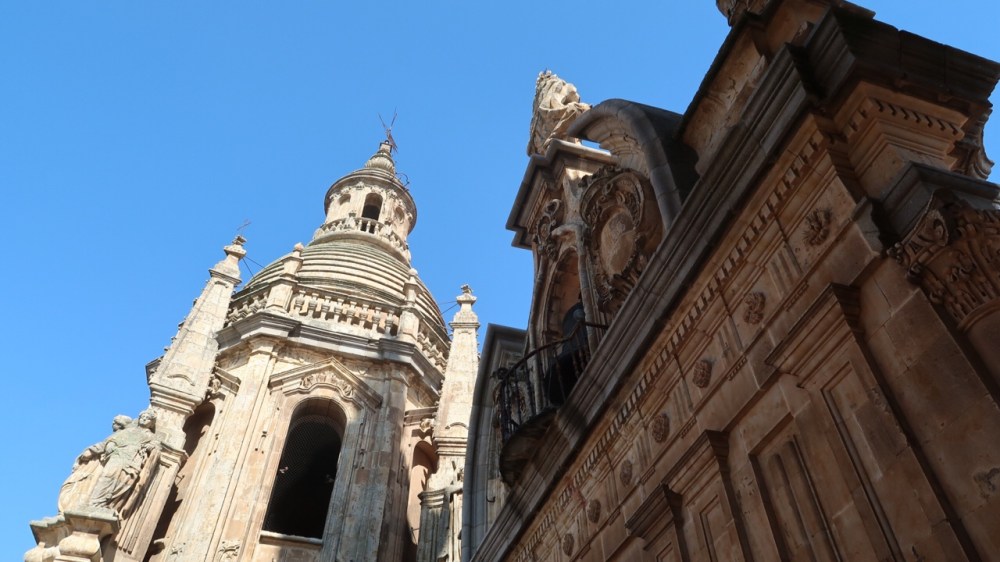


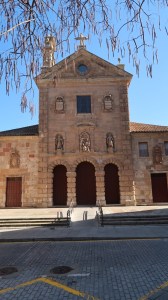
The views from the bell towers of the Catholic University – mind you I needed oxygen by the time I got half way up and they do have chairs and a guard making sure you’re ok. By the time I got to the top my knees were wrecked but it was worth it as the views were fantastic as you will see from the above photos. Sheila had found a nice seat for herself and the dogs to rest while I was up there! That’s them way down there…
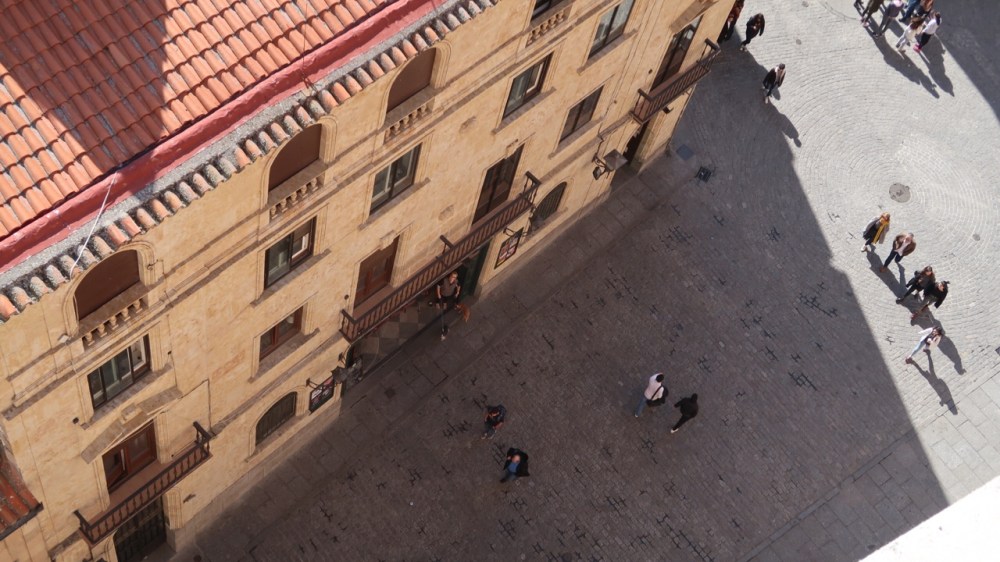
And zooming in a bit you can see her waving at me hanging out of the bell tower 😝
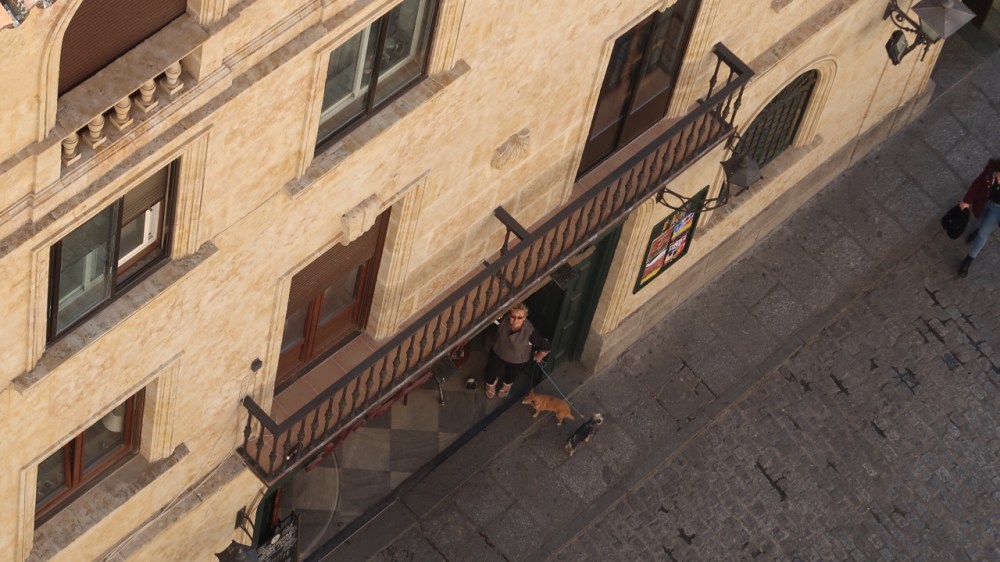
It was a wonderful city to visit and had such a lovely atmosphere just wandering around during the day and at nighttime. And of course it was a great place to scoot 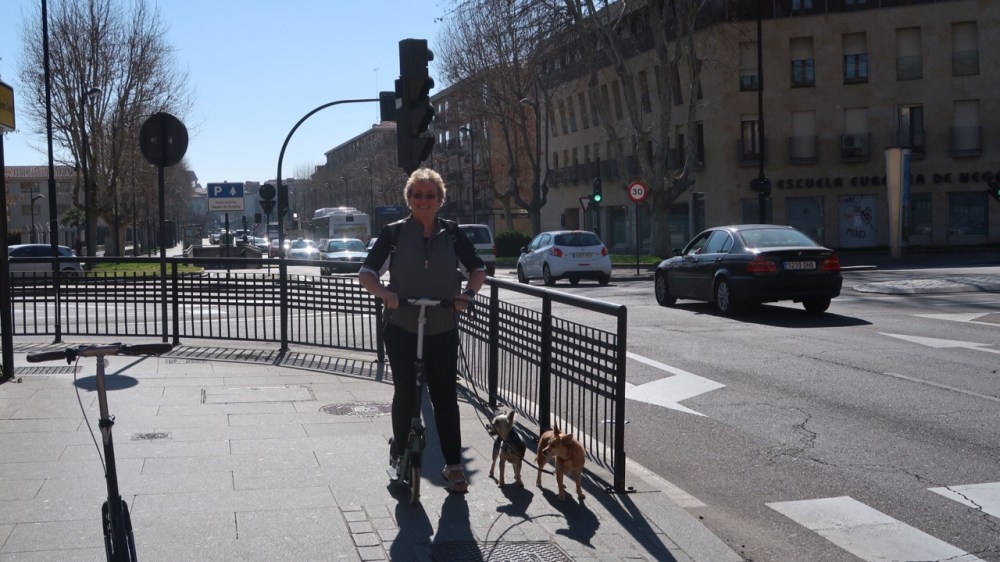
And we really got to see loads of things on the scooters.
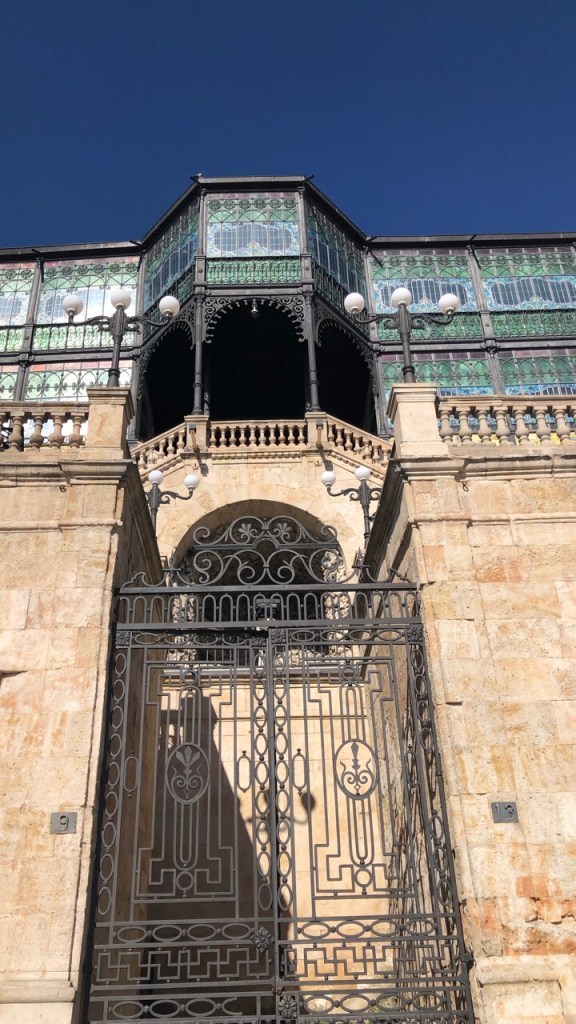

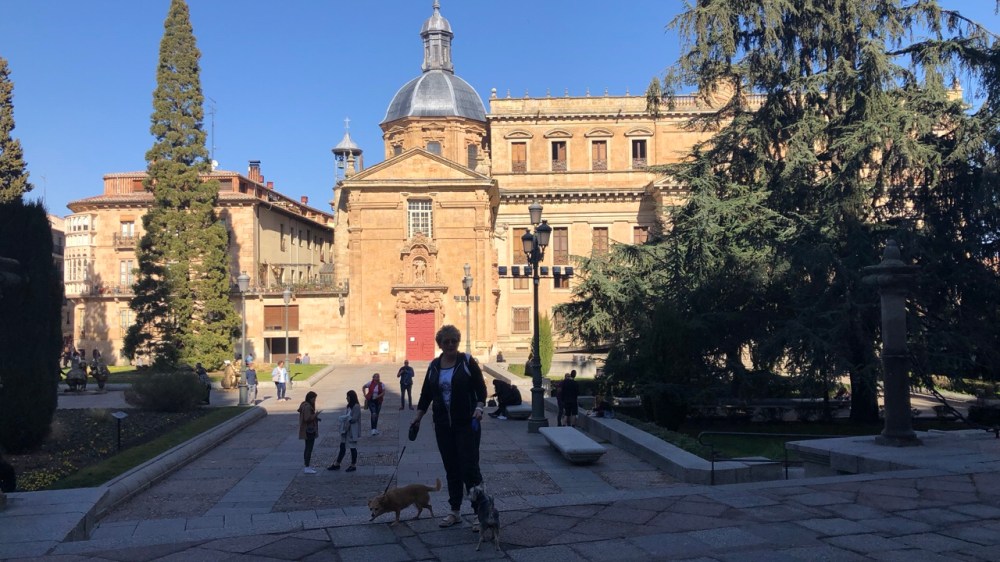
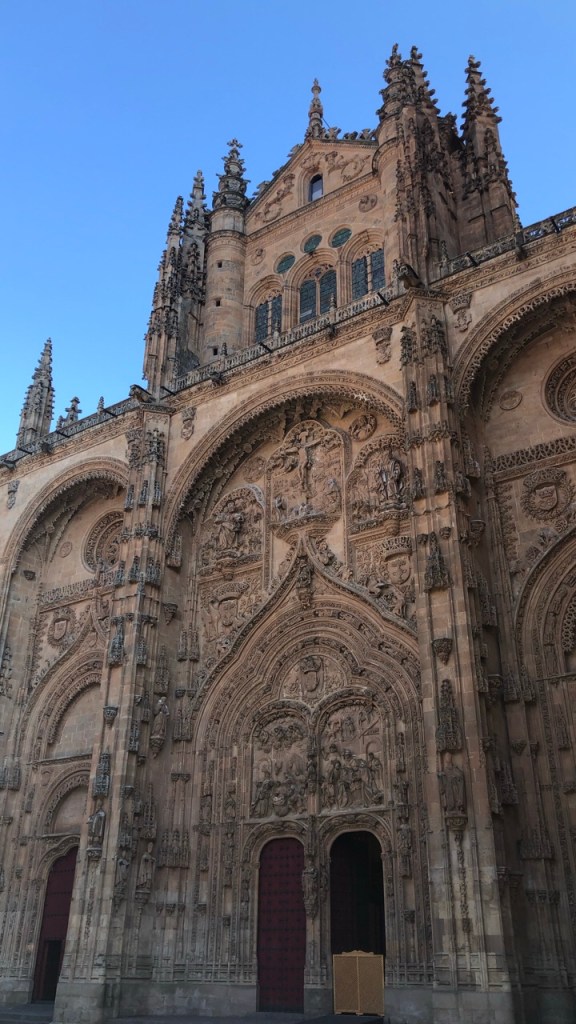
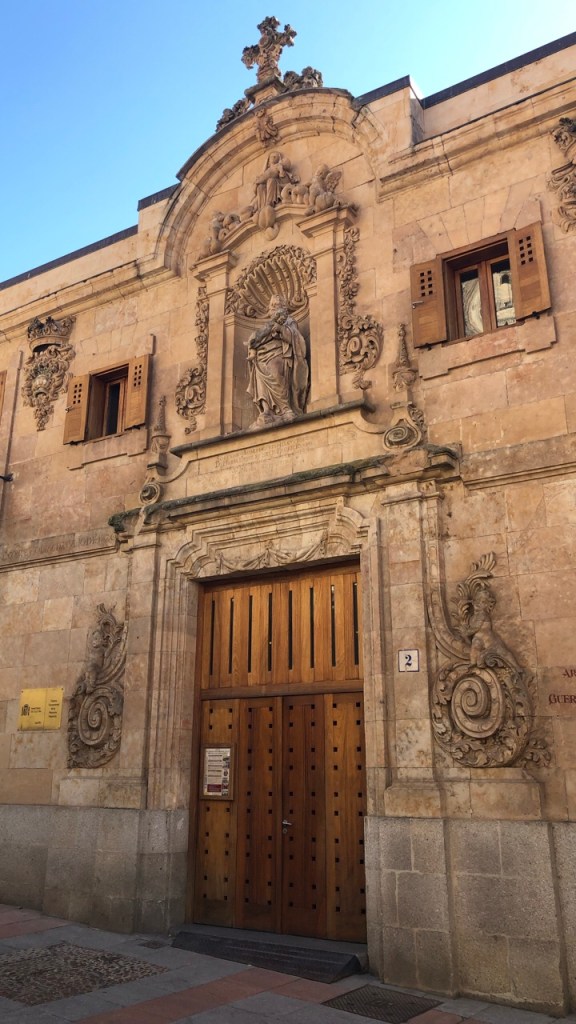
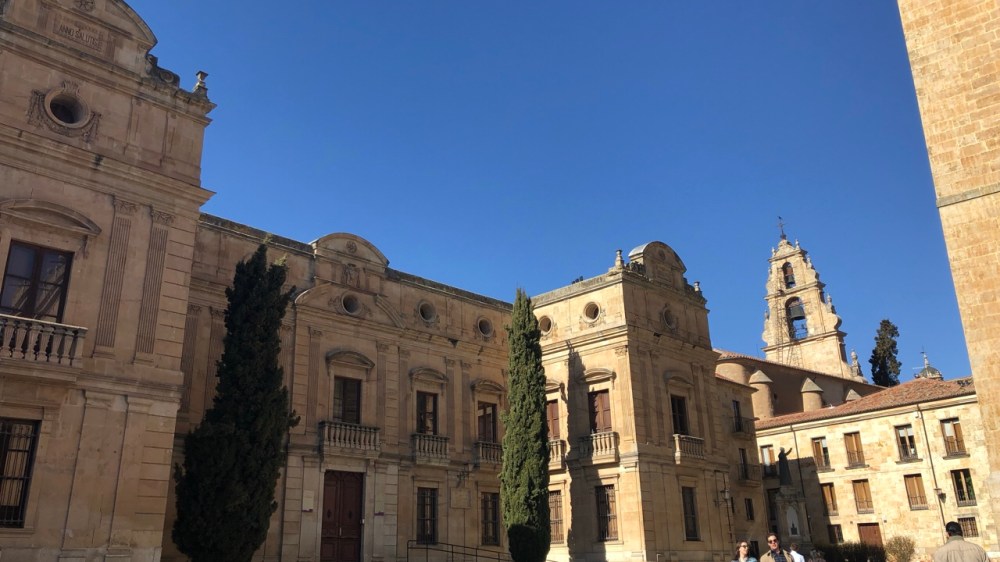
And did I mention the weather was glorious… 😎

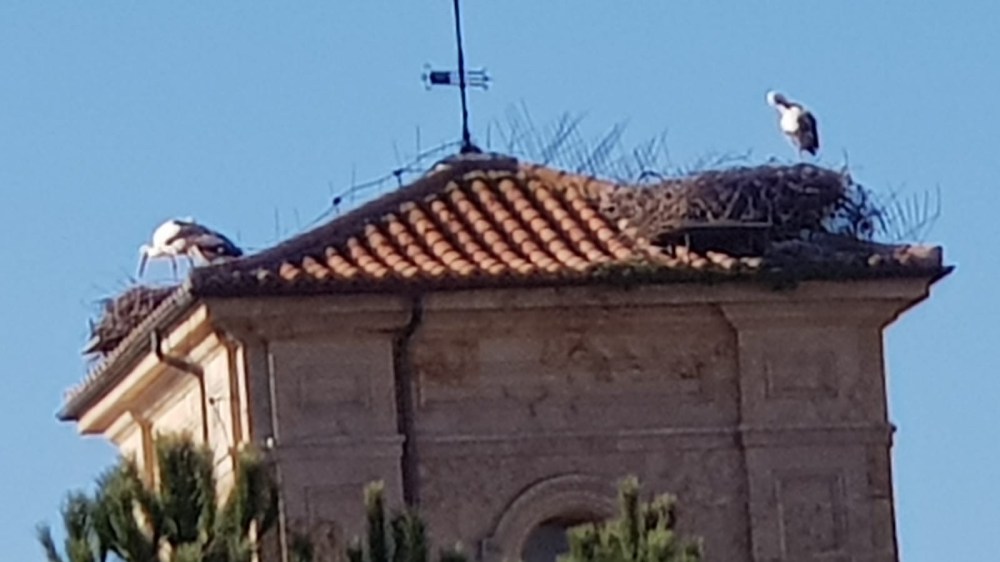
And Sheila spotted these two nesting Storks watching over and feeding their babies – there were there day and night.
 Mutts on Tour
fabulous pictures fabulous buildings the architecture is amazing.
LikeLike