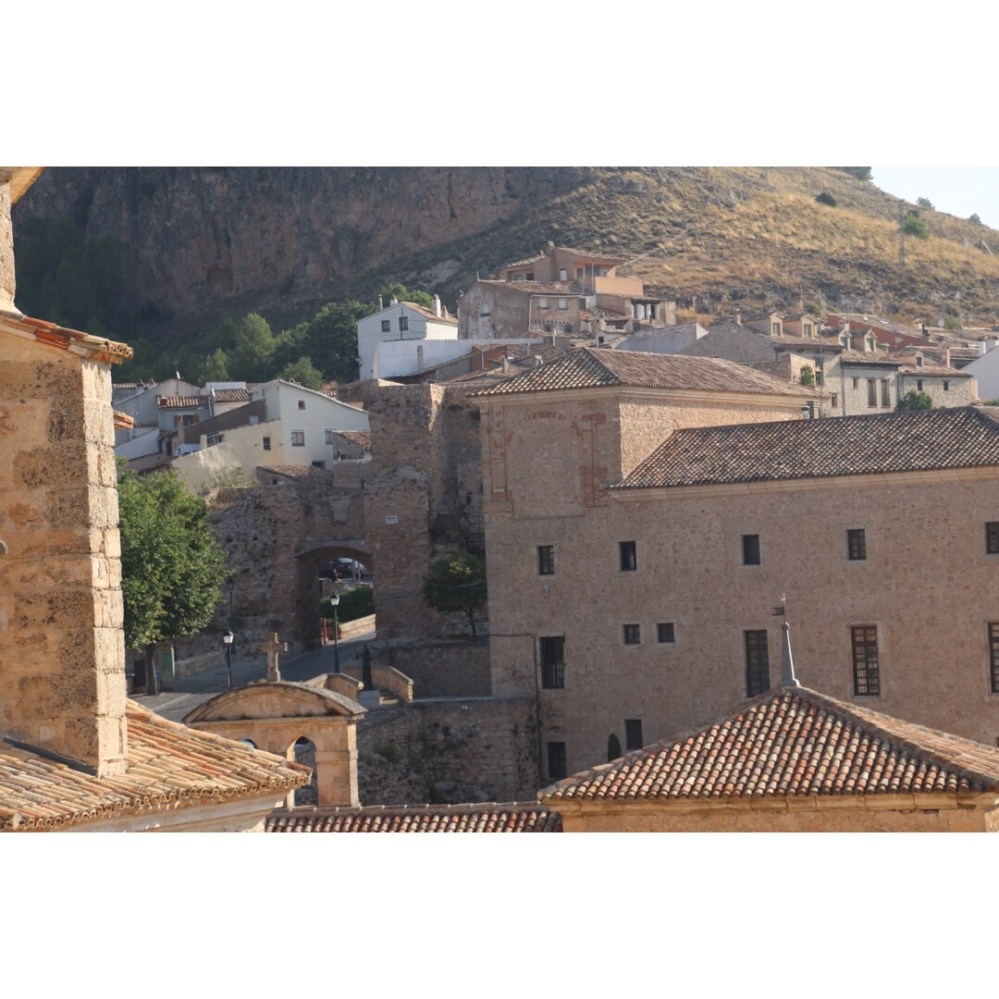
Cuenca is a city set in the mountains of east-central Spain about 2 hours from Madrid and 1.5 hours from Benijofar. A World Heritage Site, Cuenca is one of Spain’s most memorable cities, its old centre a stage set of evocative medieval buildings, many painted in bright colours, stacked on a steep promontory at the meeting of two deep gorges of the Júcar and Huécar rivers. It is divided into two separate settlements: the “new” city is situated south-west of the old one, which is divided by the Huécar. An absolutely spectacular place to visit – except for the Spanish drivers who didn’t seem to notice the width of the streets and were apparently afraid to slow down in case their cars stalled 😝
A little bit of history….
When the Muslim Arabs captured the area in 714, they soon realized the value of this strategic location and they built a fortress (called Kunka) between two gorges dug between the Júcar and Huécar rivers, surrounded by a 1 km-long wall. Cuenca soon became an agricultural and textile manufacturing city, enjoying growing prosperity.
Around the 12th century the Christians, living in northern Spain during the Muslim presence, started to slowly recover the Iberian peninsula. Castile took over western and central areas of Spain, while Aragon enlarged along the Mediterranean area. The Muslim Kingdom, Al-Andalus, started to break into small provinces (Reinos de taifas) under Christian pressure, Cuenca being part of the taifa of Toledo. In 1076 it was besieged by Sancho Ramírez of Aragon, but not conquered. In 1080 King Yahya al-Qadir of Toledo lost his taifa, and his vizier signed in Cuenca a treaty with Alfonso VI of León and Castile by which he ceded him some fortresses in exchange for military help.
After Alfonso’s defeat in the battle of Sagrajas (1086), Cuenca was captured by the king of Seville, Al-Mu’tamid ibn Abbad. However, when his lands were attacked by the Almoravids, he sent his daughter-in-law Zaida to Alfonso, offering him Cuenca in exchange for military support. The first Christian troops entered the city in 1093. However, the Almoravids captured it in 1108. Their governor in the city declared independence in 1144, followed by the whole of Murcia the following year. In 1147 Muhammad ibn Mardanis was elected King of Cuenca, Murcia and Valencia. He had to defend his lands from the Almohad invasion until his death 1172, after which his son had to sign a pact of tributes with the newcomers. A 17-year-old Alfonso VIII of Castile tried to conquer the city, but after five months of siege, he had to retreat after the arrival of troops sent by the Almohad caliph Abu Yaqub Yusuf. Alfonso signed a seven-year truce but when, in 1176 the Cuencans occupied some Christian lands in Huete and Uclés, Alfonso intervened at the head of a coalition including also Ferdinand II of León, Alfonso II of Aragon and the Military Orders of Calatrava, Santiago and Montegaudio, besieging Cuenca for months starting from 1177’s Epiphany. The city’s commander, Abu Bakr, again sought the support of Yaqub Yusuf, but the latter was in Africa and did not send any help. After an unsuccessful Cuenca sortie against the Christian camp on 27 July, the besieged city was conquered by Alfonso’s troops on 21 September 1177, while the Muslim garrison took refuge in the citadel.
The latter fell in October, putting an end to Arab domination in Cuenca. Alfonso VIII granted the city a title, and it was considered to be “Muy noble y muy leal” (Very noble and very loyal). It was given a set of laws, the Fuero, written in Latin, that ruled Cuenca’s citizens, and it was considered one of the most perfectly written at that time. The diocese of Cuenca was established in 1183; its second bishop was St. Julian of Cuenca, who became patron saint of the city.
The Cathedral
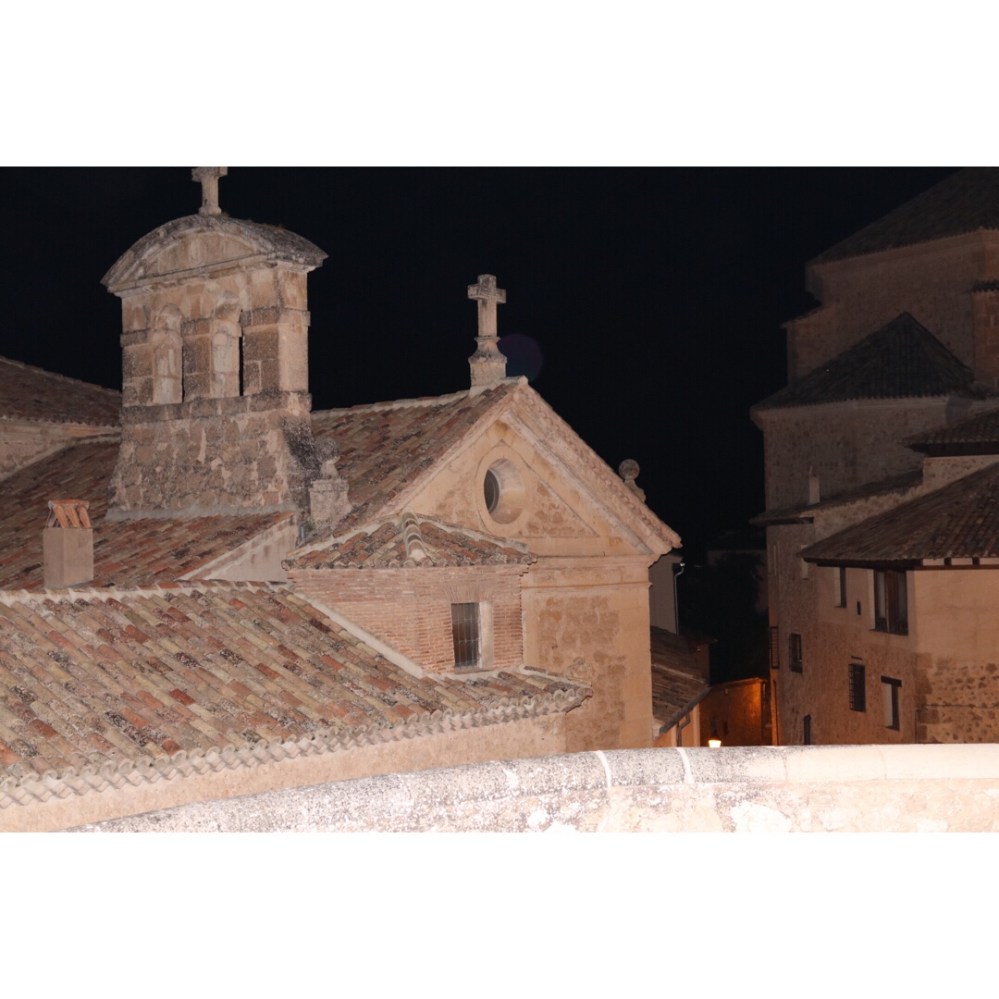
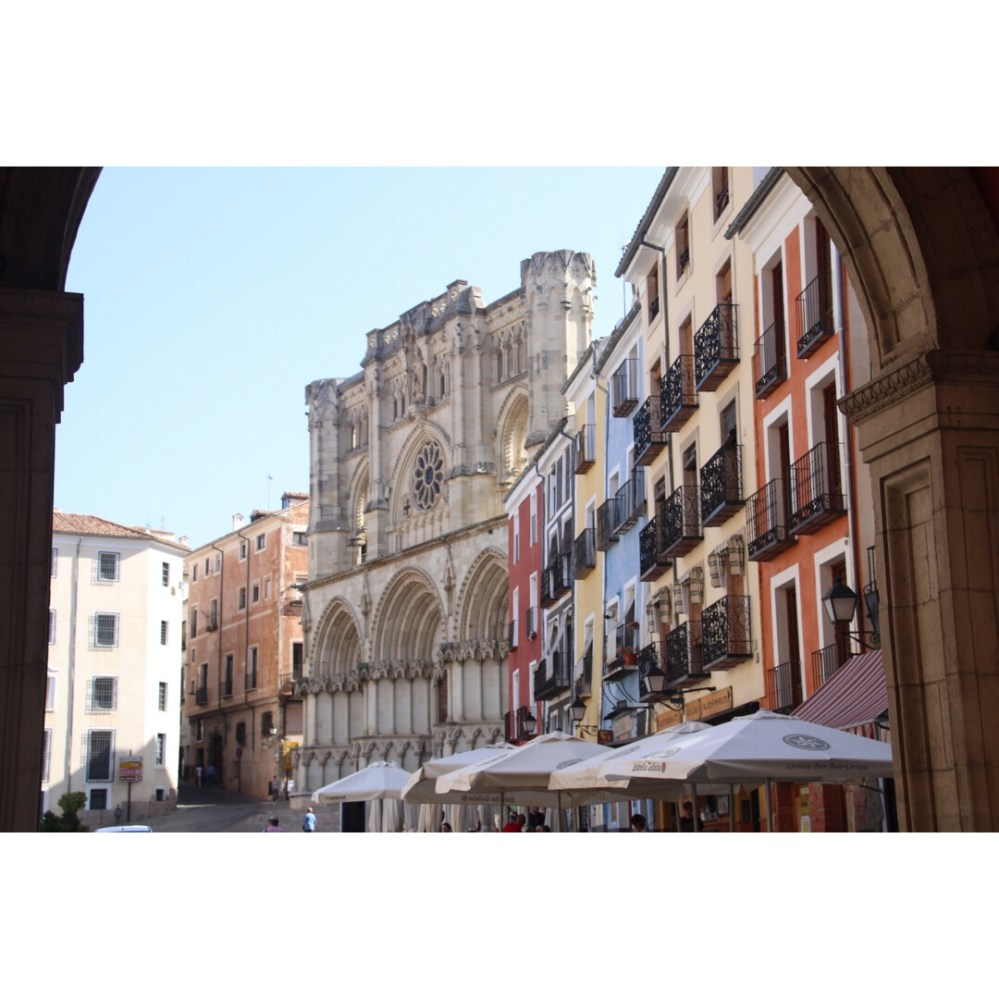
Cuenca’s Cathedral of Our Lady of Grace and Saint Julian was built from 1182 to 1270. The façade was rebuilt after it crumbled down in 1902. It is the first gothic style Cathedral in Spain (together with Avila’s one), because of the influence of Alfonso VIII’s wife, Eleanor, daughter of King Henry II of England and his wife, Eleanor of Aquitaine, who introduced the Anglo-Norman style. [Remember Eleanor from our trip last year – Sheila was fascinated with her 😜]
From that date the cathedral has undergone some changes. An apse-aisle (doble girola) was added in the 15th century, while the Renaissance Esteban Jamete’s Arch was erected in the 16th century. The main altar was redesigned during the 18th century by famous architect Ventura Rodríguez: it features a precious iron-work gate. The façade was rebuilt in 1902 from ruins due to the collapse of the former bell tower, the Giraldo. In the early 1990s modern coloured windows were installed, and in 2006 one of the two old baroque organs from Julián de la Orden was recovered. The other organ has also been restored.
The naves do not follow exactly a straight line. The San Julián altar, dedicated to Saint Julian of Cuenca, at the apse-aisle, consists of columns made of green marble.


This was an amazing cathedral with wonderful stain-glass windows and incredible light throughout the entire cathedral.
Bridge of Saint Paul
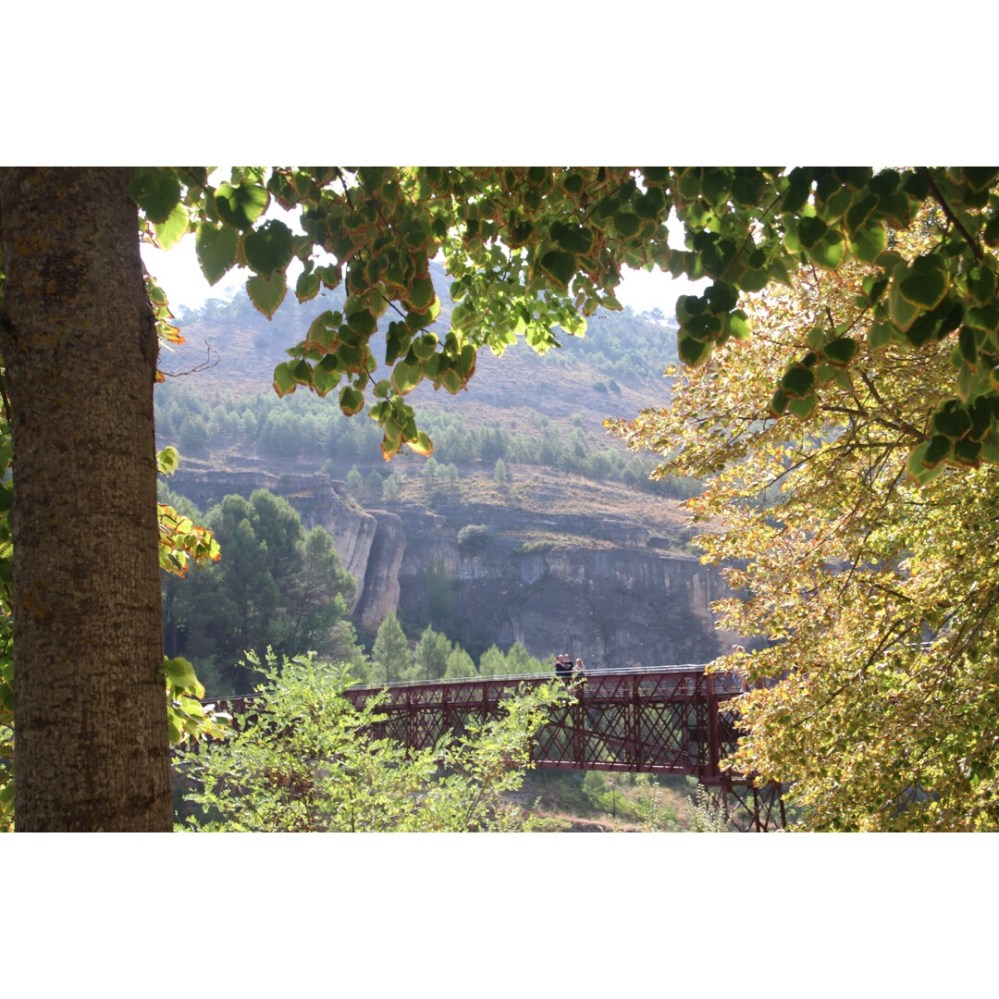
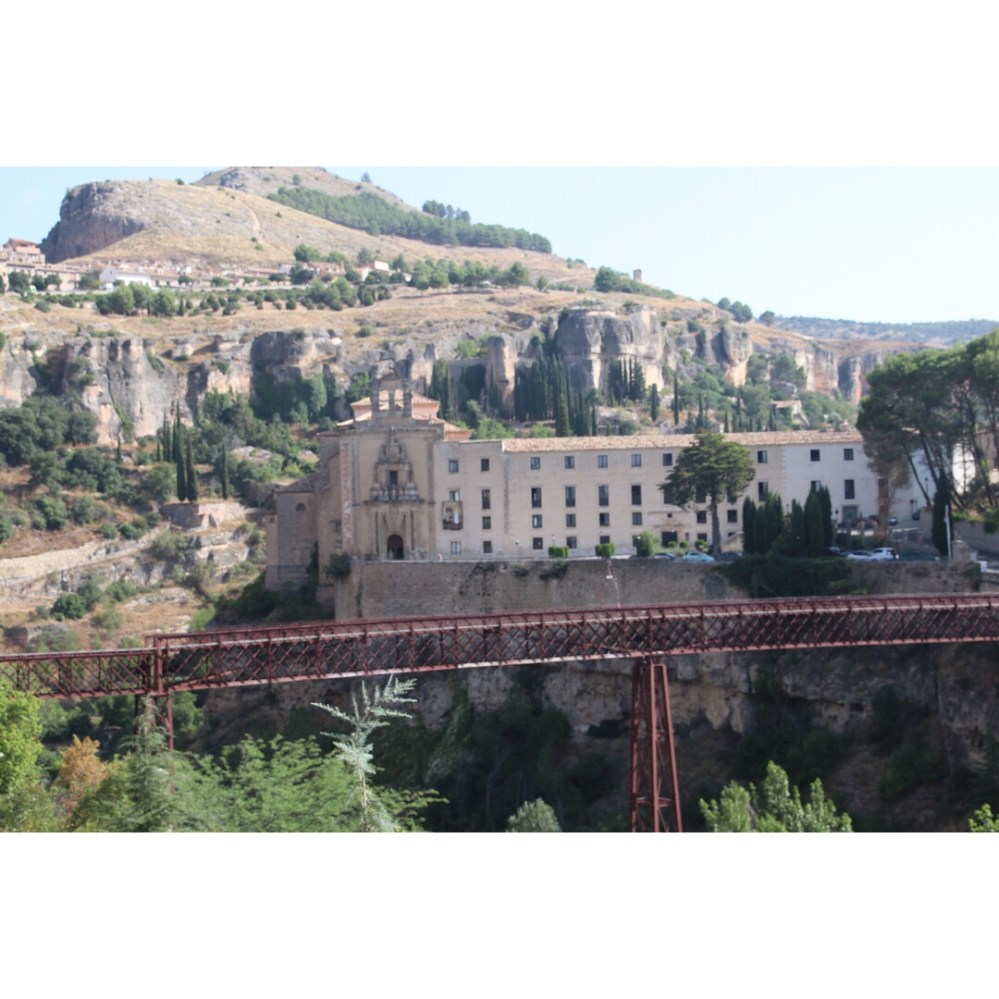
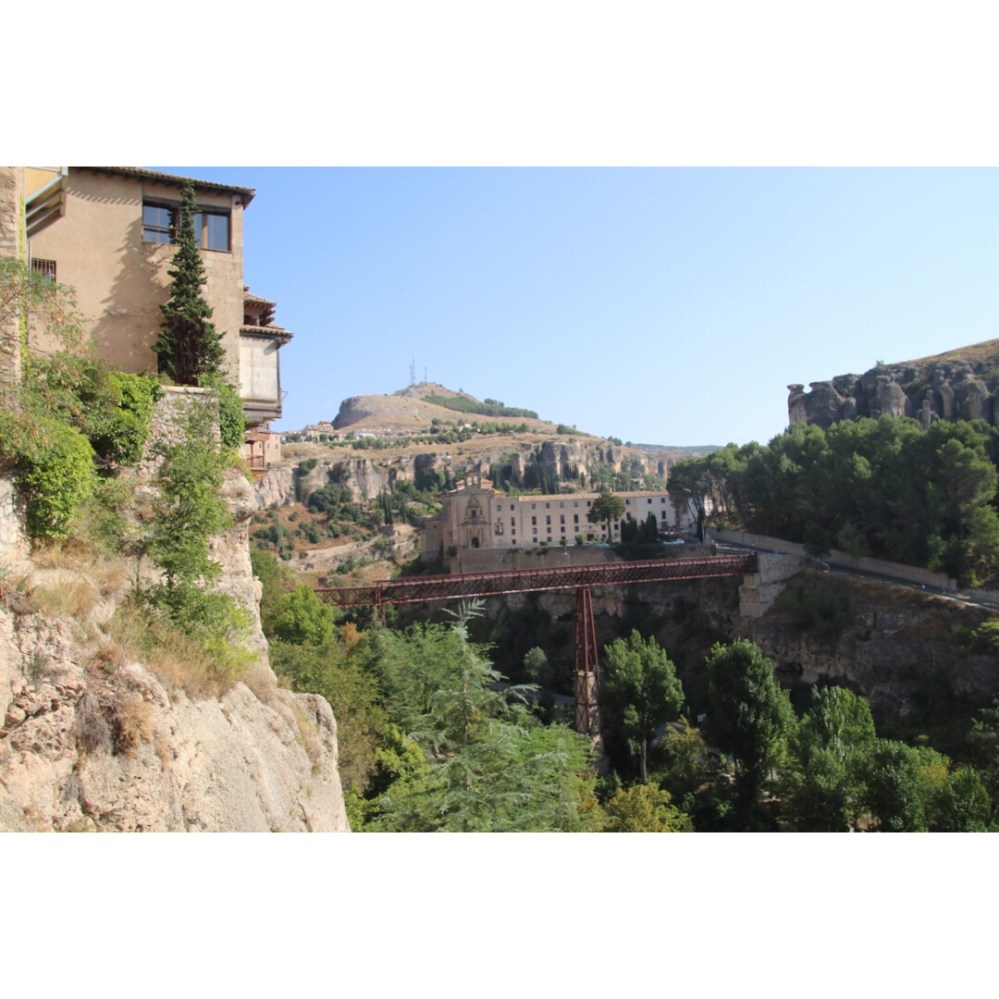
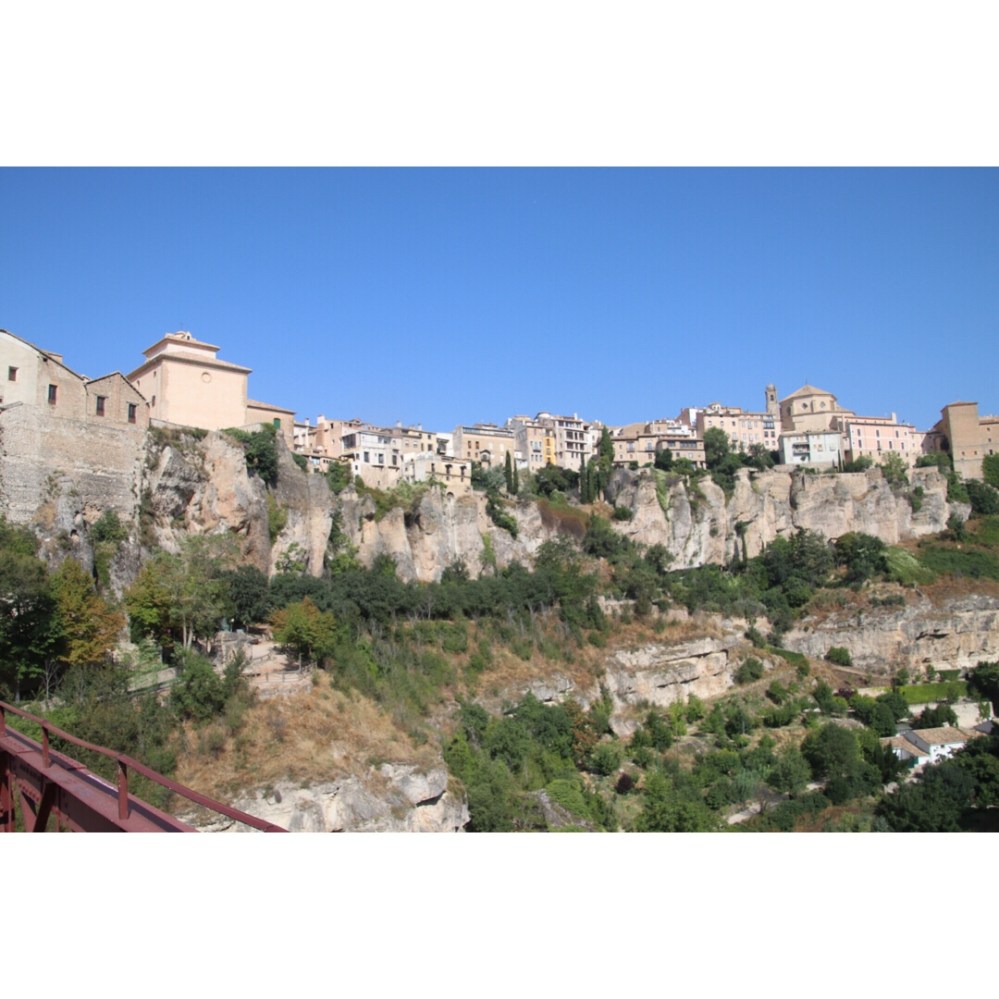
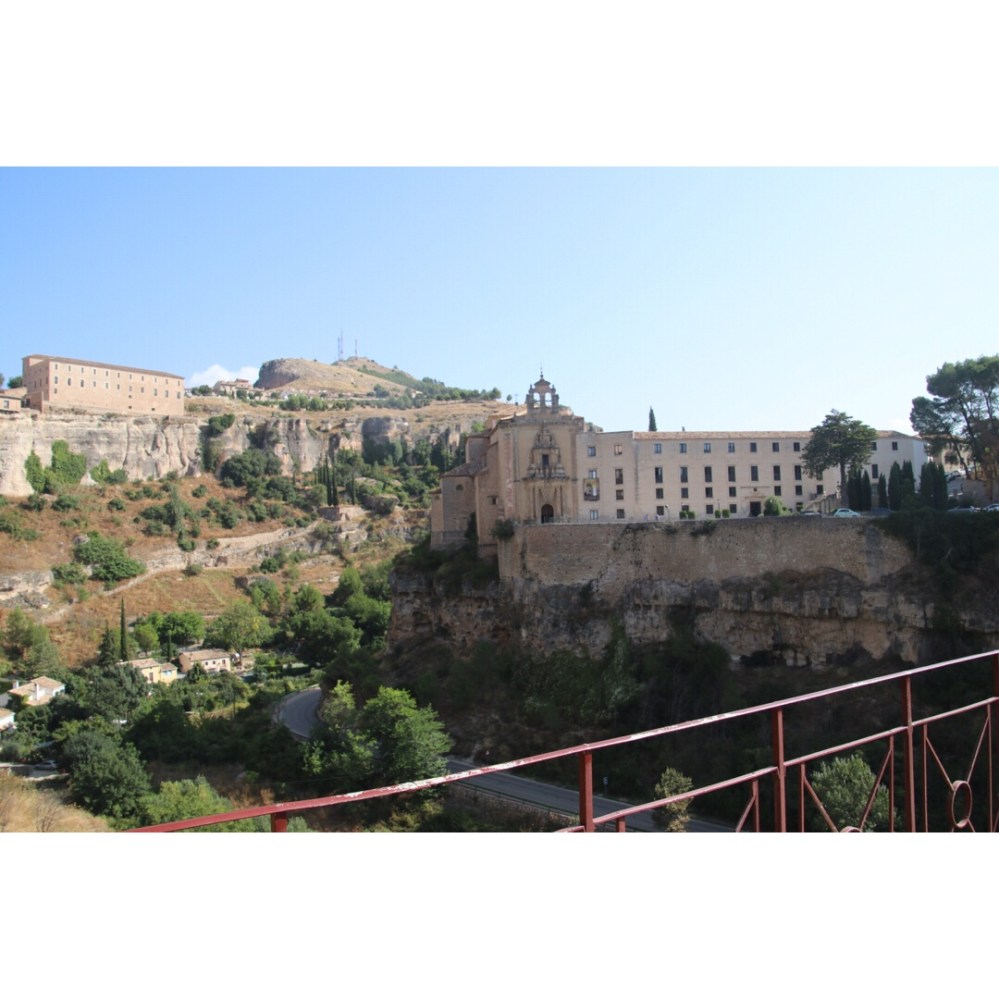
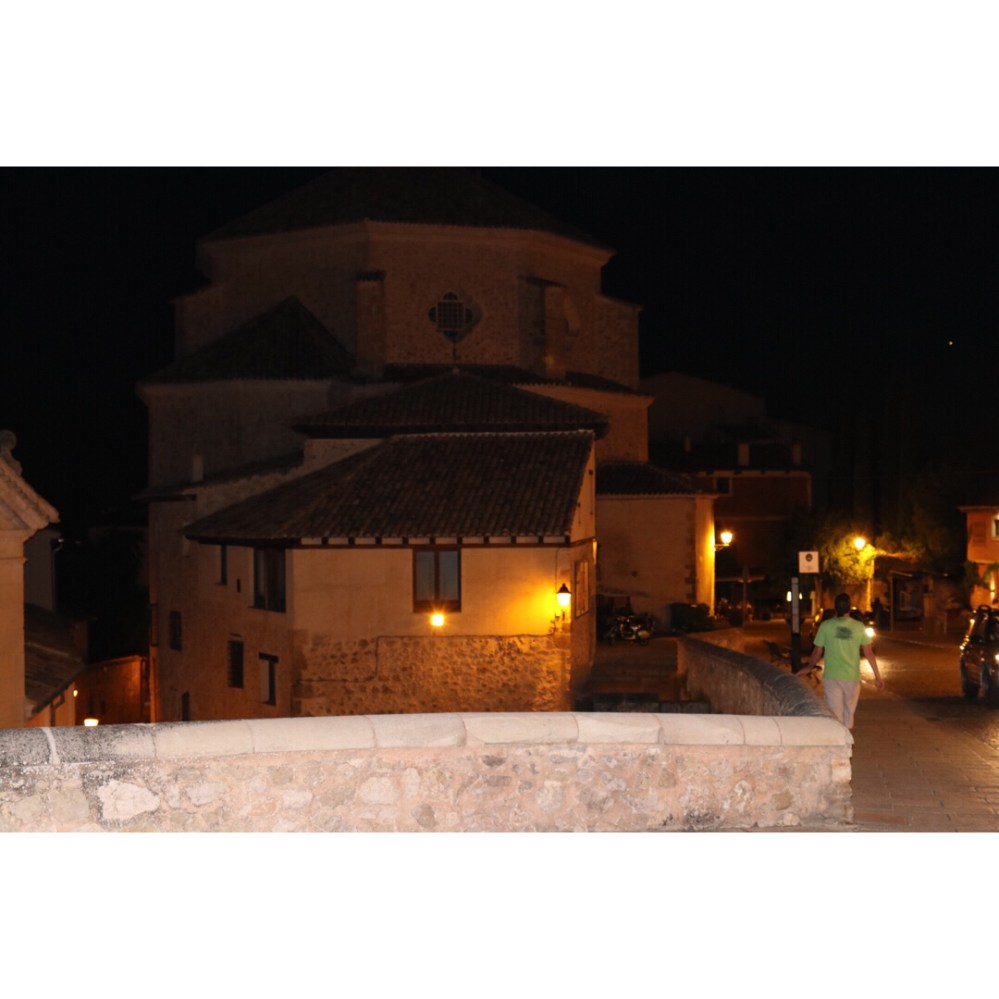
The bridge of Saint Paul (Puente de San Pablo) was built from 1533 to 1589, a construction driven by the canon Juan del Pozo, over the gorge of the River Huecar, aiming at connecting the old town with St Paul convent. The original bridge collapsed, and the current one was built in 1902, made of wood and iron according to the style dominating at the beginning of the 20th century. It is up to 40 metres high and supported by the remains of the old bridge.

The Seminary
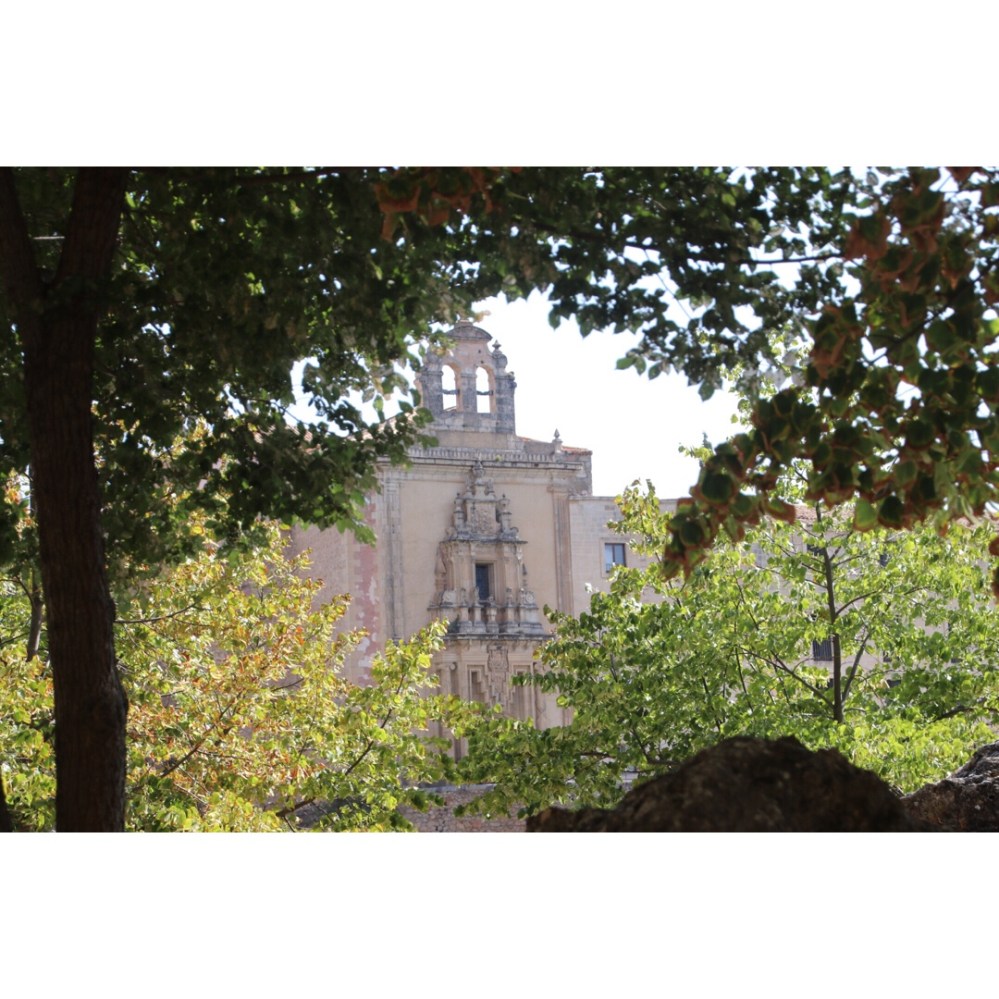
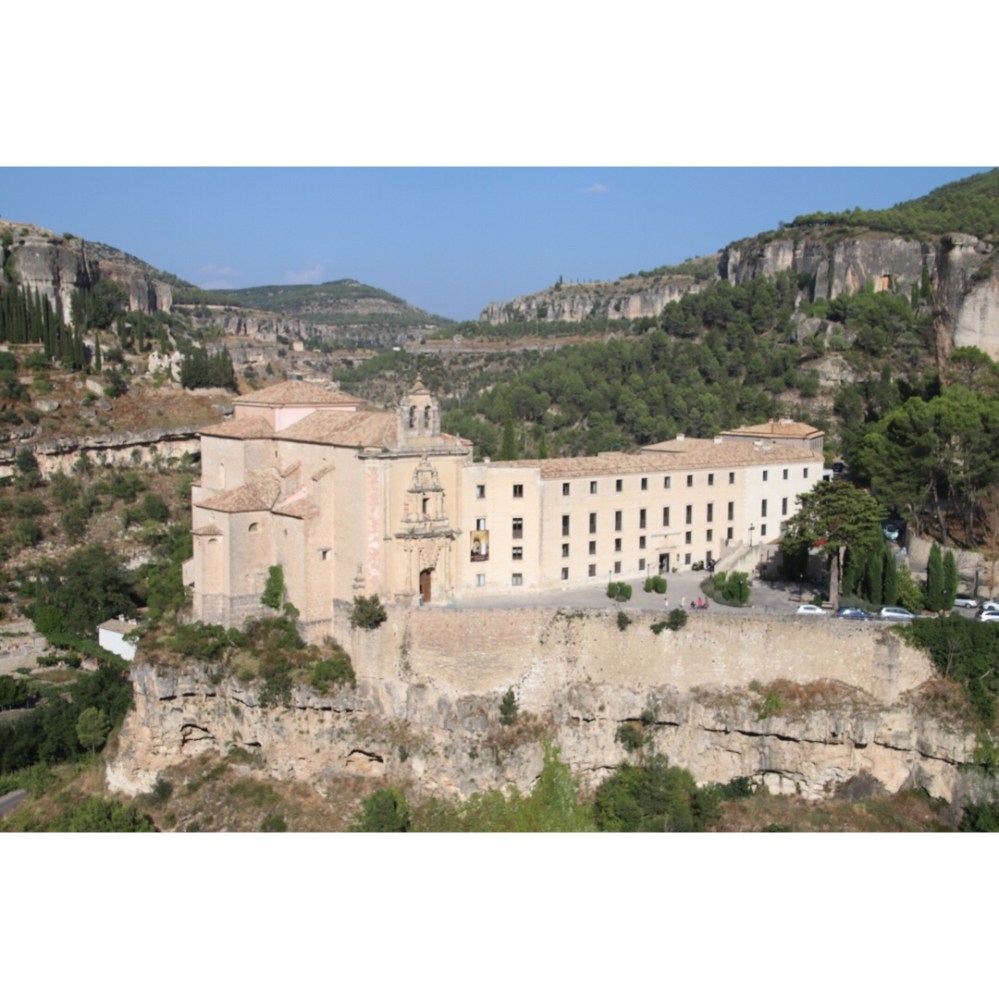
Is a rectangular building stretching from Plaza de la Merced to Mangana Square, was established under the rule of José Flores y Osorio, the Bishop of Cuenca (1738–1759), and built by Vicente Sevill, around 1745. The Baroque façade at Plaza de la Merced was erected in 1748. It holds a library with numerous ancient books, some of them “incunables” (previous to 1501). There is also a Rococo meeting room inside and a Gothic altarpiece at the chapel, but visits are not allowed, which is just as well as I would never have made it over that bridge😳.
The Castle
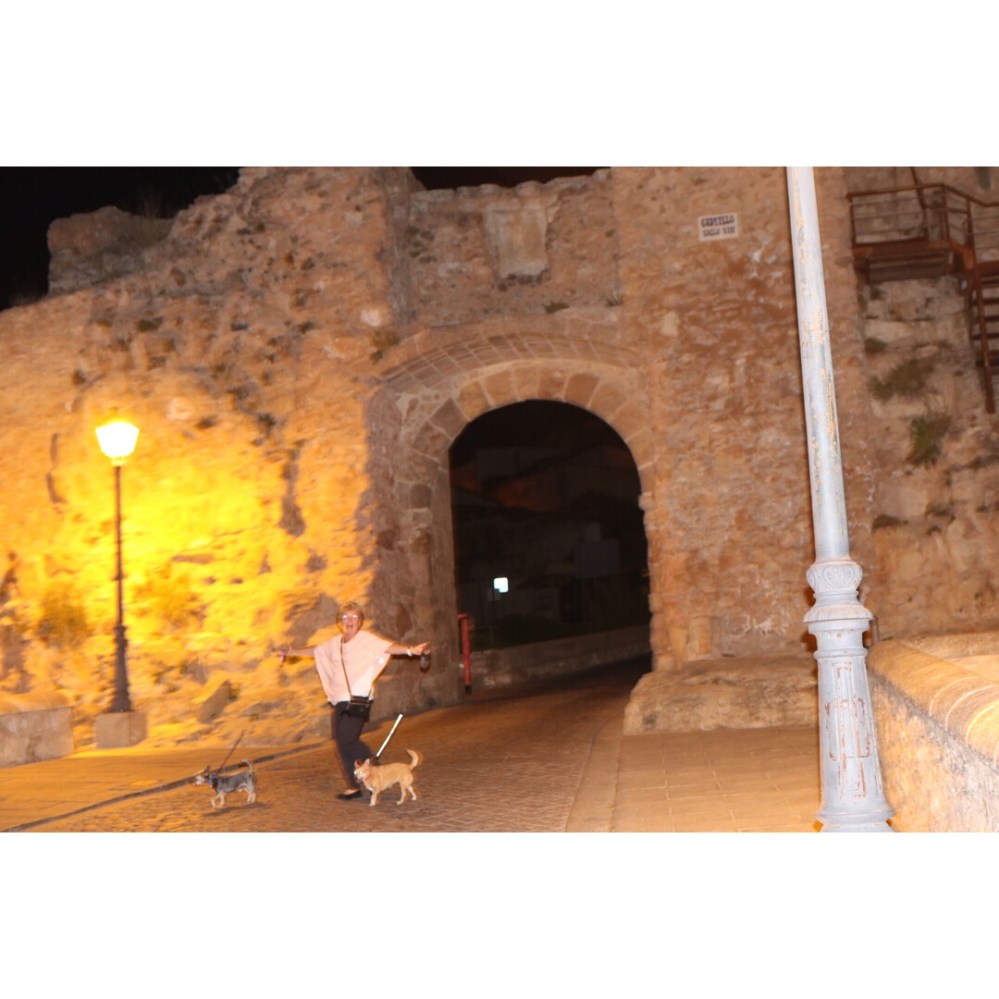
El Castillo is the name for the remains of an ancient Arab fortress, representing the older structures of Cuenca. Only a tower, two stone blocks, the arch – which allows you to enter or leave the old town and a fragment of the walls – the Barrio del Castillo – have been left. The arch (arco de Bezudo) is named after Gutierre Rodriguez Bezudo, from Segovia, who fought the Arabs with King Alfonso VIII to conquer Cuenca. The castle was home of the Holy Inquisition after 1583, and it was finally destroyed during the 19th century by French soldiers during the Spanish War of Independence.
Town Hall & The Plaza Mayor
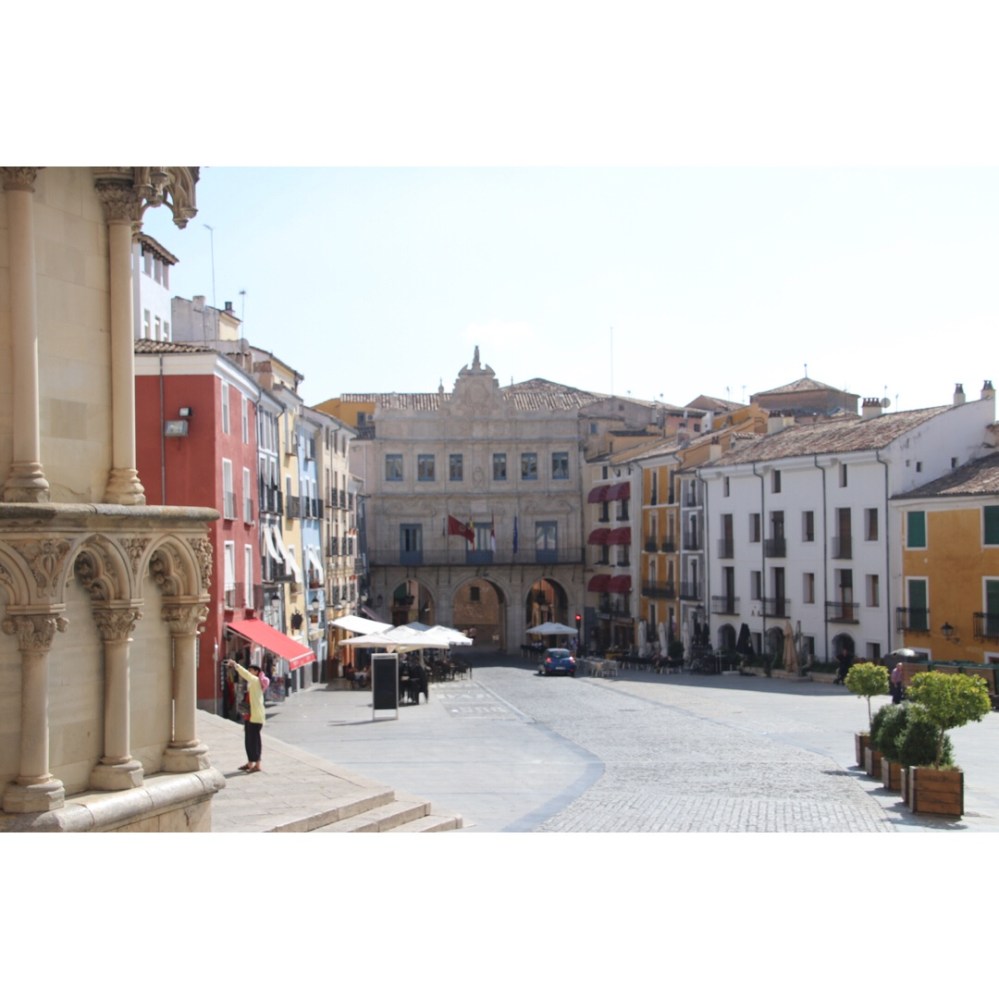
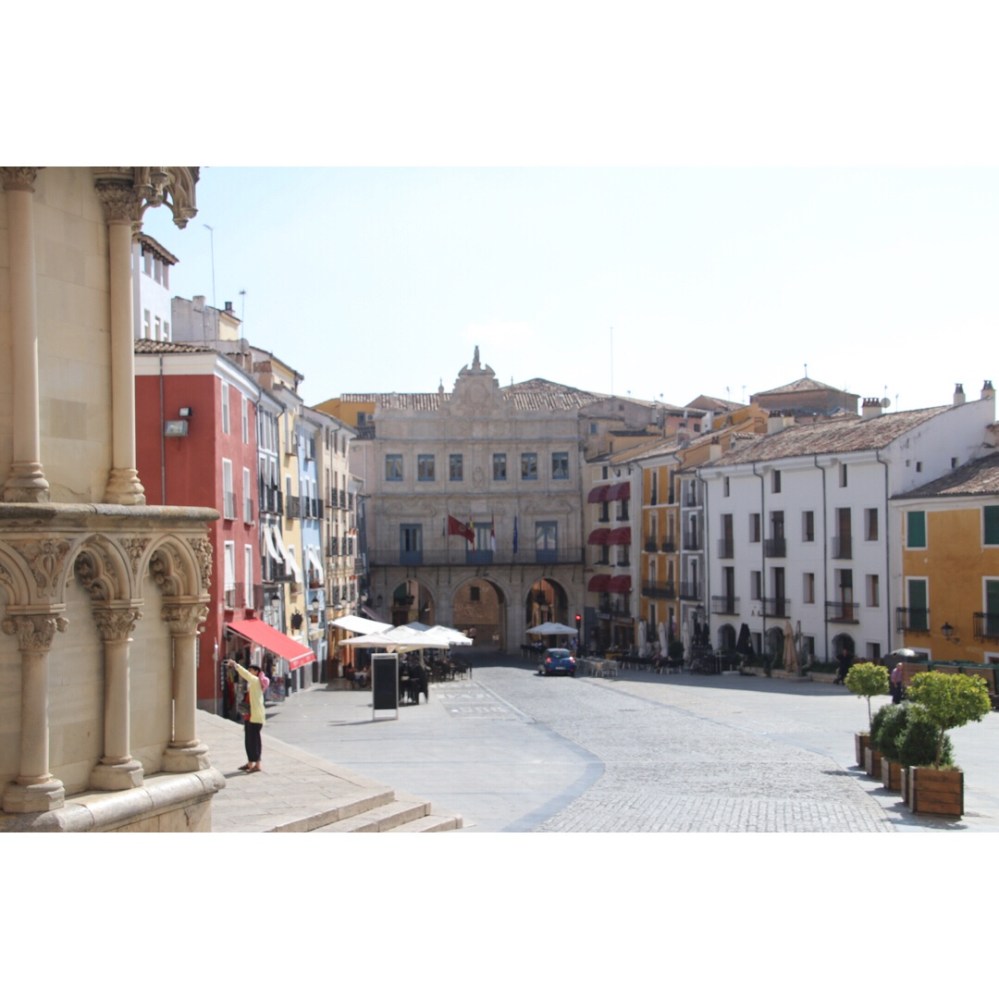
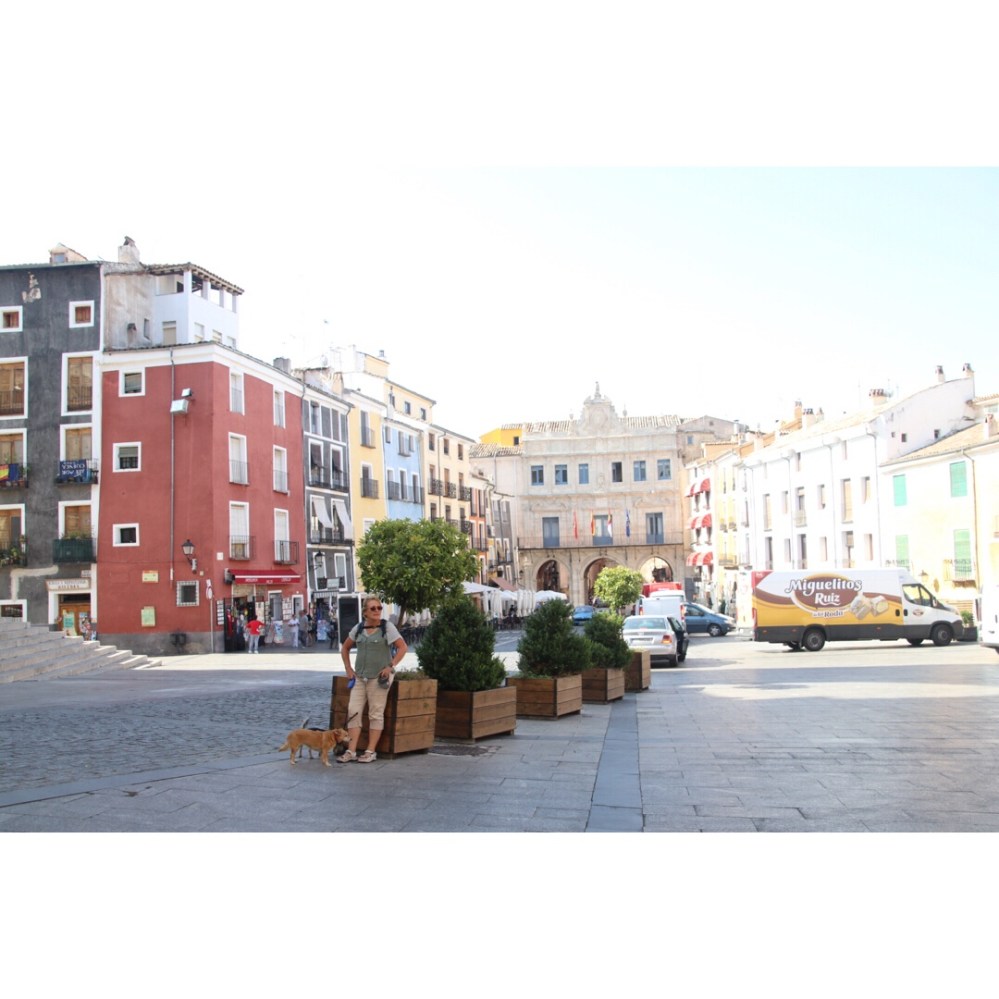
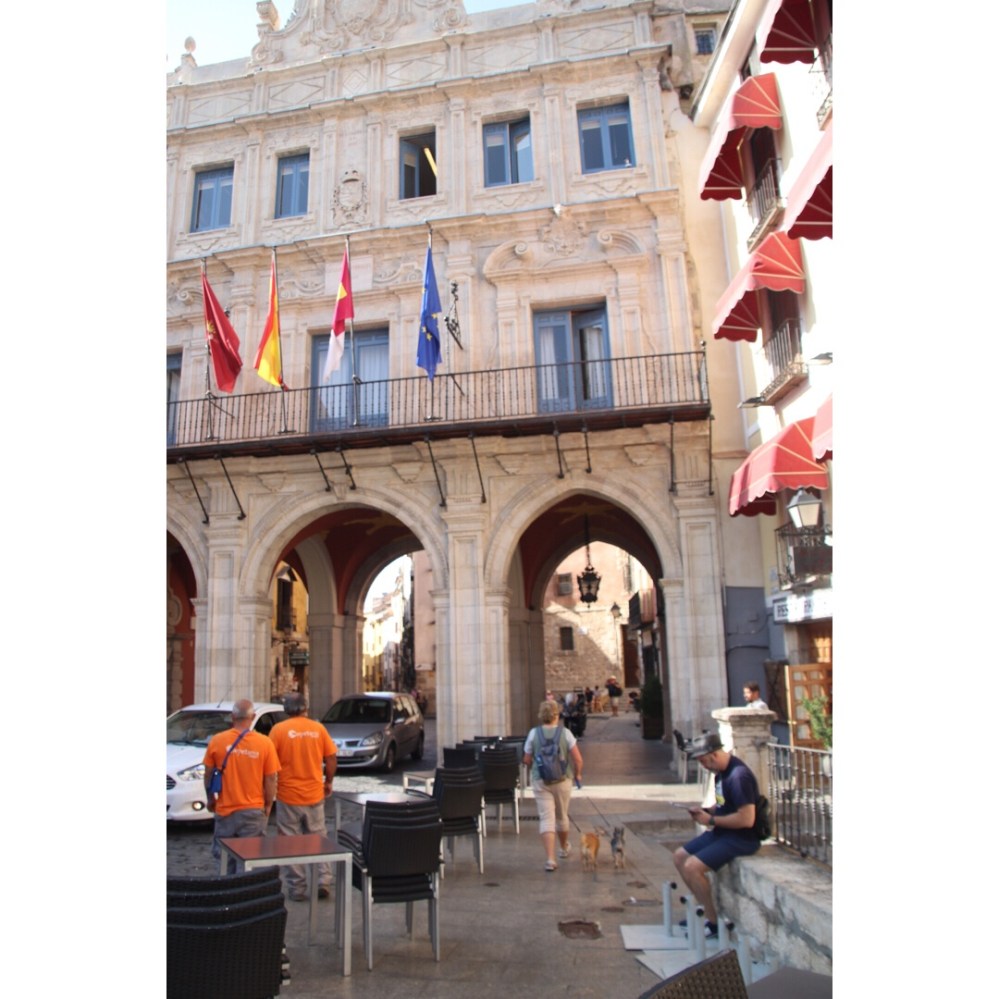
The Town Hall is a building in baroque style built up during the ruling period of King Carlos III and supported over three Roman arches. It was finished in 1762.

The Hanging Houses of Cuenca
Cuenca is famous for its hanging house which were built over a rock above the Huecar River gorge in the 15th century, Las Casas Colgadas are the only remaining samples of this type of building which was common in this city a long time ago. The houses are considered the most famous civil buildings in Cuenca. They house a restaurant and the Museum of Abstract Arts and they serve as the background of millions of photos made from the bridge of San Pablo and you will see proof of these with the following 😎.


And this was our beautiful hotel room – we had the rooms to the left of the round-turretty roof and our balcony came out over the red part of the building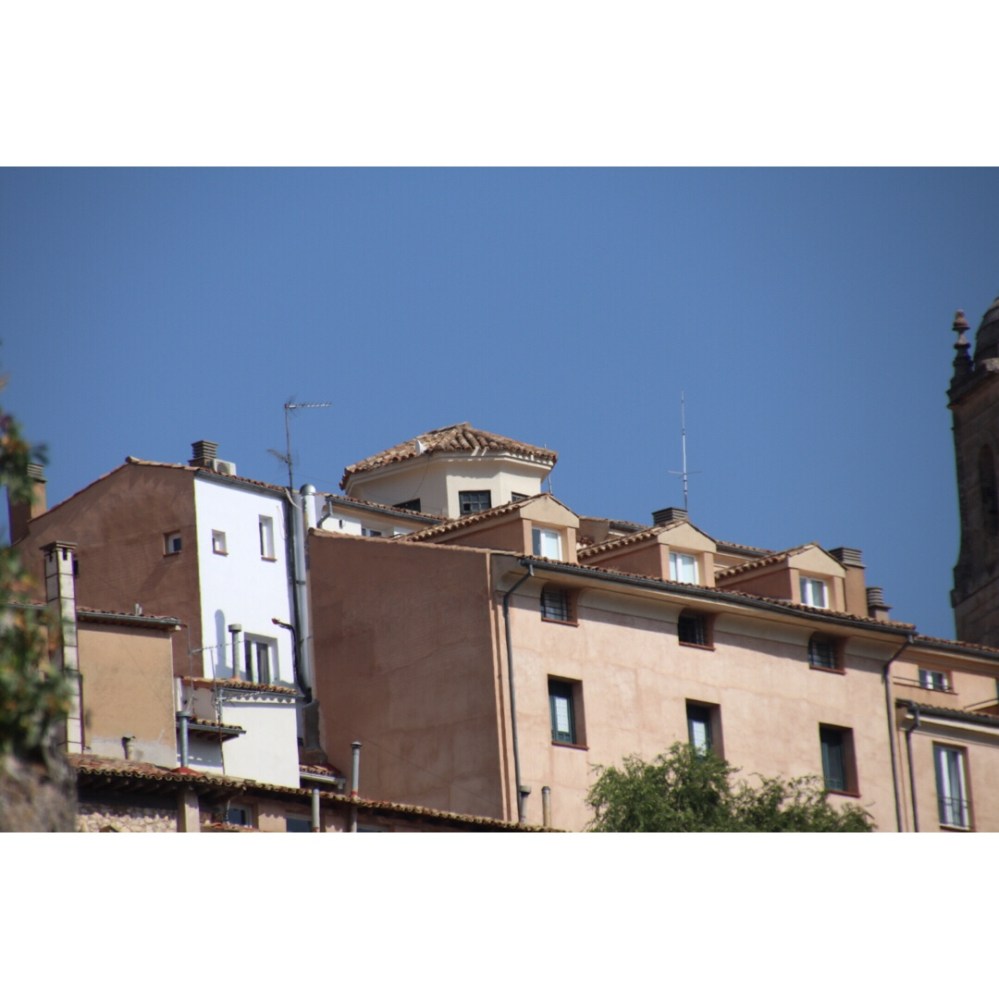


And these were the magnificent views from the room….
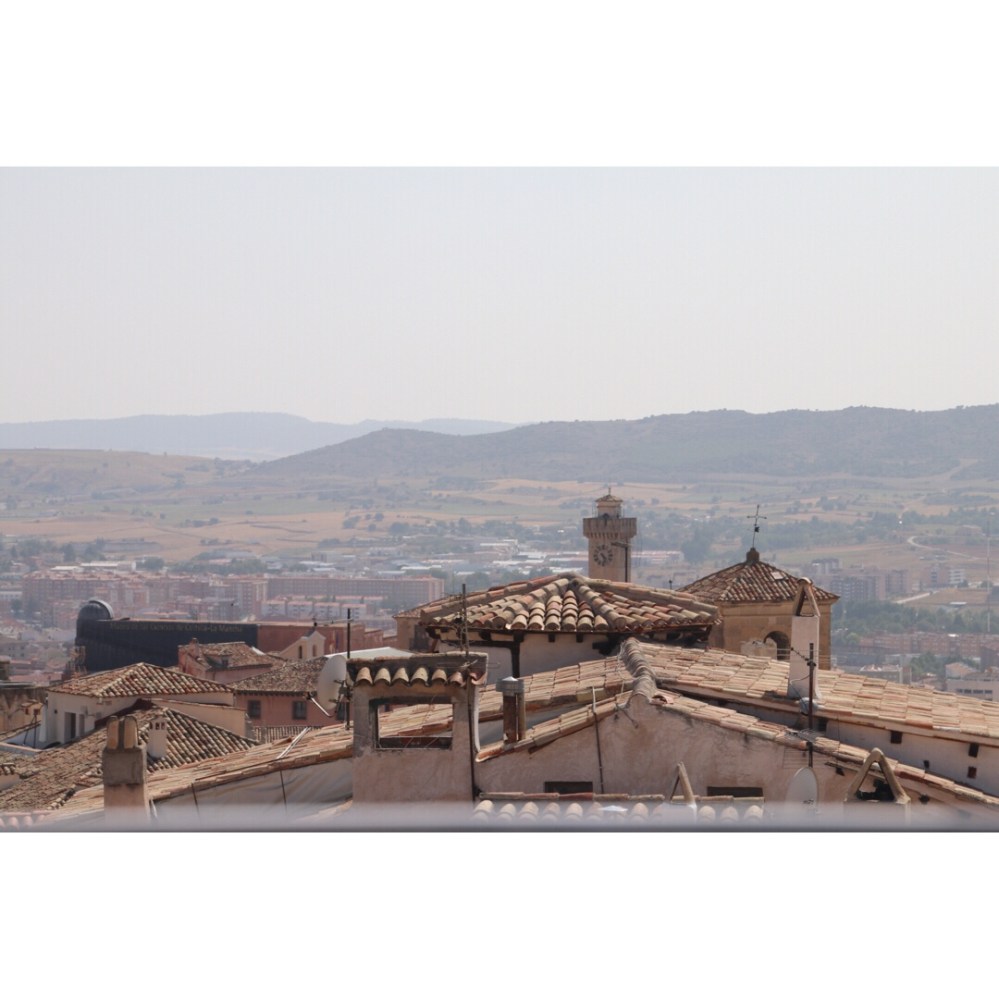
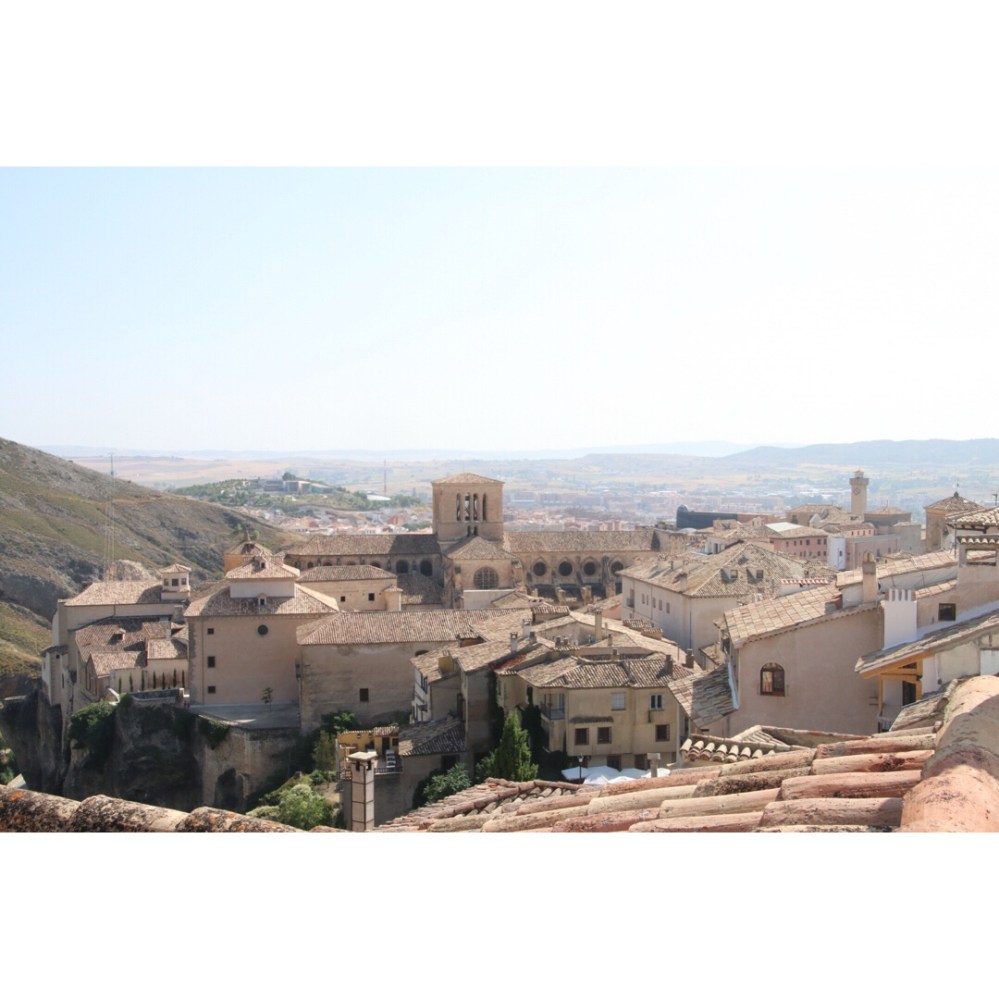

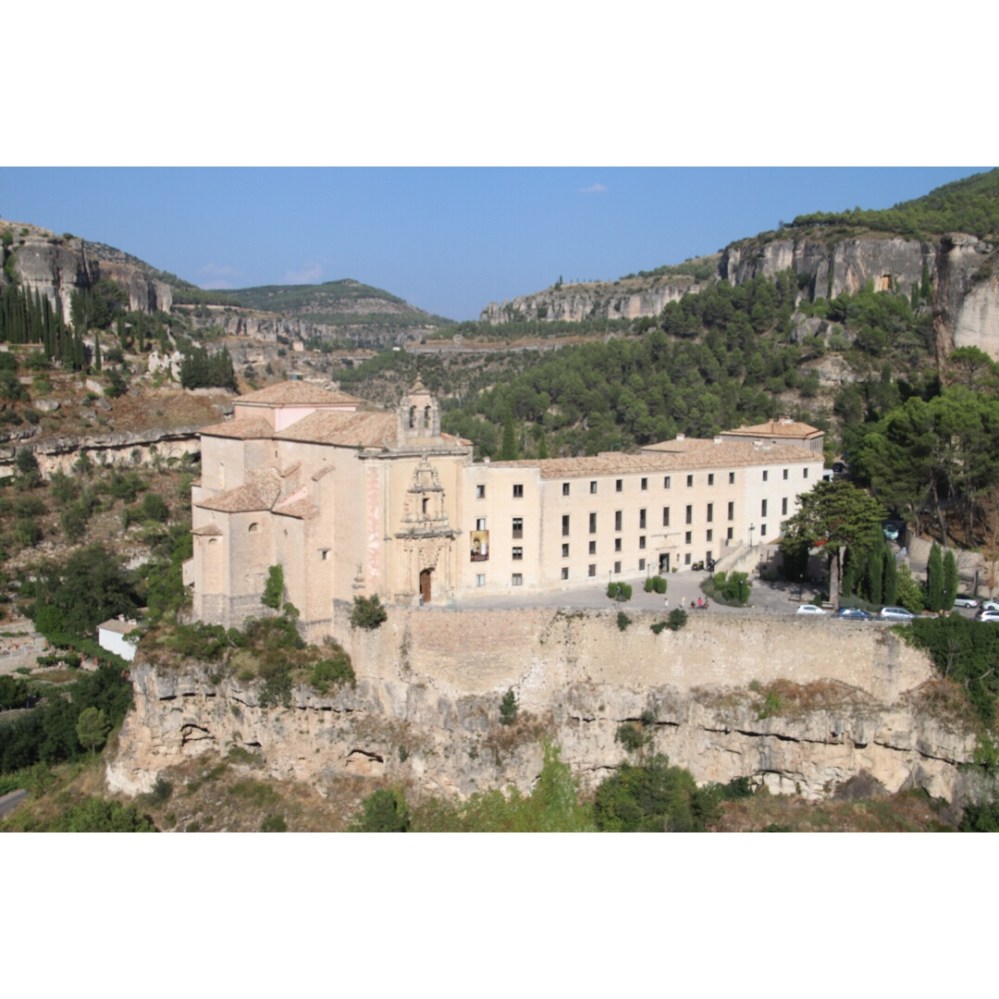
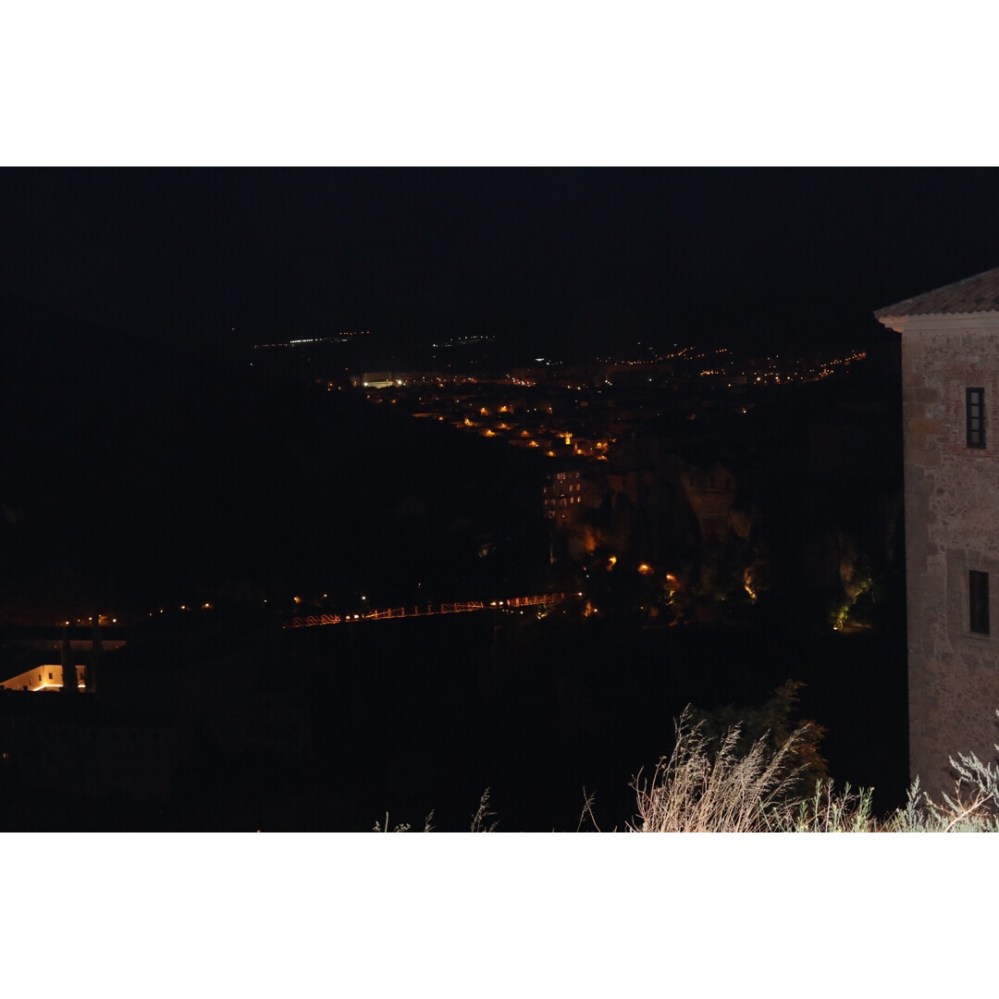
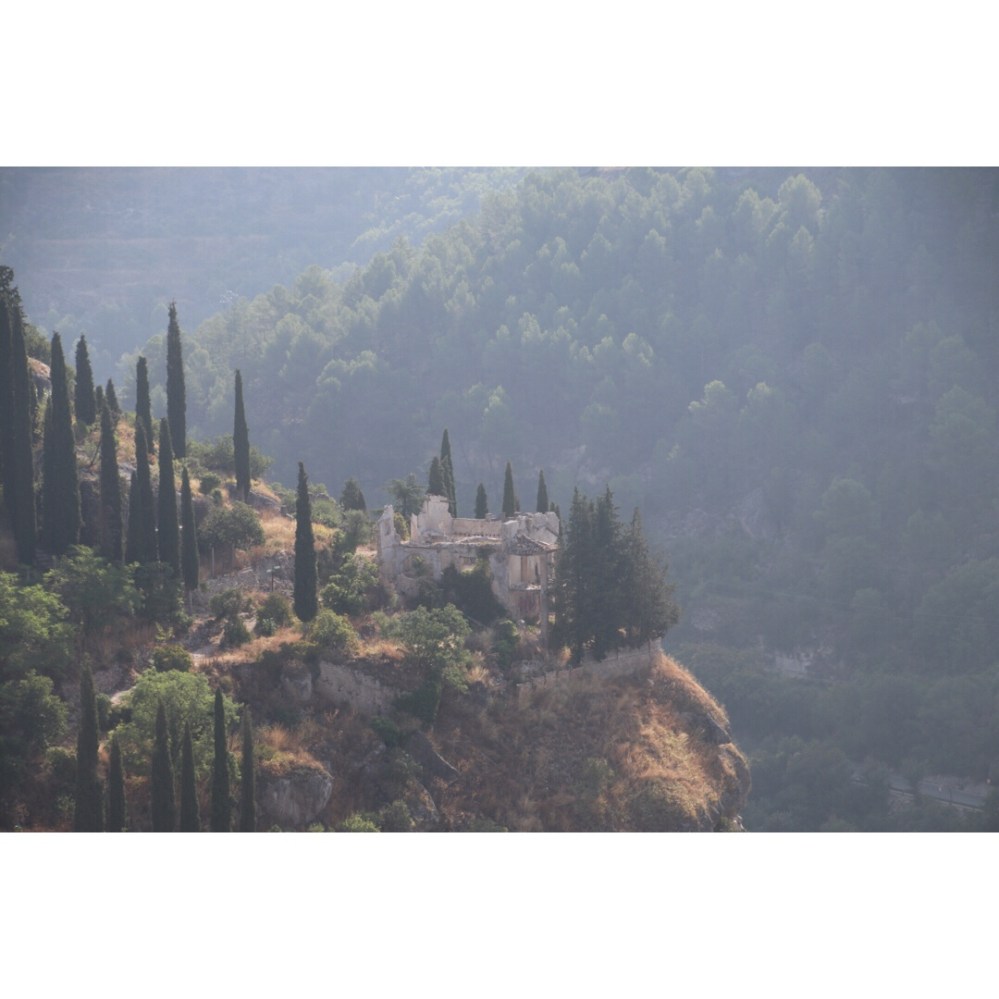
And the view from the loo…..
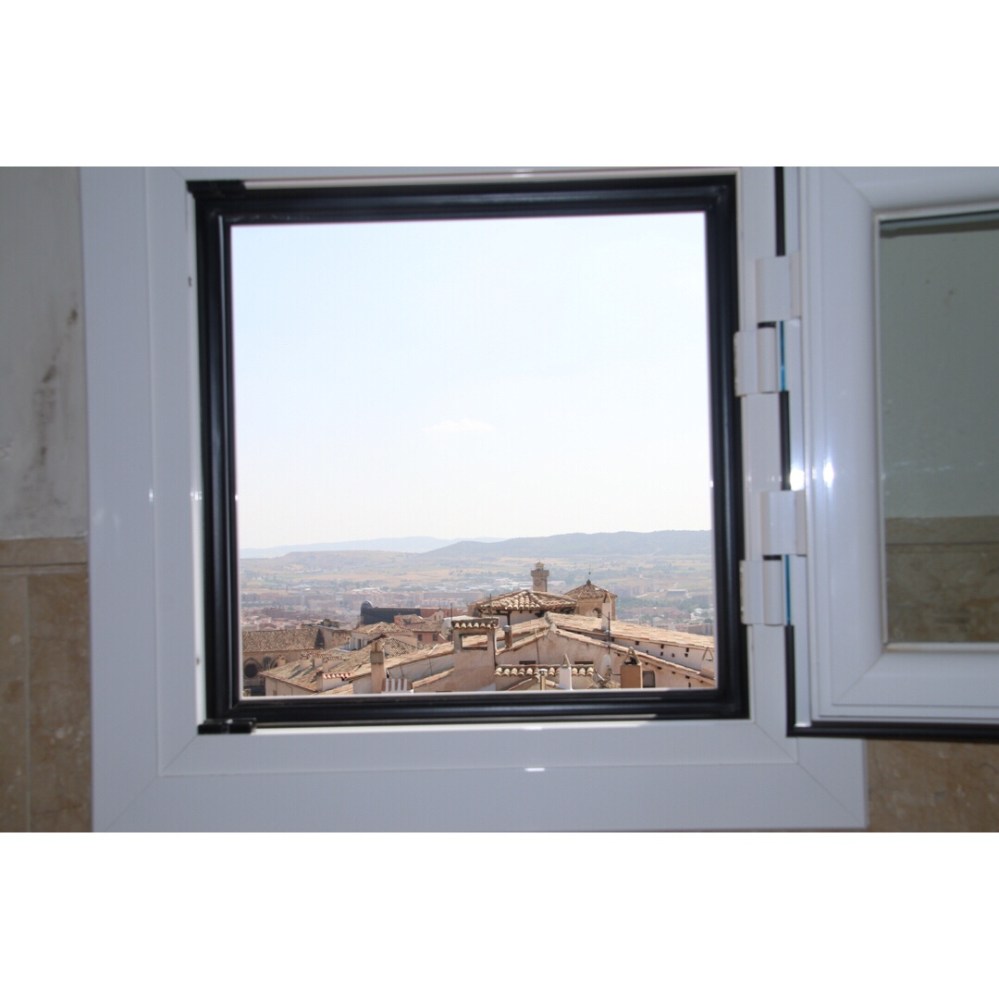
Very thirsty work all this touring…….
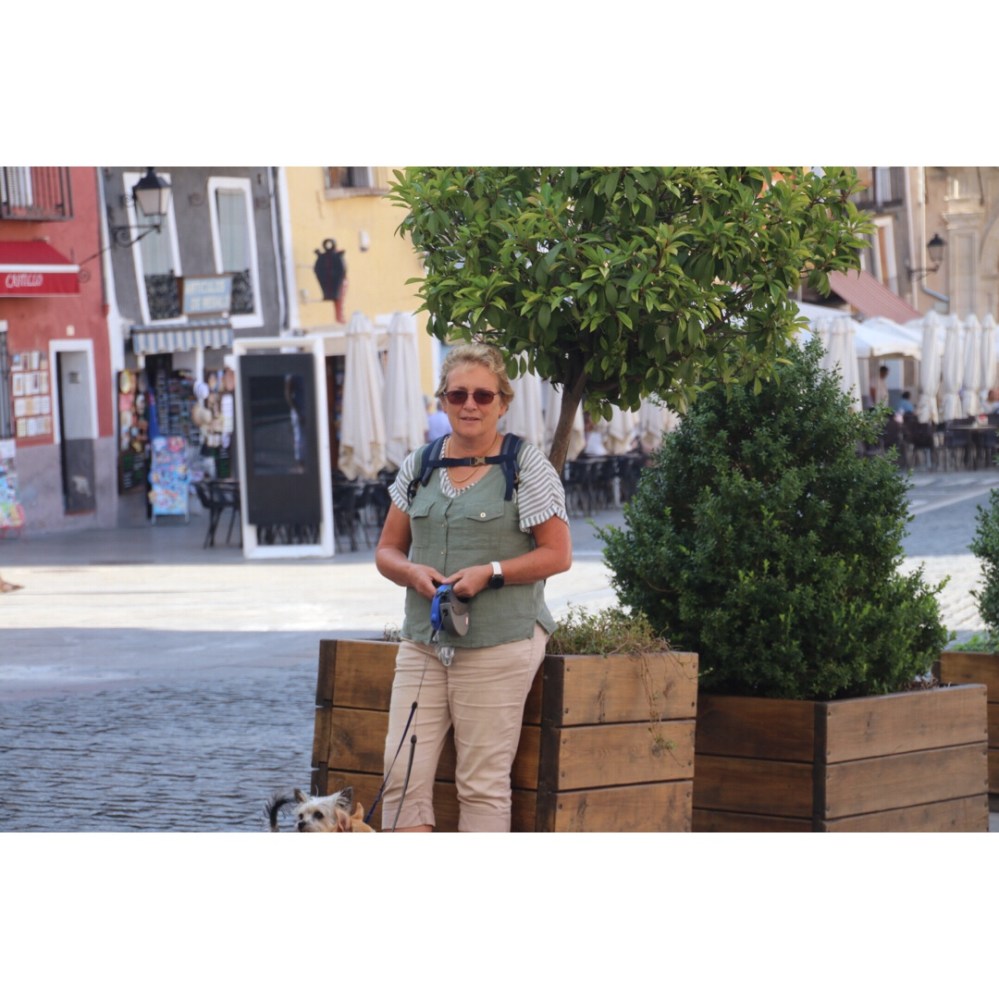
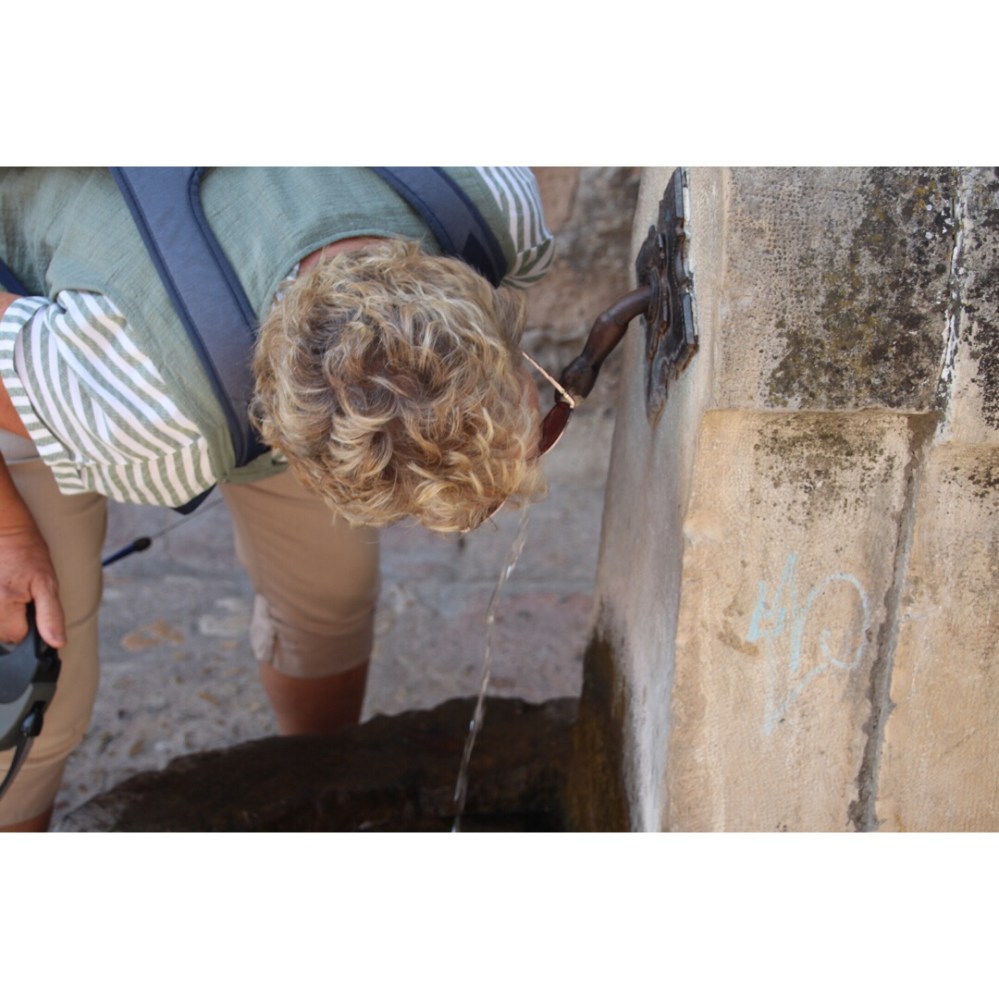

What a wonderful place to visit – another great find by the chief navigator Sheila.
 Mutts on Tour
Fabulous. Looks like a magical place.
LikeLike
It was Jim. Hard to believe the height at which these towns were built. It was just amazing and we really enjoyed exploring the old town.
LikeLike