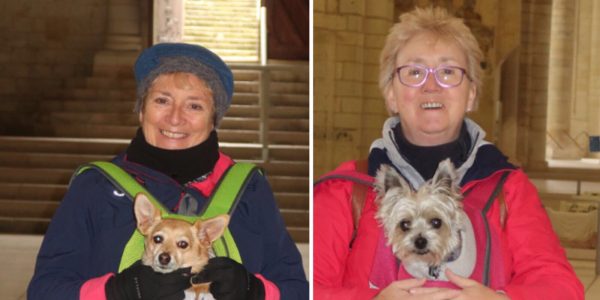
Avignon is an incredible city and just full of history. It is the capital of the Vaucluse and the Cotes de Rhône and of course was the seat of the popes and is famous for the song and dance “Sur le Pont d’Avignon”.
The historic city centre, the Popes’ Palace, all the episcopal buildings and the Saint Bénézet Bridge are listed as world heritage sites by UNESCO. The historic centre radiates from the Place de l’Horloge which is where we are staying. The Hotel de Ville is on this square and was built between 1845 and 1851 over a former cardinal’s palace of which it has kept the old fortified tower, transformed into a belfry in the 15th century with clock and Jacquemart. Next to it, the theatre house, also from the 19th century, houses the Avignon opera and, all the way at the top, the delightful Belle Époque style carrousel still turns.
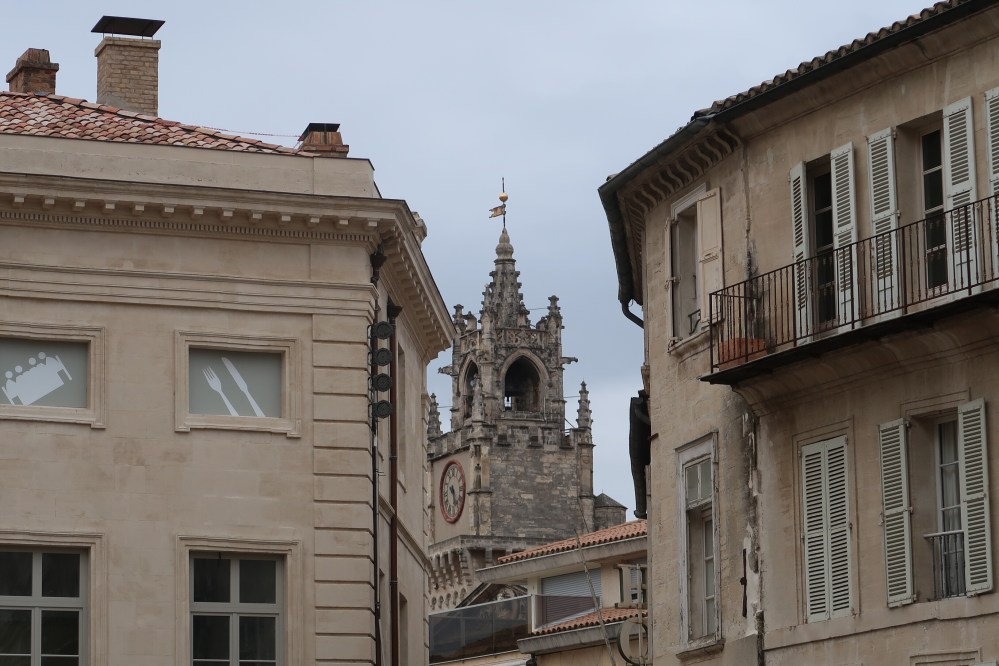
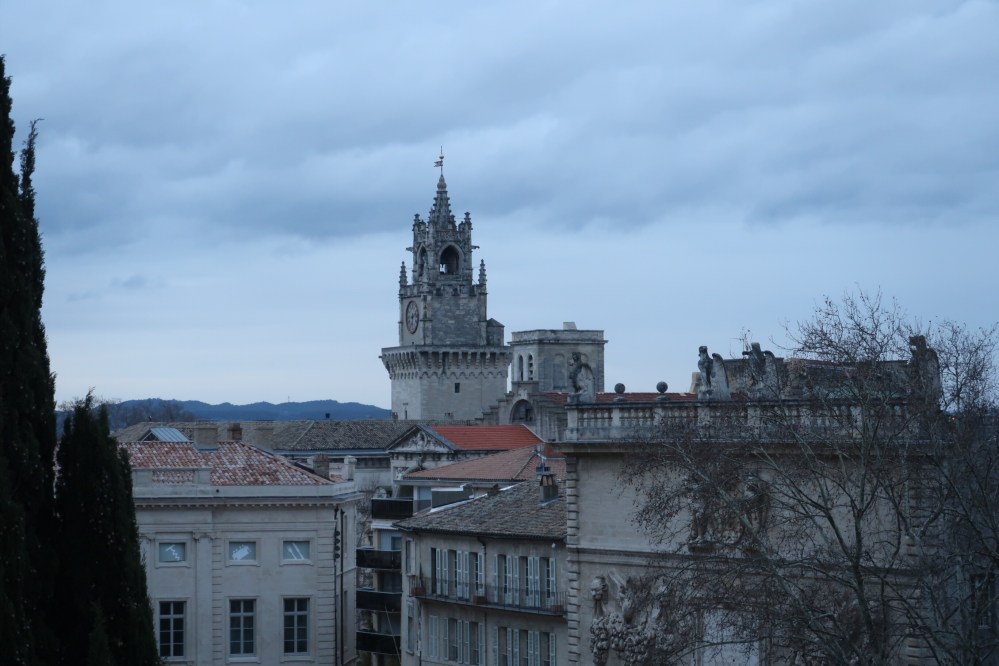
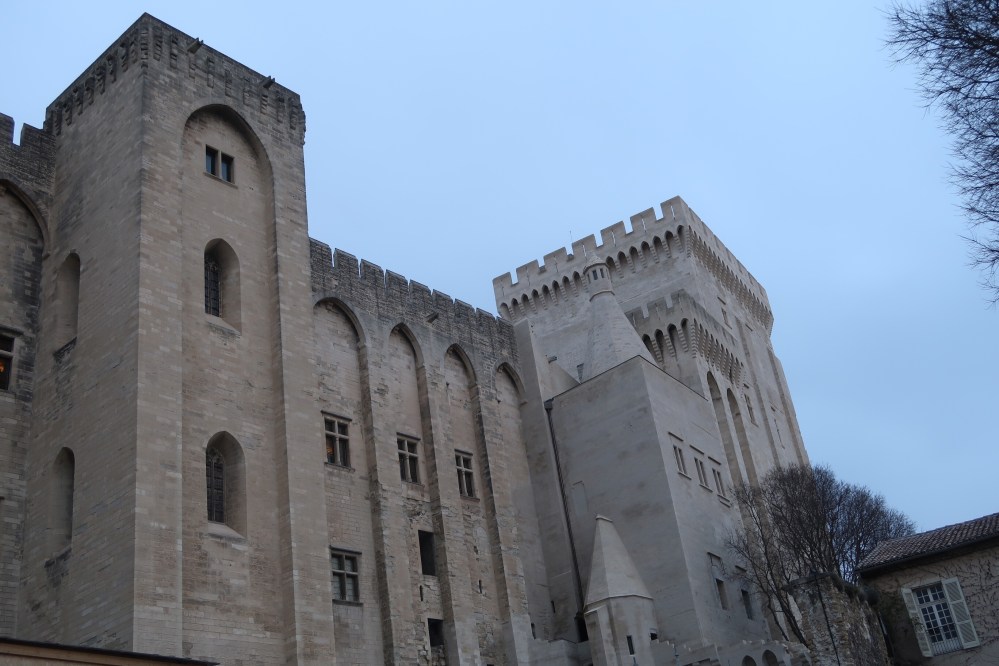
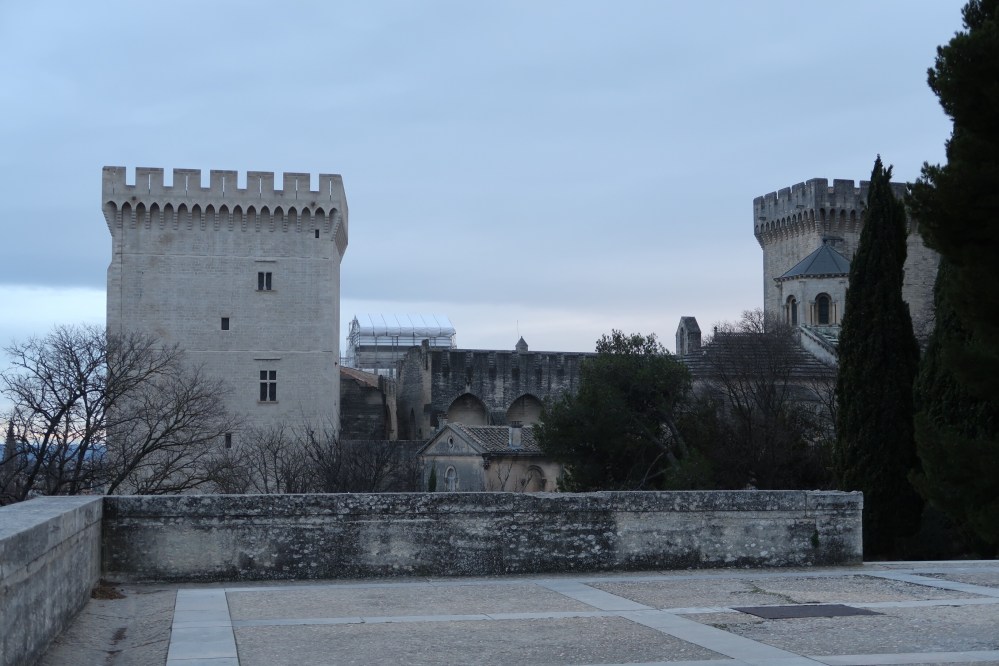
The Popes’ Palace, emblem of the city and awe-inspiring monument to the importance of Avignon in the Christian world of the Middle Ages. It was built in the 1300s, mainly by two popes – the austere Benedict XII and his successor, the much less ascetic Clement VI, – the palace would become the biggest gothic edifice in all of Europe.
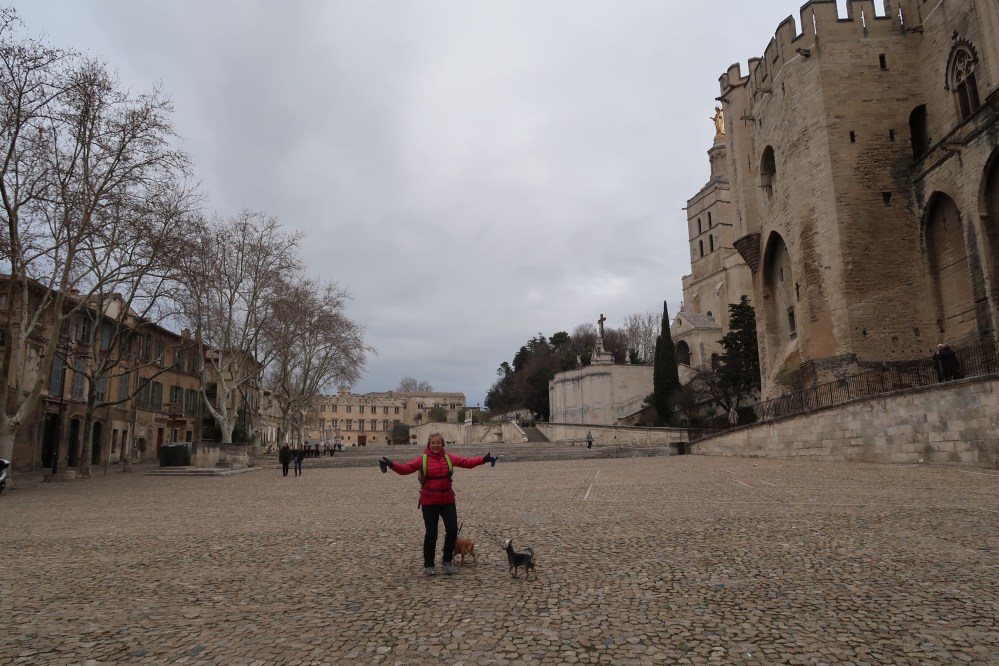
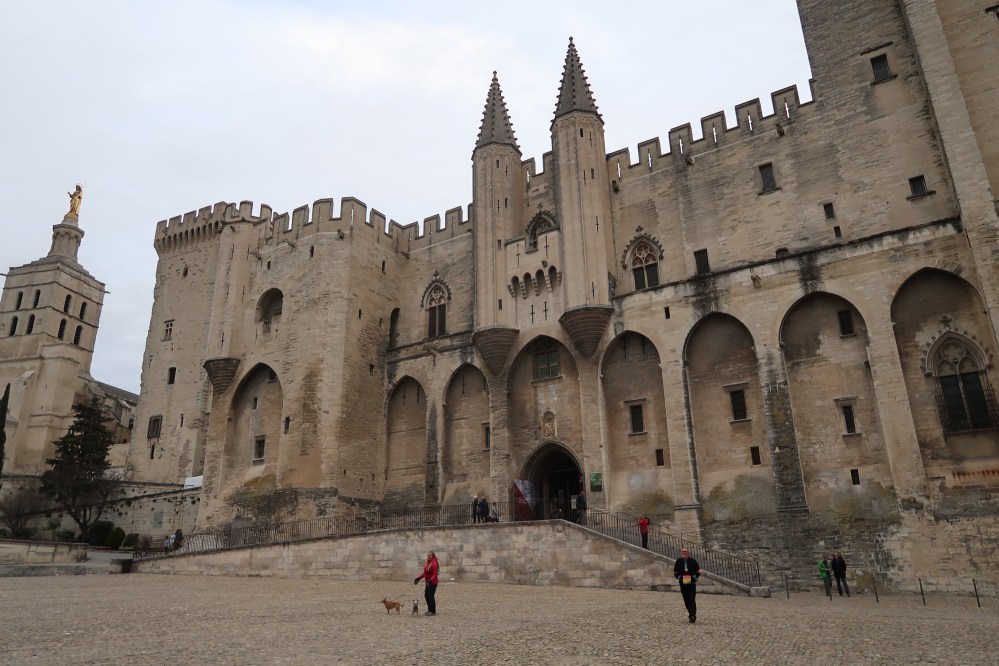
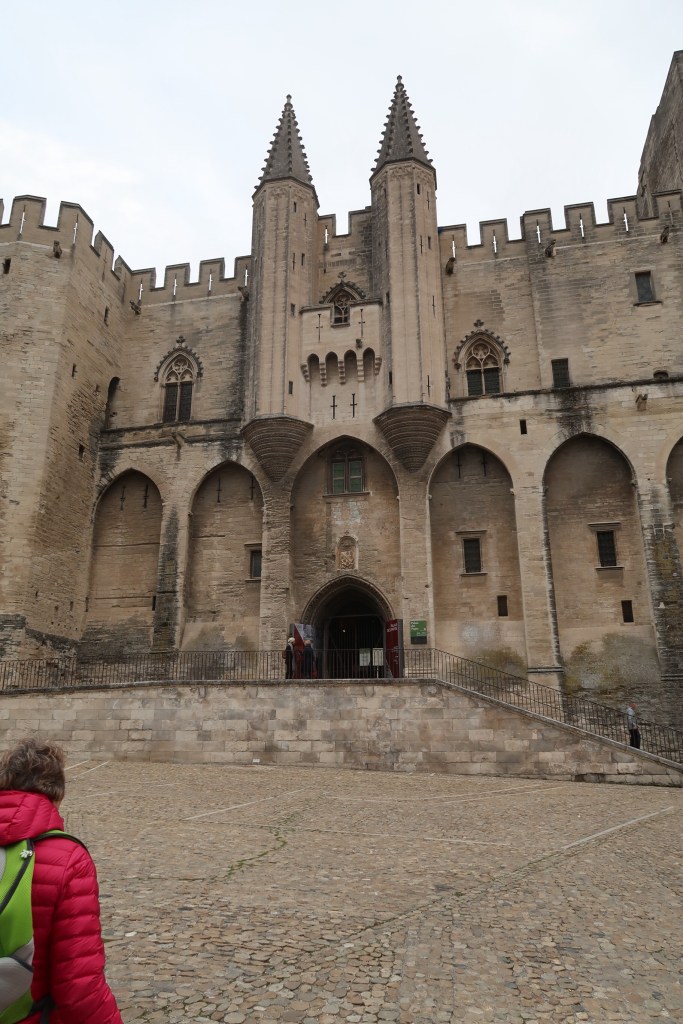
Next to the palace, the Notre-Dame des Doms Cathedral, built in 1150 in a Provençal Romanesque style, was put on the first very list of historic monuments in 1840. From the top of its bell tower, the statue of the Virgin Mary, entirely gilded in gold, 6 metres high and weighing 4500 kilos, blesses and protects the city.
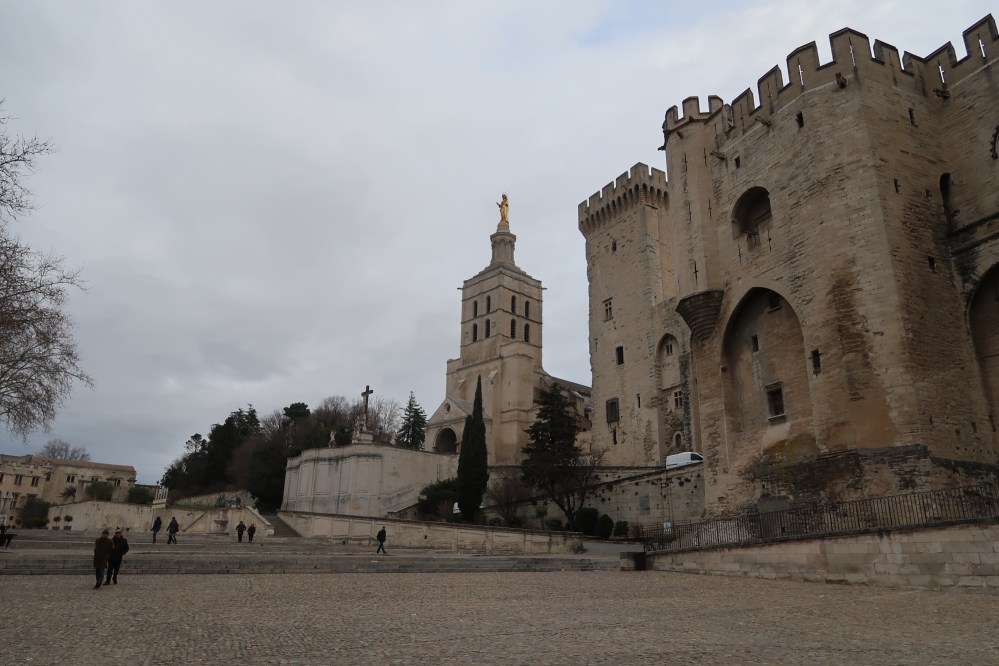
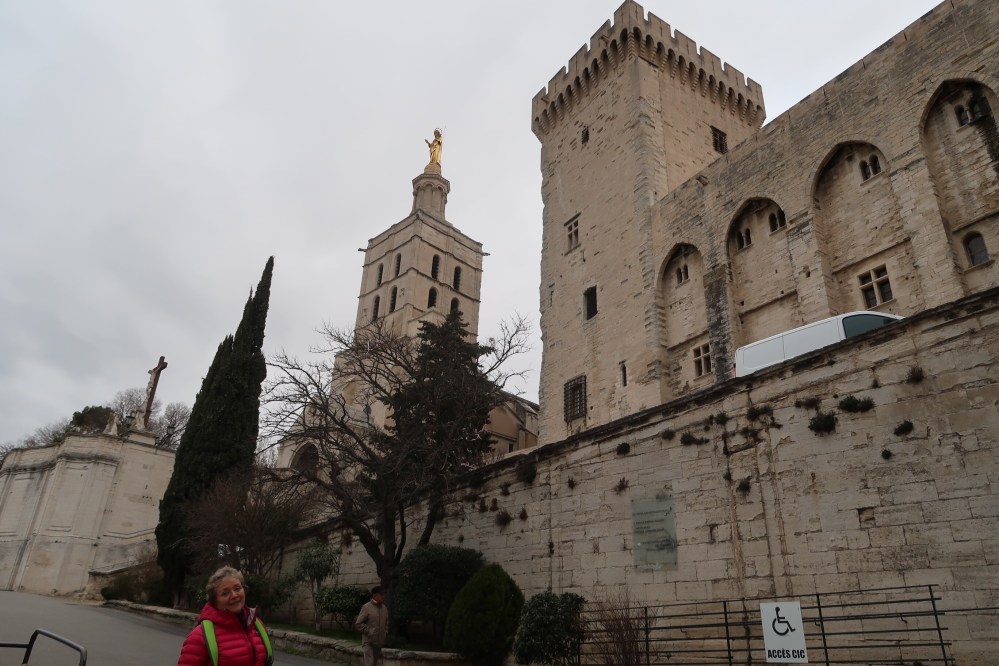
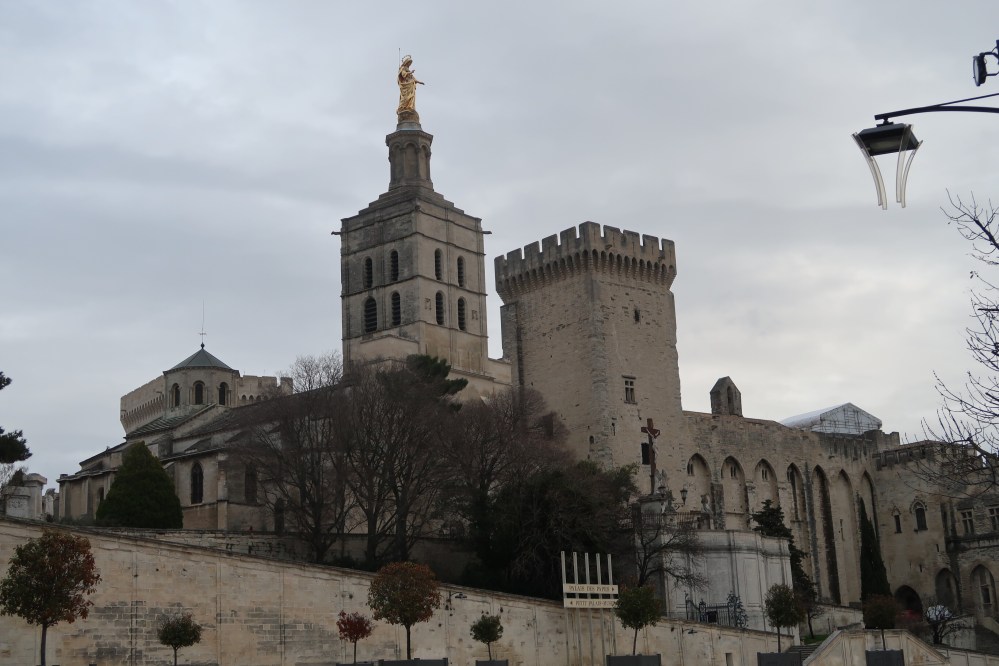
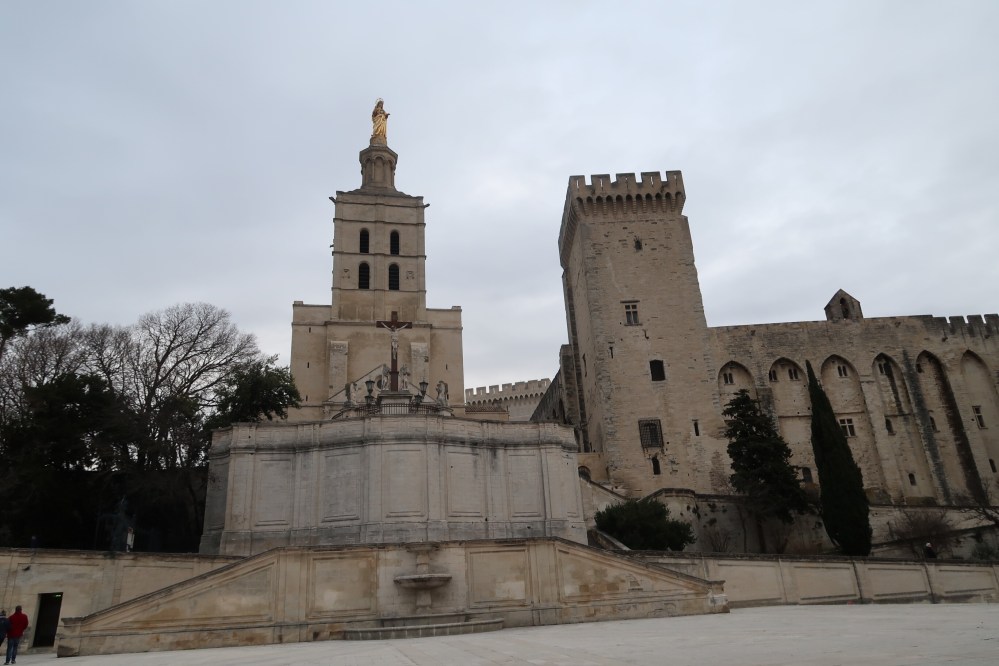
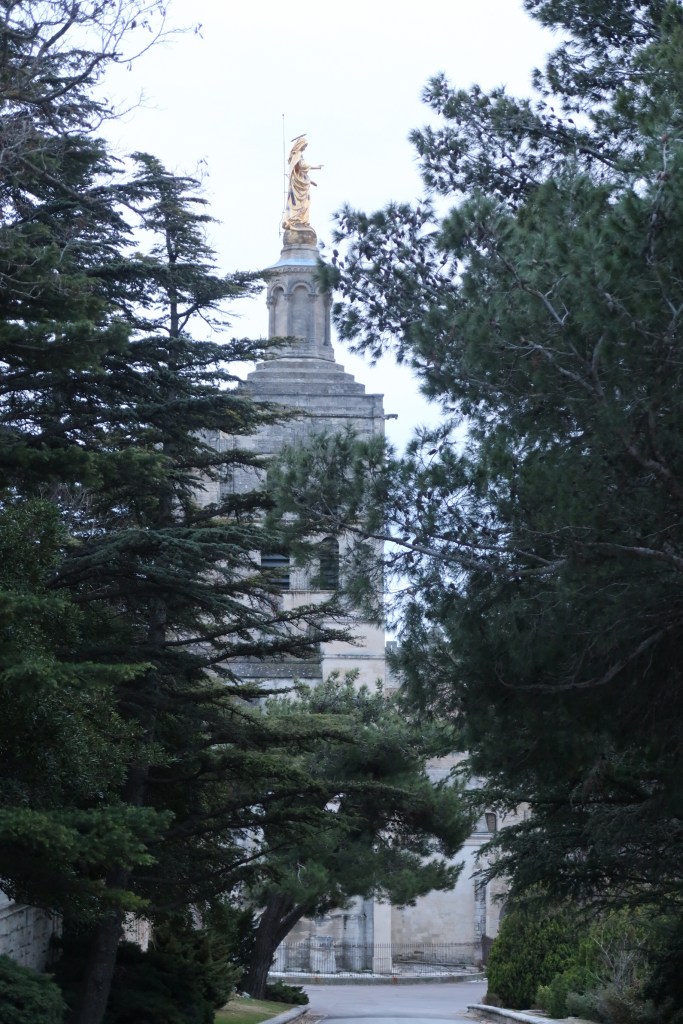
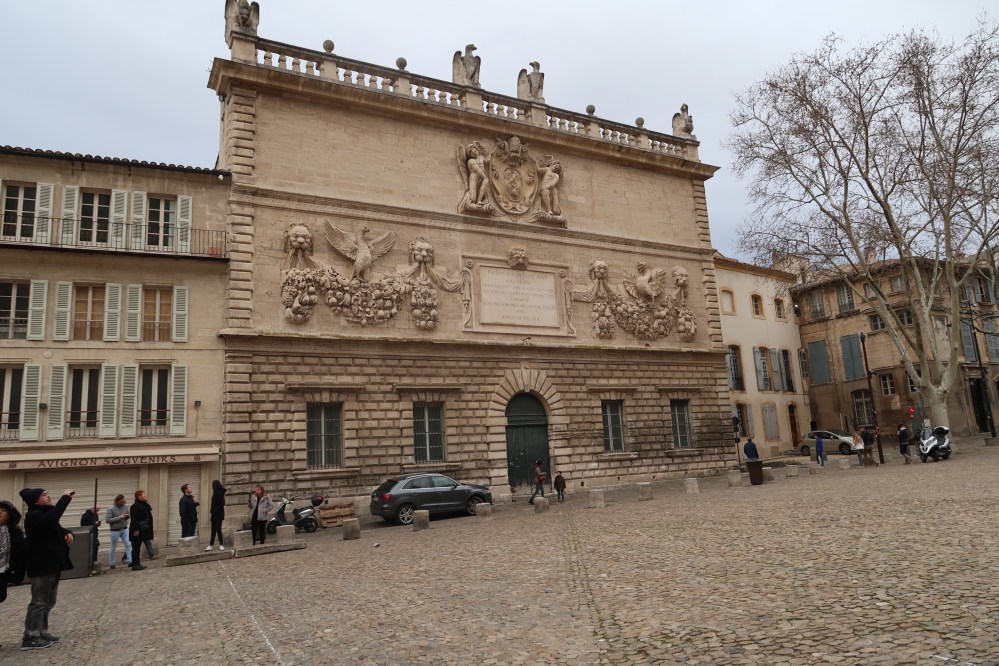
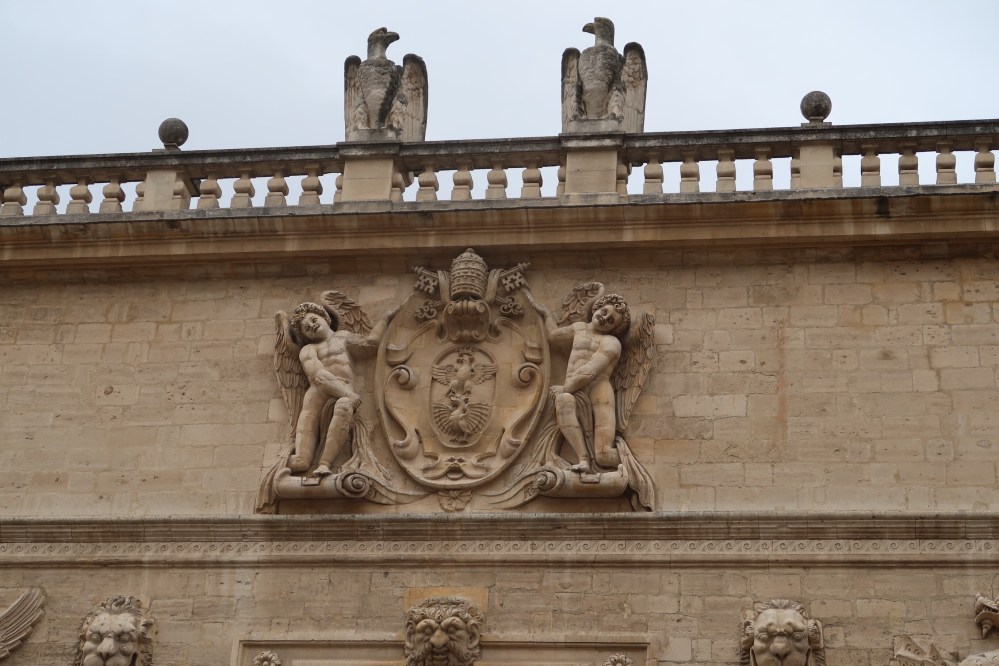
Across from the palace, dragons and eagles stand guard over the imposing edifice of the Hôtel des Monnaies, once the city’s mint. And not far away, the Petit Palais, a former cardinal’s residence turned into a museum, houses an impressive collection of Italian primitive art, old sculptures by Avignon artists and paintings from the Avignon School.
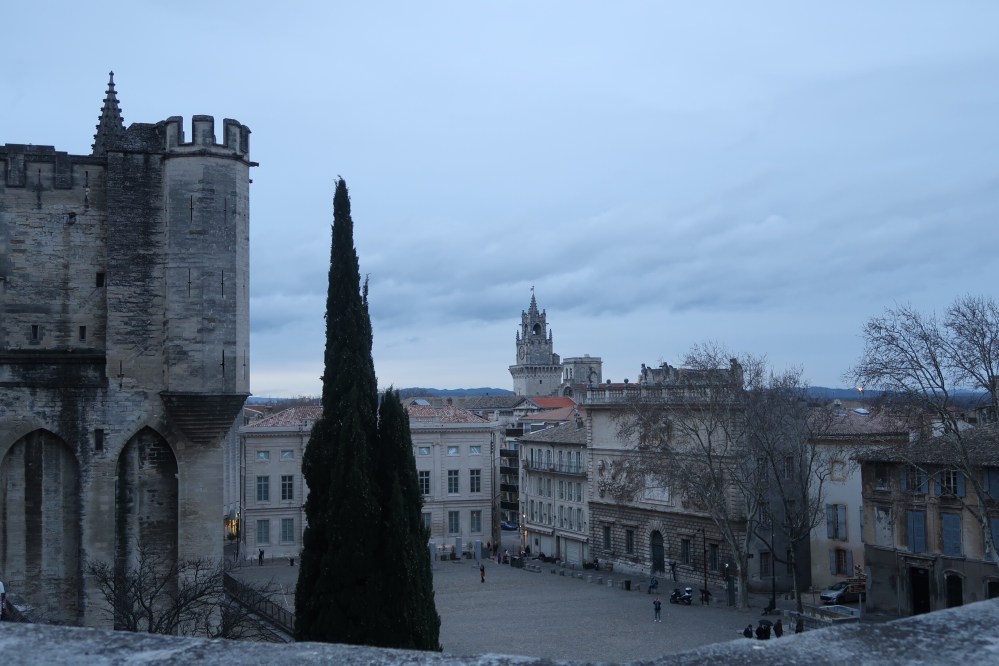
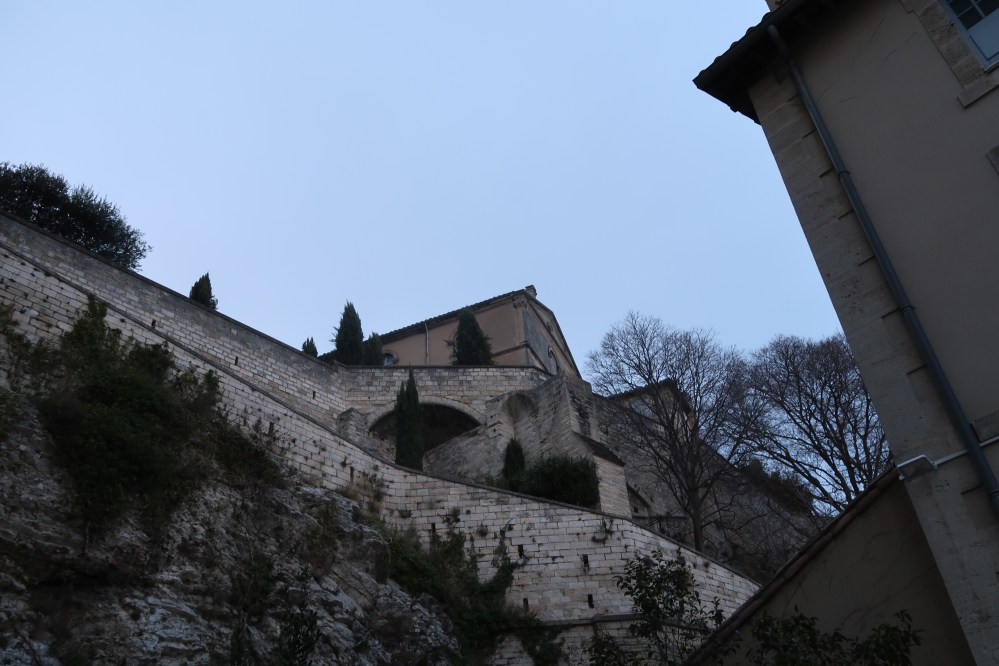
From the Rocher des Doms you have wonderful panoramic views over the entire city, its tiled roofs and bell towers and over to Villeneuve-les-Avignon and all the surrounding areas.
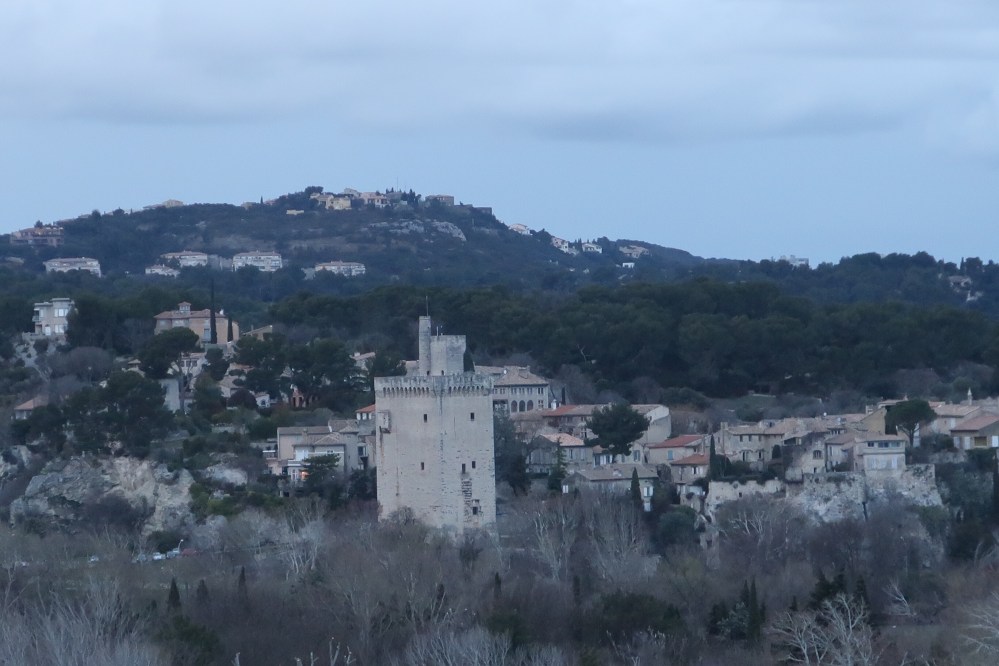
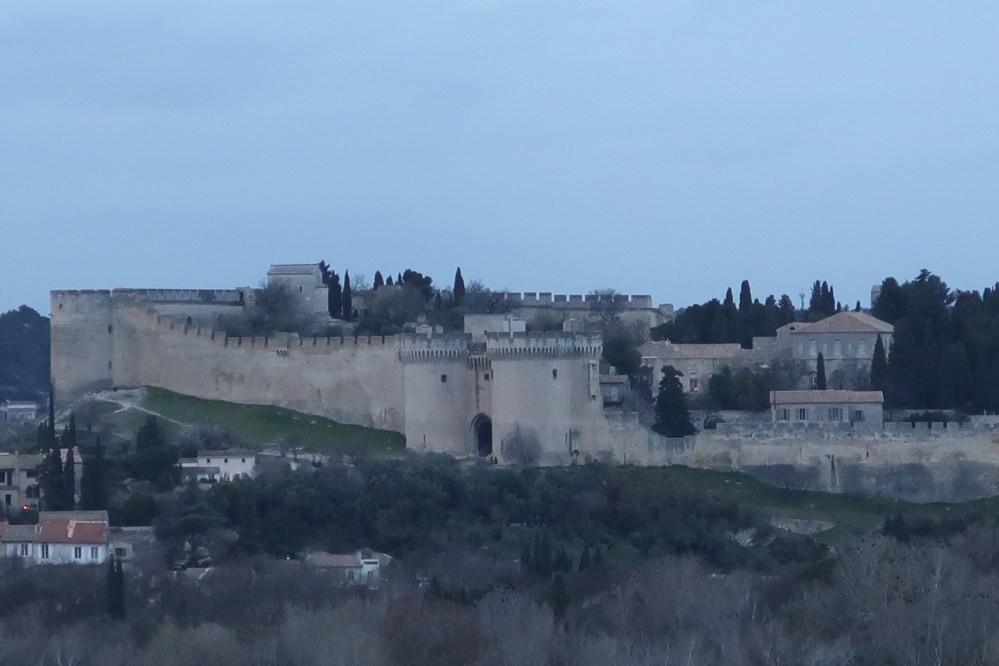
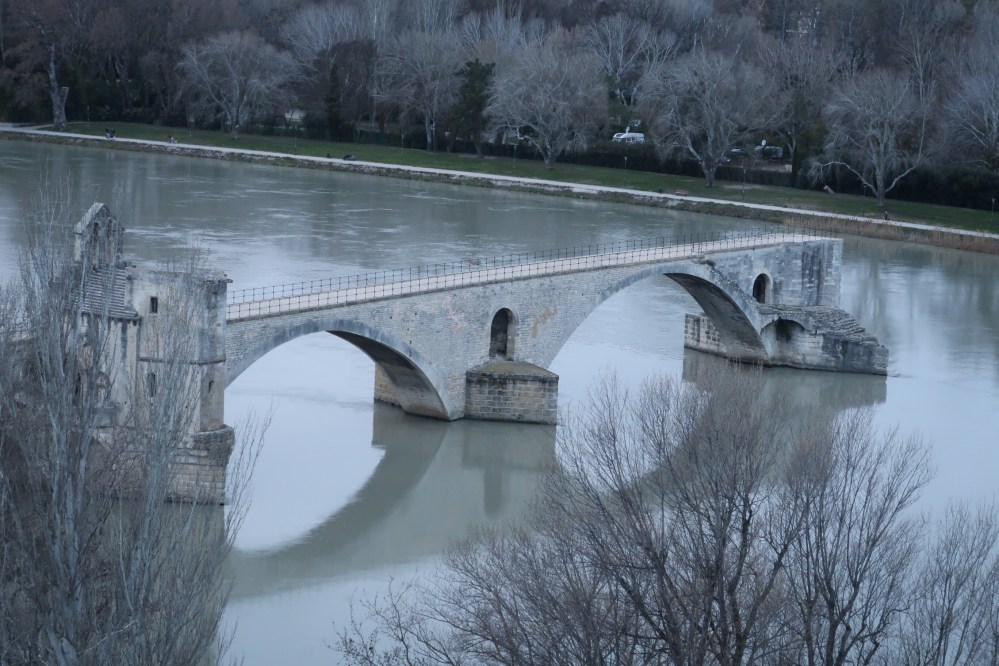
And then of course there is the famous Pont d’Avignon – “Sur le Pont d’Avignon” is a French song about the Pont d’Avignon. The bridge is officially Pont St. Bénézet but it is better known as the Pont d’Avignon on which one dances, as the song says. And after all these years singing this song in French I cant believe that the dance actually took place under the bridge and not on the bridge (“Sous le Pont d’Avignon”, not “Sur”) 🙈

For those of you not familiar with the song and dance [Sheila hadn’t a clue what I have been singing all the way down from Calais 🤨] The dance starts out with everyone in pairs and they dance around each other. When the chorus is done you stop in front of your partner and traditionally the male will bow on the first part then tip his hat on the second. Then after the chorus finishes again it is the girl who curtsies to one side then the other. And the words are:
- Sur le Pont d’Avignon
- On y danse, On y danse
- Sur le Pont d’Avignon
- On y danse tous en rond
- Les beaux messieurs font comme ça
- Et puis encore comme ça.
- Les belles dames font comme ça
- Et puis encore comme ça.
Go on how many of you remember learning that song in school? 😝😆
A bridge spanning the Rhône between Villeneuve-lès-Avignon and Avignon was built between 1177 and 1185. This early bridge was destroyed forty years later during the Albigensian Crusade when Louis VIII of France laid siege to Avignon. The bridge was rebuilt with 22 stone arches. It was very costly to maintain as the arches tended to collapse when the Rhône flooded. Eventually in the middle of the 17th century the bridge was abandoned. The four surviving arches on the bank of the Rhône are believed to have been built in around 1345 by Pope Clement VI during the Avignon Papacy. The Chapel of Saint Nicholas sits on the second pier of the bridge. It was constructed in the second half of 12th century but has since been substantially altered. The western terminal, the Tour Philippe-le-Bel, is also preserved.
Nice one Eamonn, our neighbour, who highly recommended we visit this wonderful city.
I introduced Sheila to Couscous tonight in a traditional Moroccan restaurant – she loved it!!
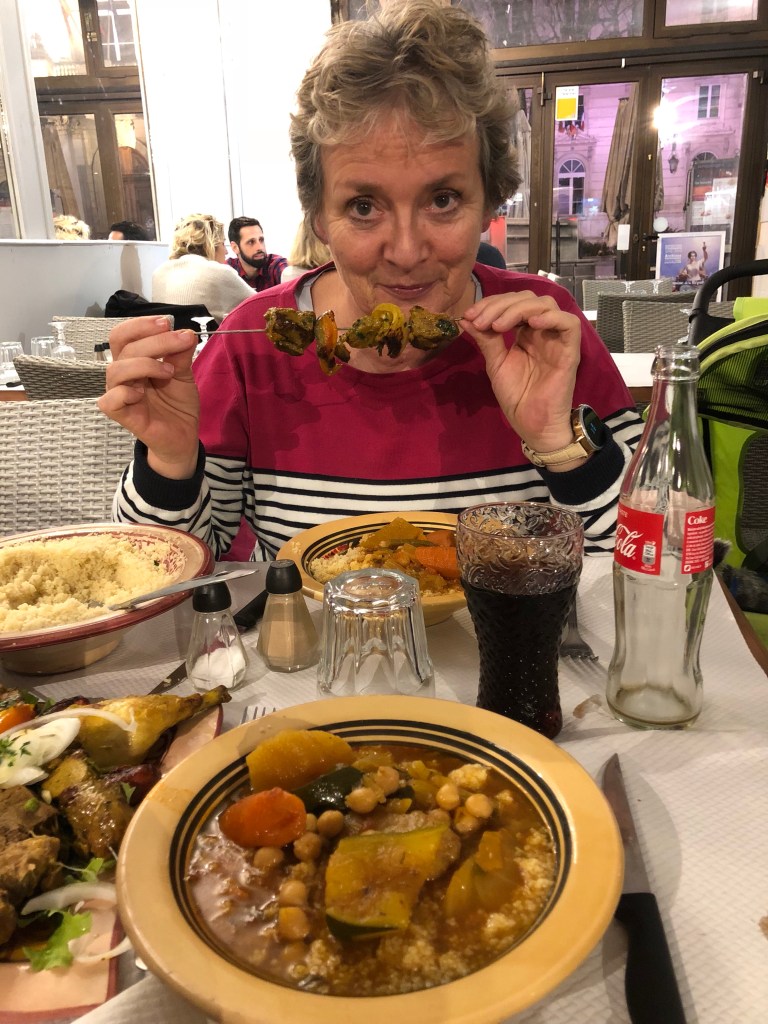
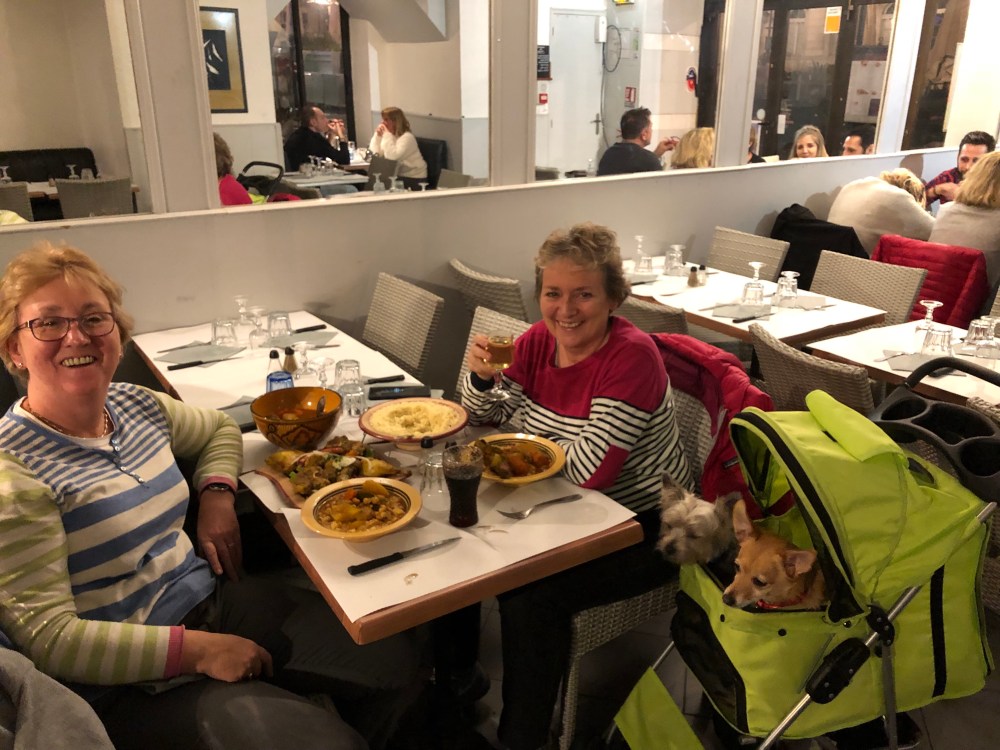
So now we are both stuffed and off to bed as we’ve to be up and at it early again in the morning as we have lots to see tomorrow before we head to Spain.
 Mutts on Tour
I remember that song. Had forgotten the last bit!
LikeLiked by 1 person
I remember that song well, thanks for the memories!
LikeLiked by 1 person