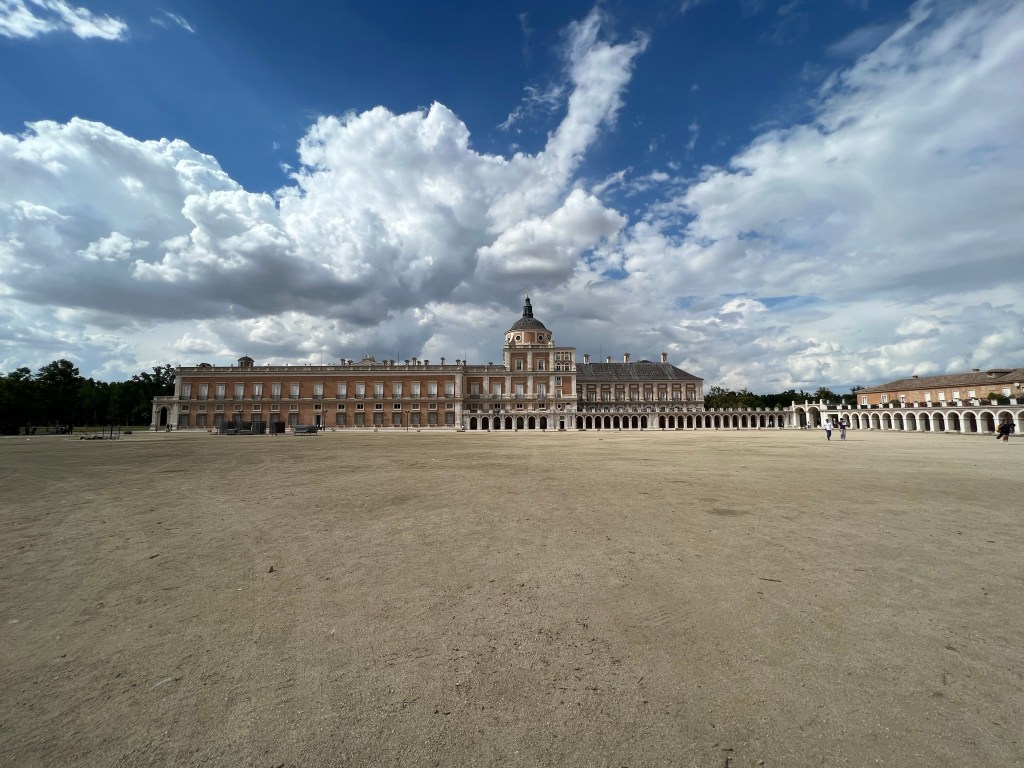
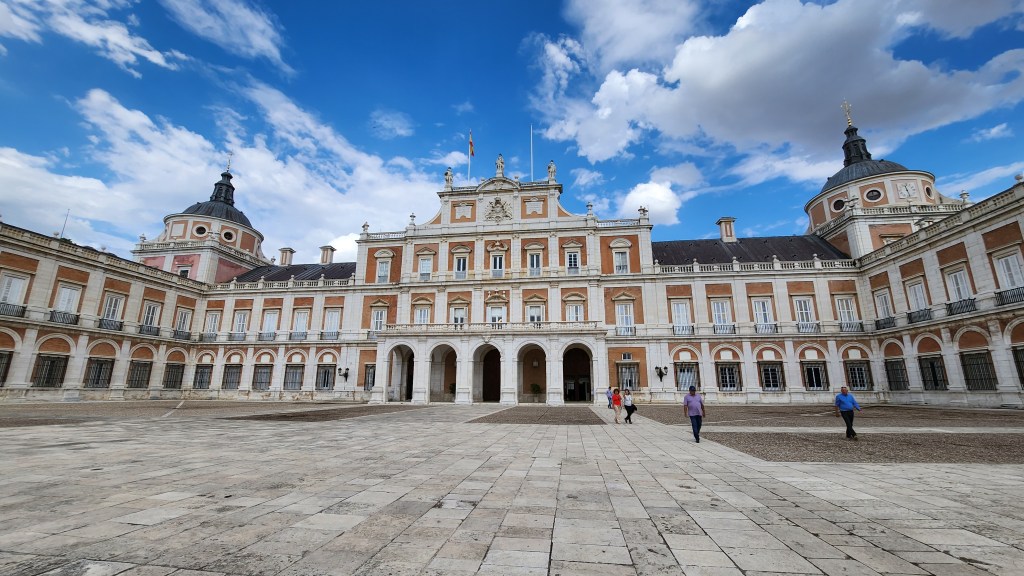
The Royal Palace of Aranjuez is one of the official residences of the Spanish royal family. It is located in the town of Aranjuez (just south of Madrid), Spain. Built in the 16th century as a royal hunting lodge, by order of Philip II. Under his reign it became one of four seasonal seats of the court along with Rascafría, El Escorial and the Royal Alcázar of Madrid. The royal estate comprises a set of landscaped and ornate gardens and woodlands that house an extensive botanical collection.
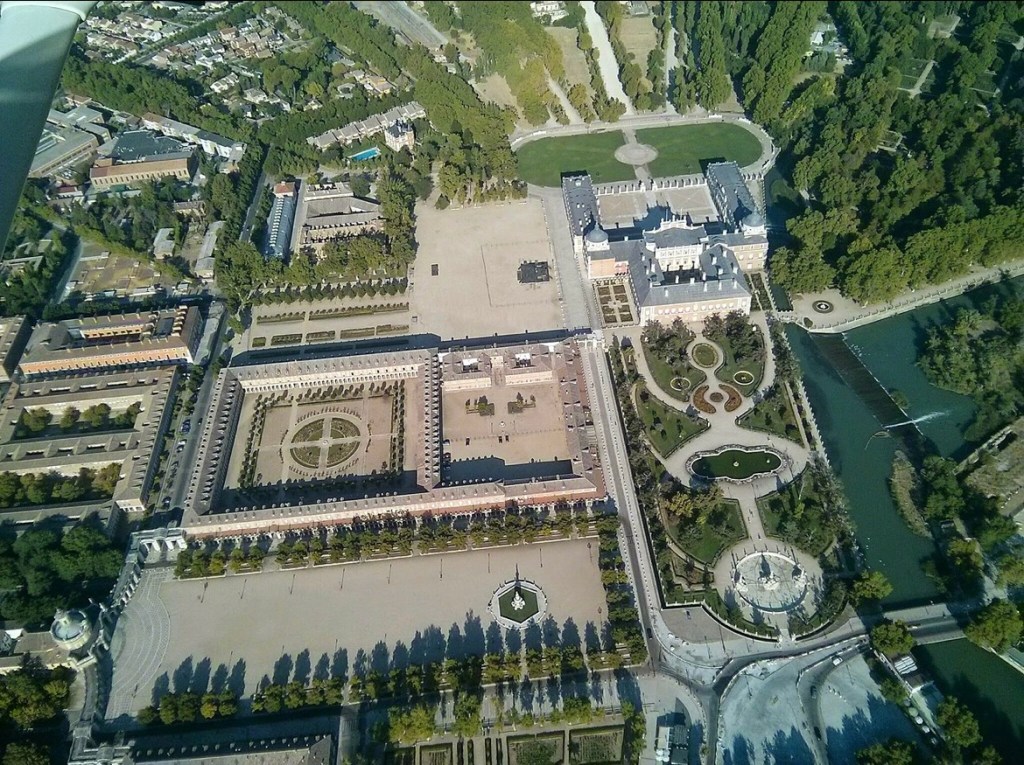
From 1977 to 1983, the palace served as a state guest house. The palace, gardens and associated buildings are part of the Aranjuez Cultural Landscape, which was declared a UNESCO World Heritage Site in 2001. Currently it houses a museum on the ground floor, the royal rooms and gardens are open to the public.
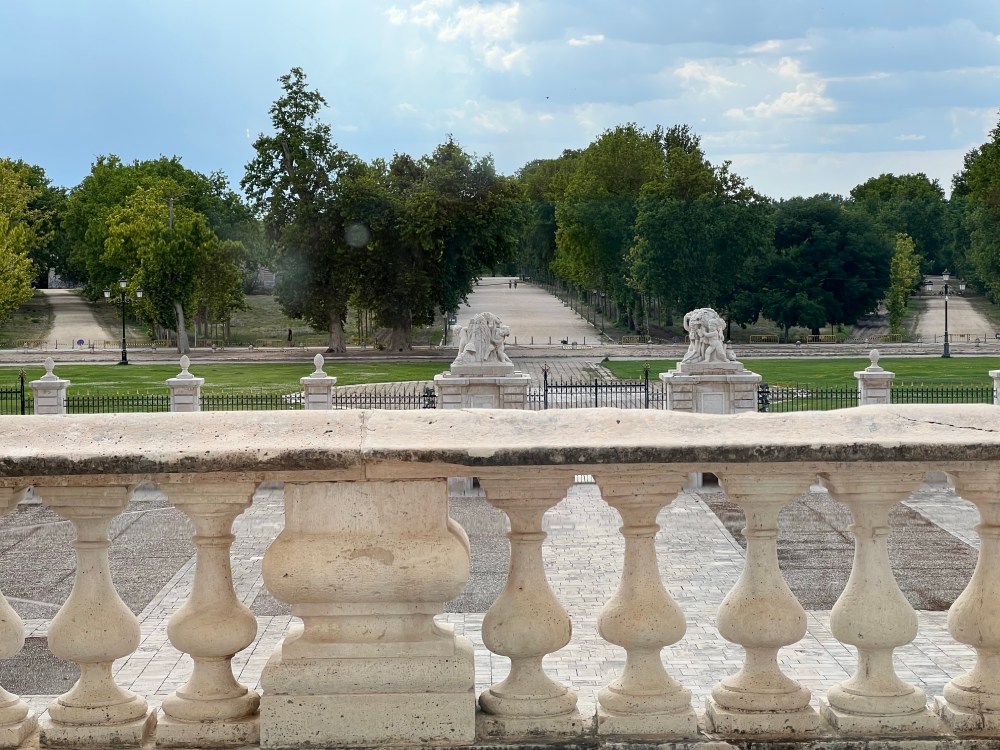
The palace is the centerpiece set of a royal estate. To the north are former potager gardens, now agricultural land intersected by geometric tree-lined “royal rides” which are now open to the public and mostly pedestrian walkways. To the east are a trident of paved roads (Reina, Principe & Infantas) along which the nobility erected family residences. To the west are a matching trident of rural tracks, one of which was the royal access road lined by barracks (now ruins). Furthest from the palace is an open area, the Raso de Estrella, the site of the original hunting lodge and now a festival ground. The original railway station was also here, before it was relocated further west of the current site.
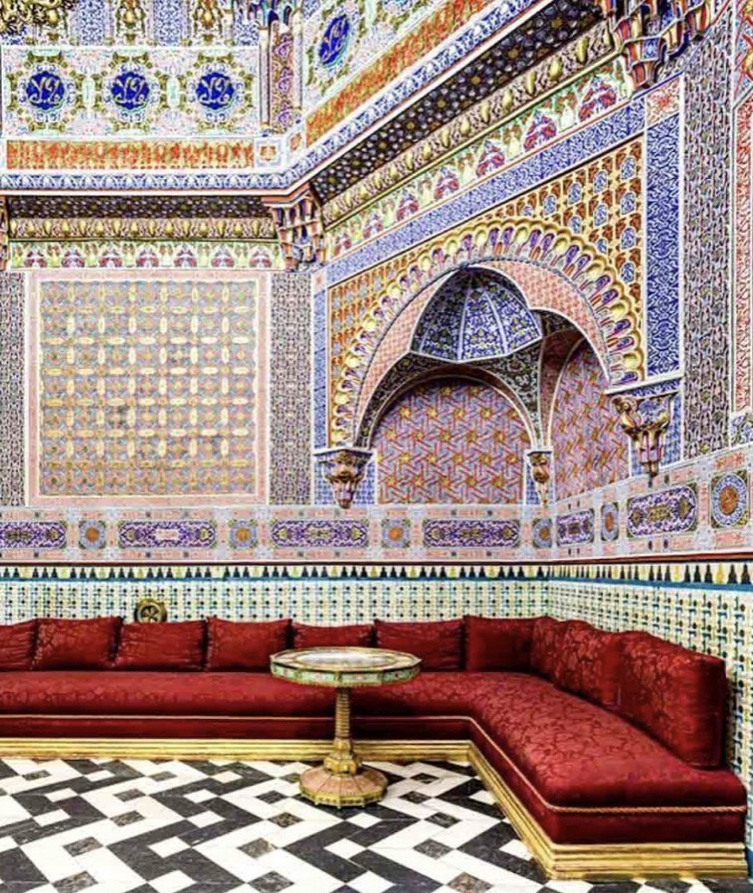
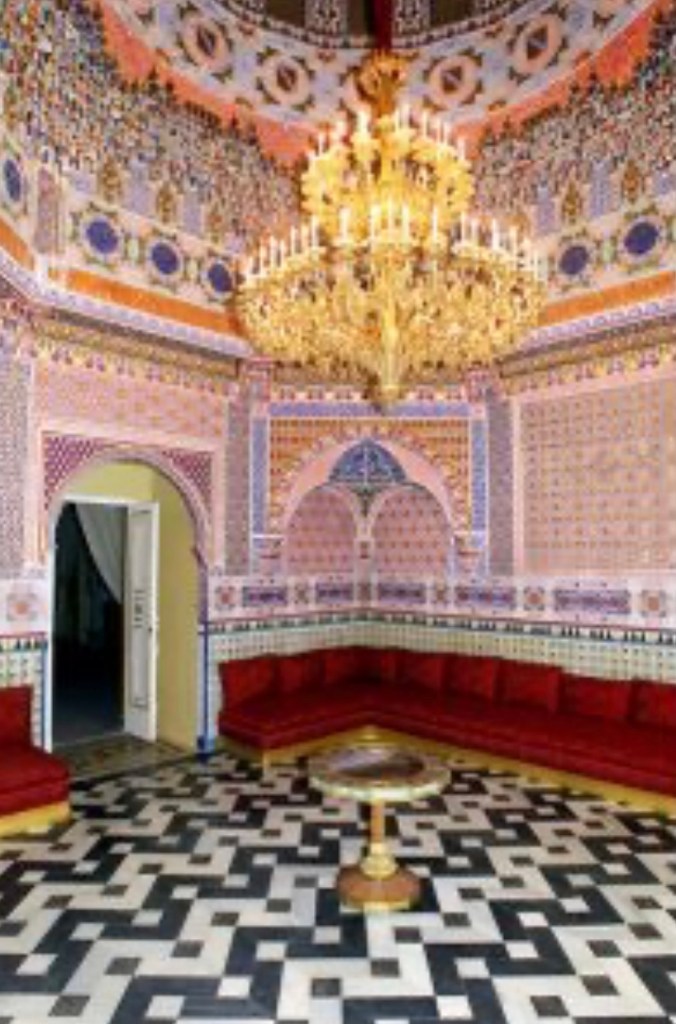
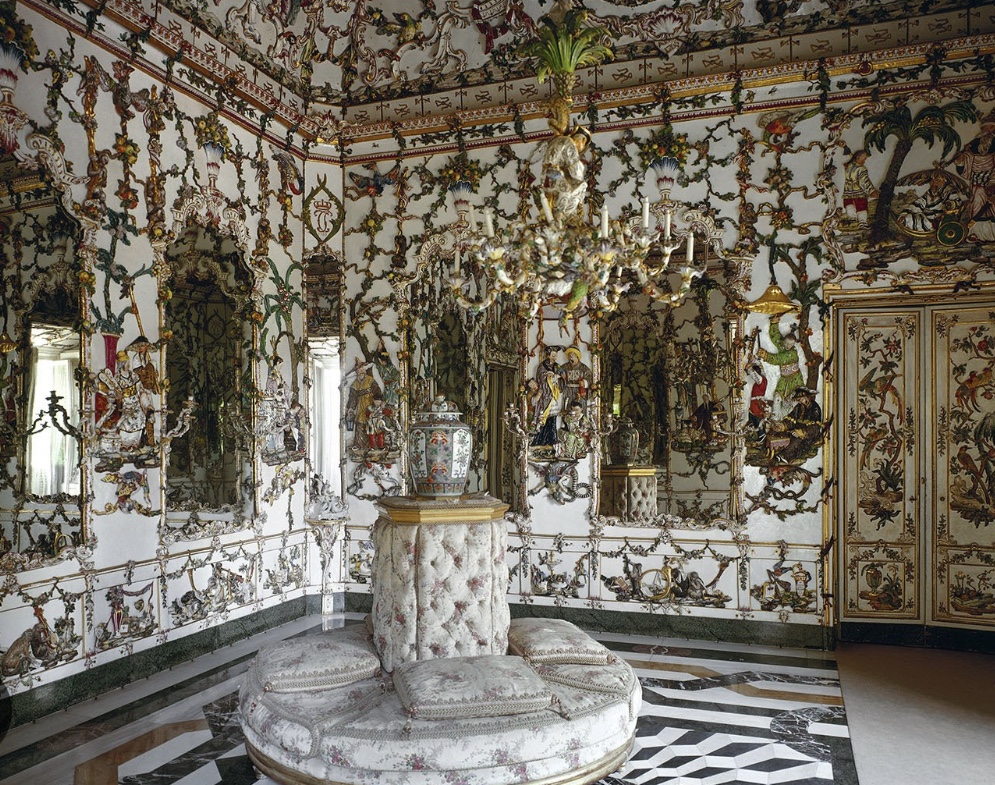
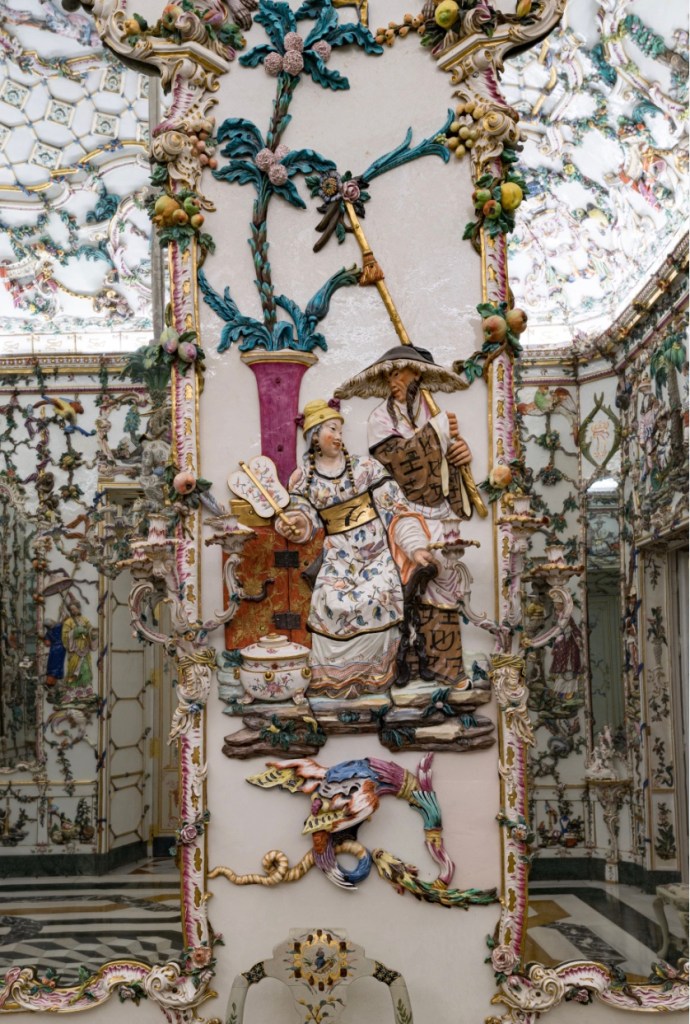
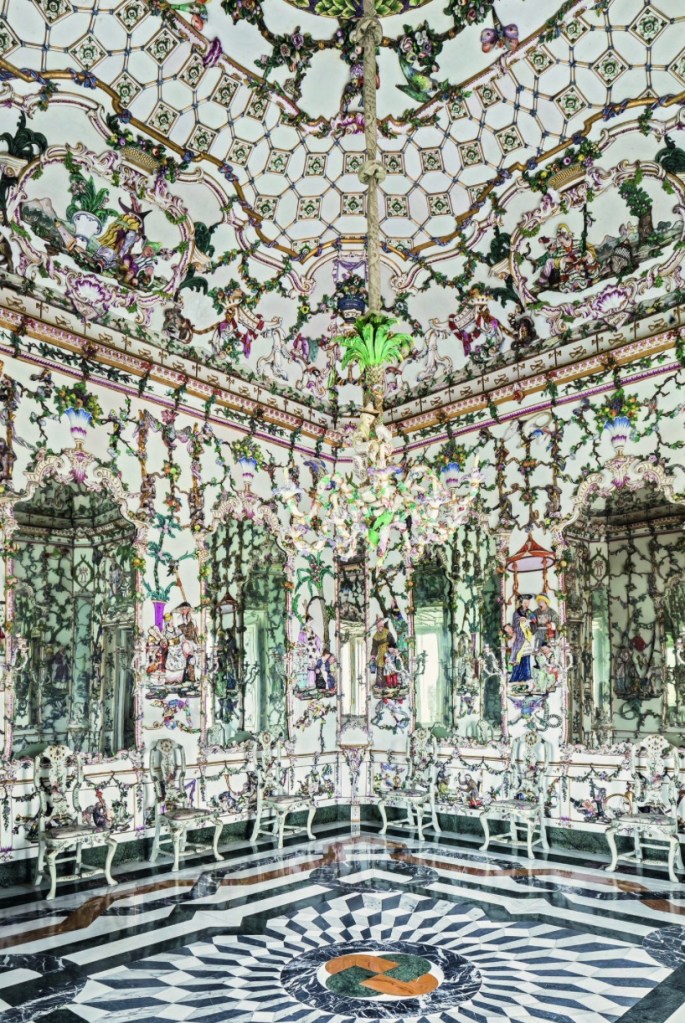
The Palace was magnificent and well worth a visit. The two main rooms that stood out for me were Queen Isabella’s Salón Árabe and Charles III Gabinete de Porcelana. I also loved the cut glass chandeliers in all the rooms – they were stunning. Unfortunately we weren’t able to take photos in any of the rooms so the photos below are from the internet just to give you an idea.
Salón árabe (Moorish room)
This hall was made for Queen Isabel II between 1847 and 1851, decorated with a Moorish style similar to the Sala de Dos Hermanas of the Alhambra in Granada. Its furniture consists of a porcelain central table and a bronze and crystal lamp. It was used as a smoking room mainly for men. The decoration of the walls is made of brightly colored plaster work.

Gabinete de Porcelana (Porcelain room)
This room was commissioned by Charles III. It is a work by the Royal Porcelain Factory of the Buen Retiro in Madrid. A medium-sized hall, its walls and ceilings are completely lined by plaques of white porcelain and reliefs with Rococo decoration of chinoiserie motifs (garlands of flowers, fruits, monkeys, vases, mandarins, parrots, samurais, birds and dragons). The ceramic plaques are attached to timber walls by screws. They were made between 1760 and 1765 by Giuseppe Gricci. The floor is marble. Eight large mirrors against the walls multiply the effect of the decorations. Interspersed with the above-described decoration are human groups in everyday scenes. In the center of the ceiling arises a lamp taking the form of a palm, while a Chinese with a hand fan and a monkey on his shoulders climbs the trunk. The purpose of this room was as a games room and playground.
I did manage to take a sneaky photo of the main stairwell with this magnificent chandelier.

We finished off our afternoon in Aranjuez with a stroll through the Sunday market and sat in the square and listened to some talented opera singers before retiring 😎



 Mutts on Tour