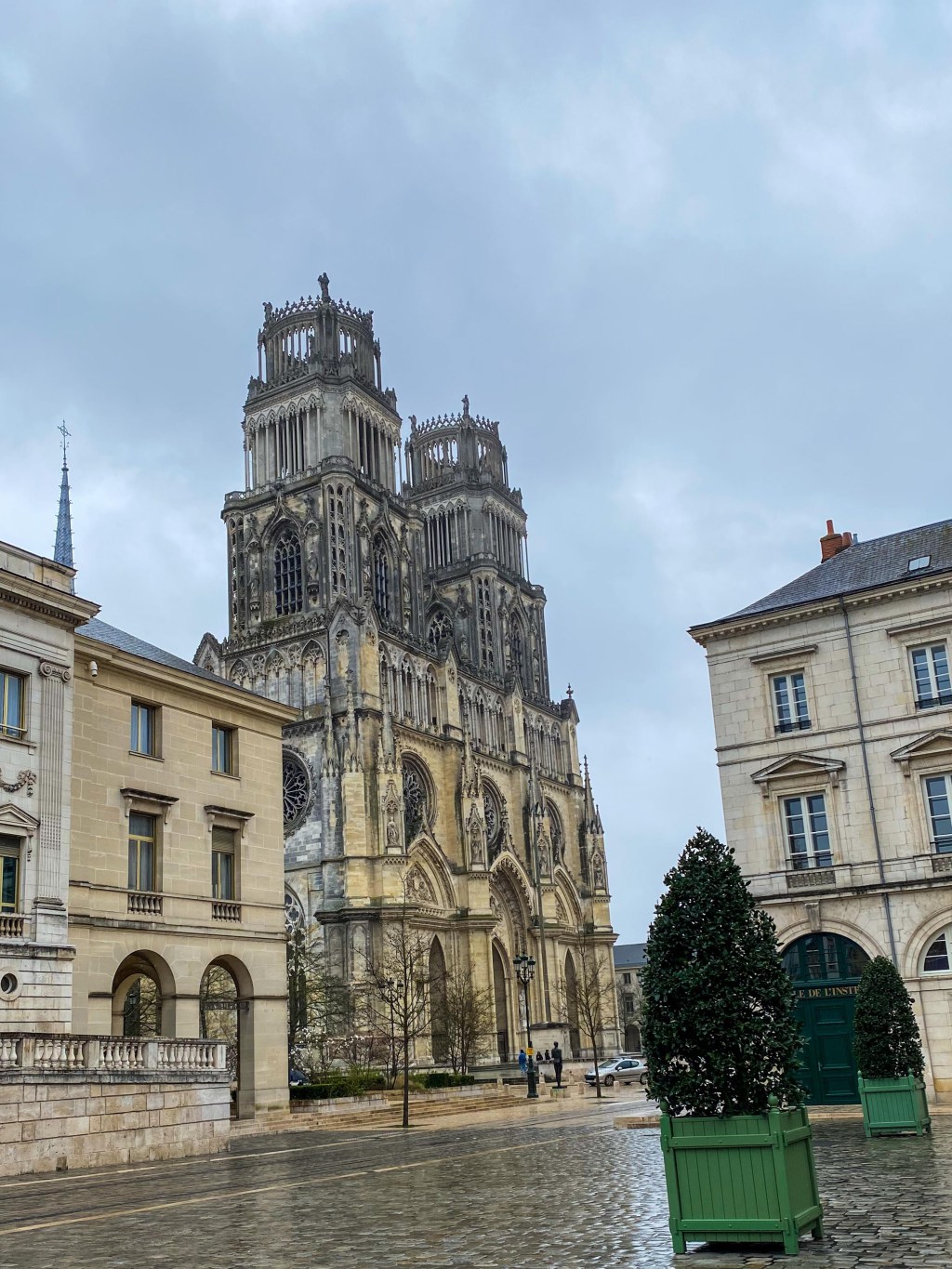
Orléans is a city on the banks of the Loire River in north-central France, and it’s the capital of the Centre-Val de Loire region. Joan of Arc famously saved the city from English siege in 1429.
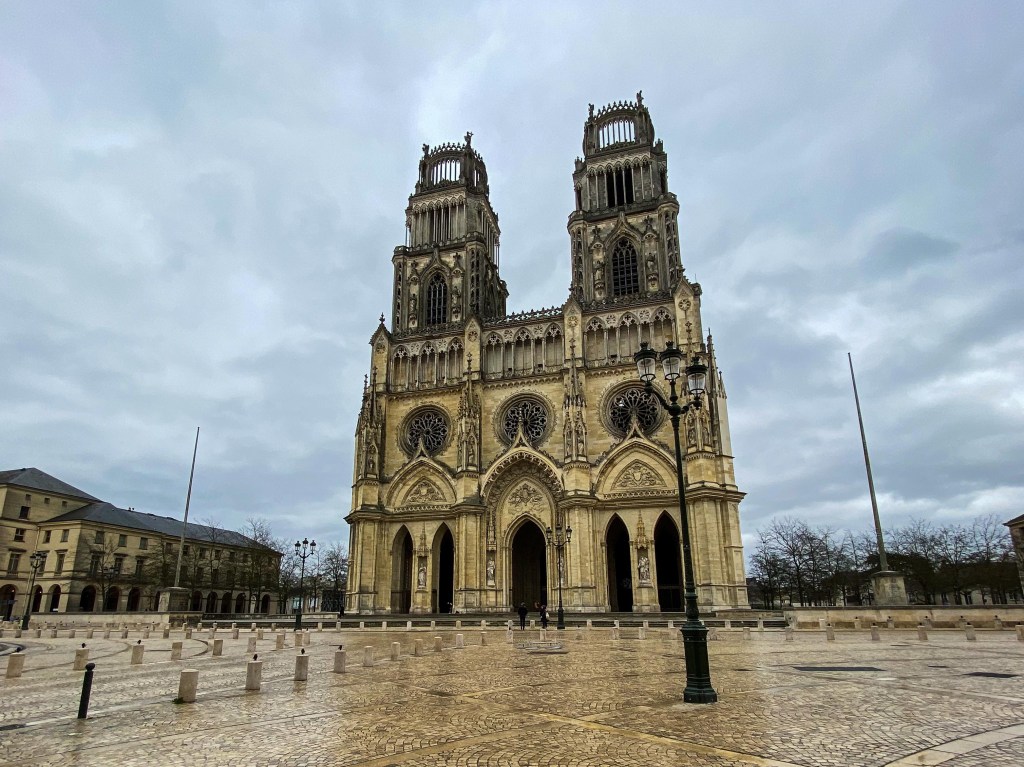
The gothic style Cathedral of Sainte-Croix dominates the city centre of Orléans.
History of Orleans Cathedral
It is said that the very first church was built here around 330 AD, at the dawn of Christianity in Europe. This early church also contained a morsel of the True Cross, that had been discovered in Jerusalem by Saint Helen, the mother of the Emperor Constantine.
Among the earliest of cathedrals in France, this was completed in 450 AD and, despite substantial damage caused by the Normans, survived until the late 10th century, when a great fire destroyed the cathedral and much of the town.
In the 12th century an imposing roman style cathedral was built to replace it. This was one of the greatest cathedrals in France, but unfortunately the ambitions of the designers was not matched by their engineering skills and the cathedral collapsed in the early 13th century.
The building of the next version of Orleans cathedral started in 1278 and eventually completed in 1512. Although it kept a few parts of the earlier roman style cathedral, it was essentially built in the ‘fashionable’ gothic style of the period, with flying-buttresses to support the great height of the walls of the nave. This was the cathedral that stood here at the time of Joan of Arc.
The Wars of Religion in 16th century France saw many churches destroyed, and a great part of the Cathedral of Orleans was destroyed by the protestants in 1568.
With the signing of the Edict of Nantes in 1598 the Wars of Religion were brought to an end. Three years later, in 1601, the building of a new cathedral began, principally in the Gothic style. The building of the cathedral took until almost the end of the 17th century to be completed.
In the 18th century the last remaining part of the original roman cathedral, the main entrance to the west, was demolished to make way for the imposing facade that we see today. The Revolution interrupted the work before the two towers were built, and these were only completed between 1817 and 1829.
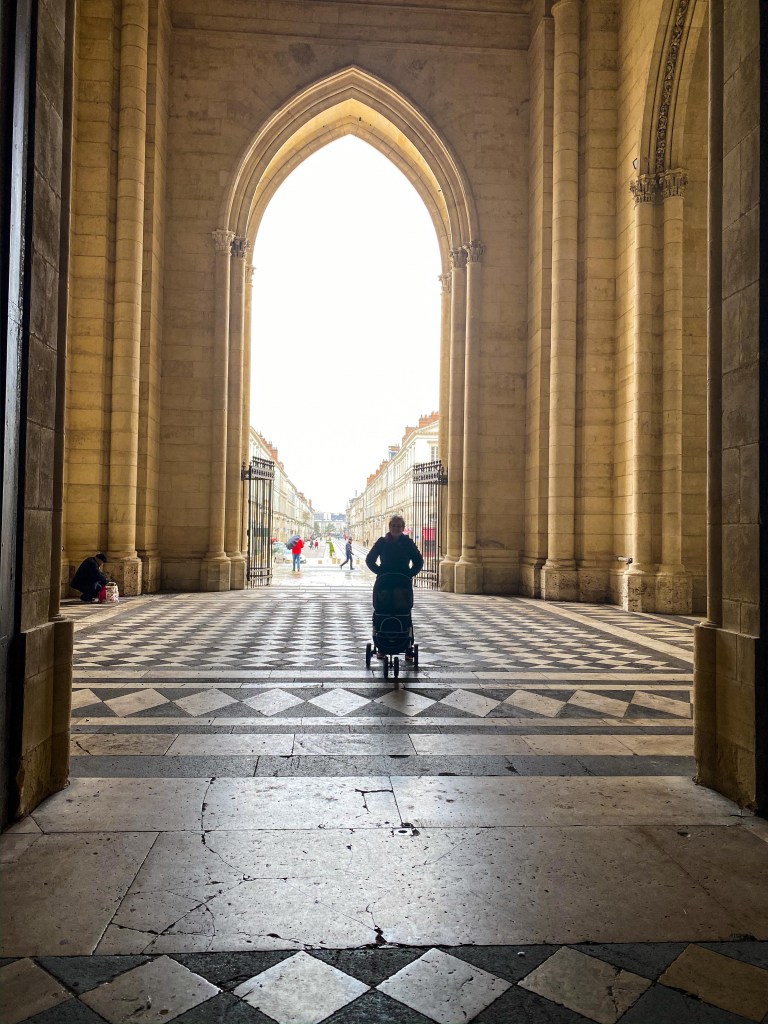
By planning or coincidence, the cathedral was completed exactly 400 years after Joan of Arc had broken the siege of Orleans by the English. It was also at this time that the area in front of the cathedral was cleared away to make room for the new Rue Jeanne d’Arc, much as we see it today.
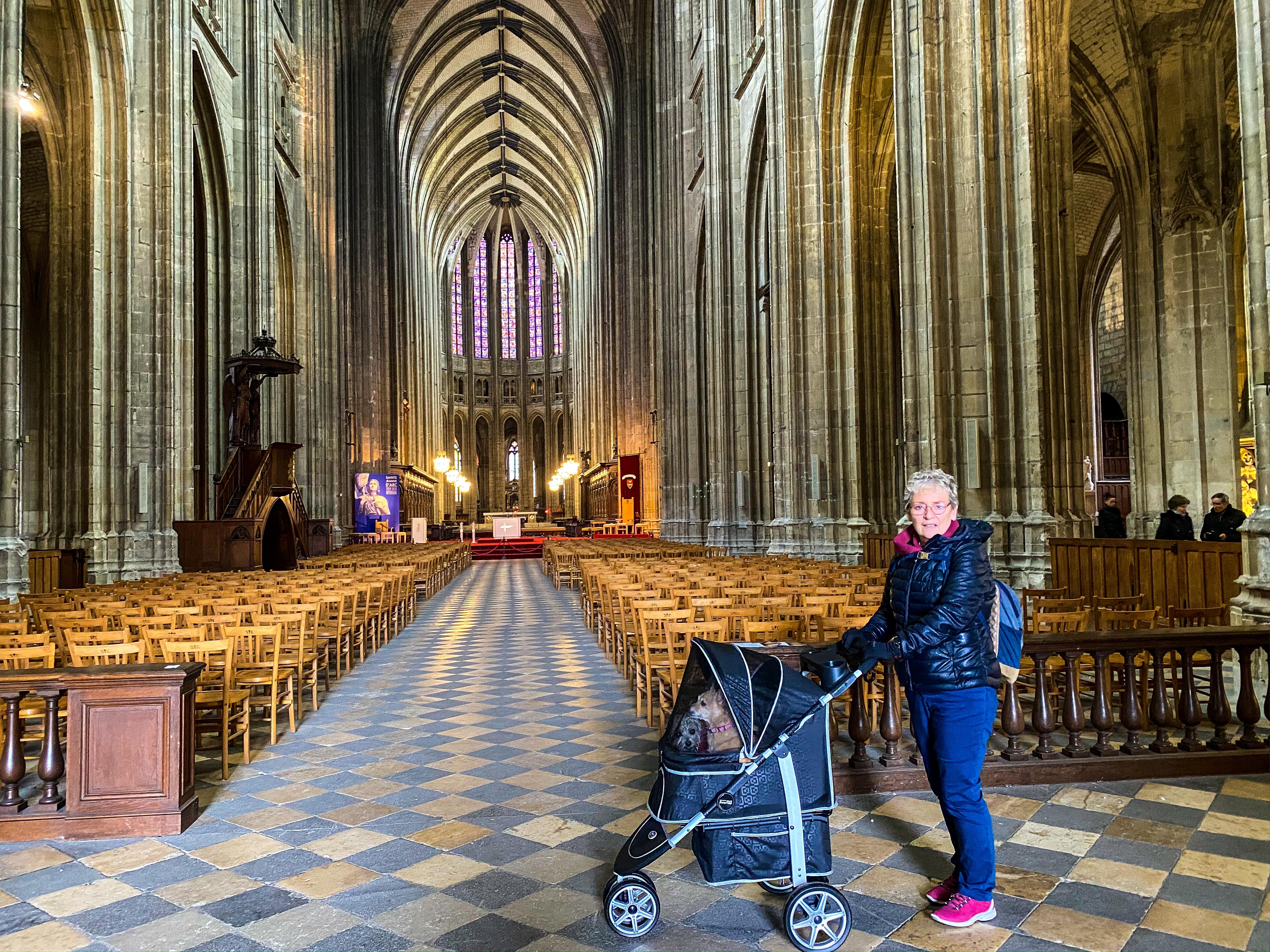
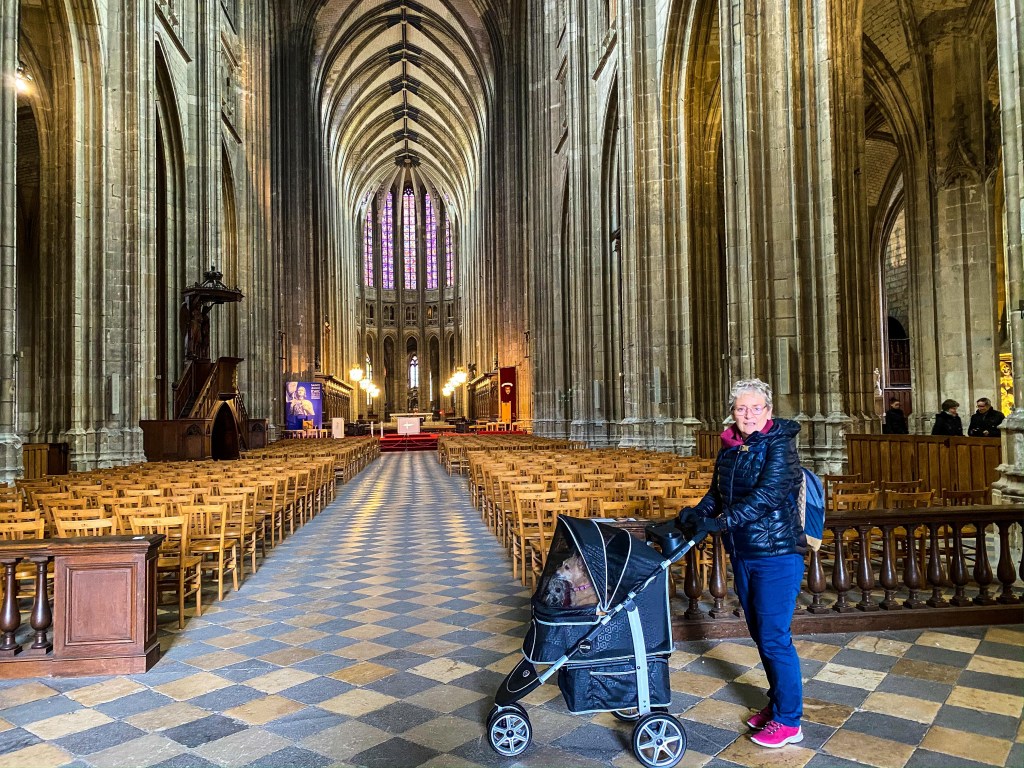
The Cathedral is very dramatic and bears a great resemblance to Notre Dame in Paris. The remaining stain glass windows are spectacular and we thought it must have been amazing when all the original windows were in place. A section of the cathedral’s windows depicts the story of Joan of Arc.

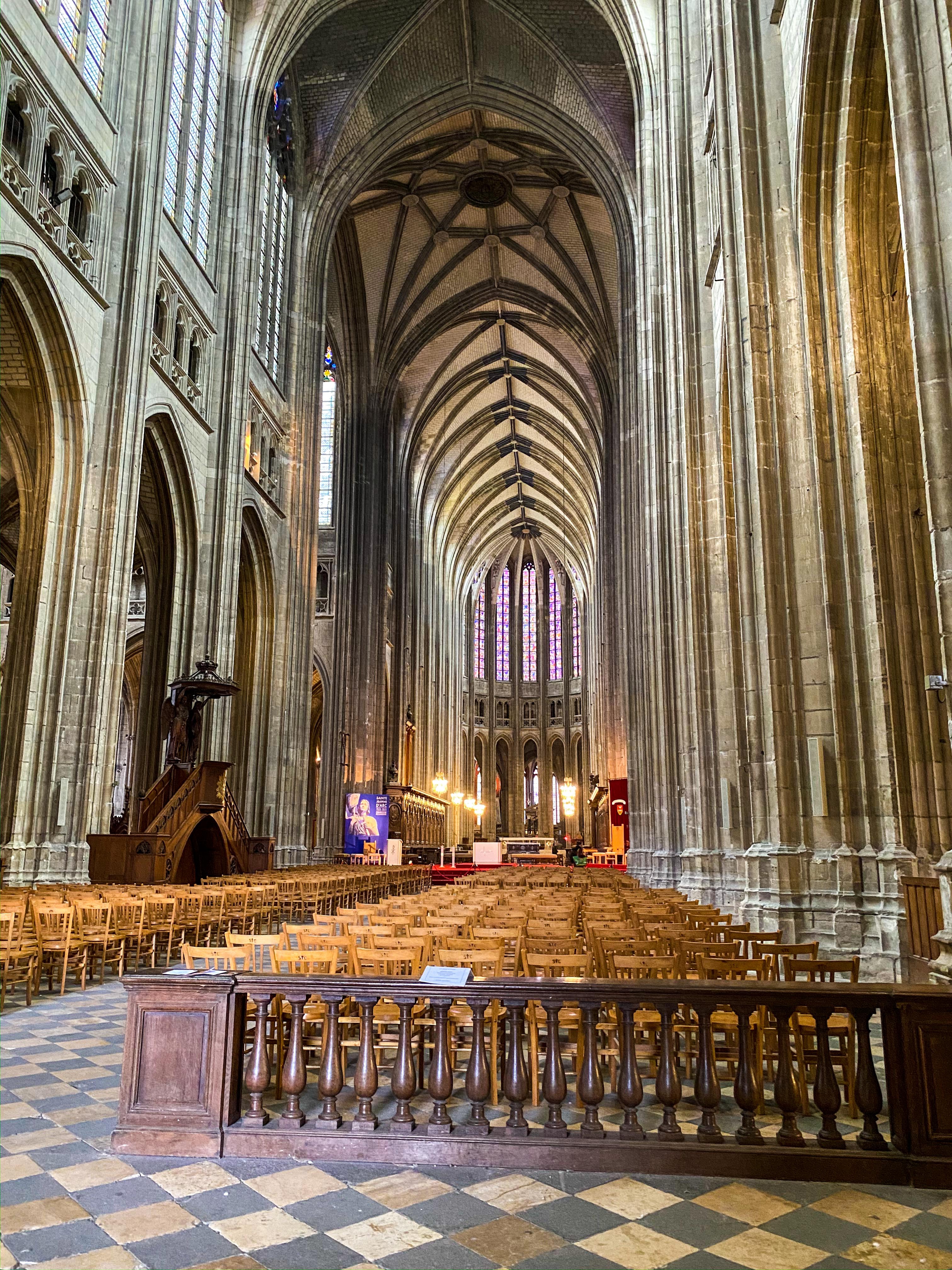
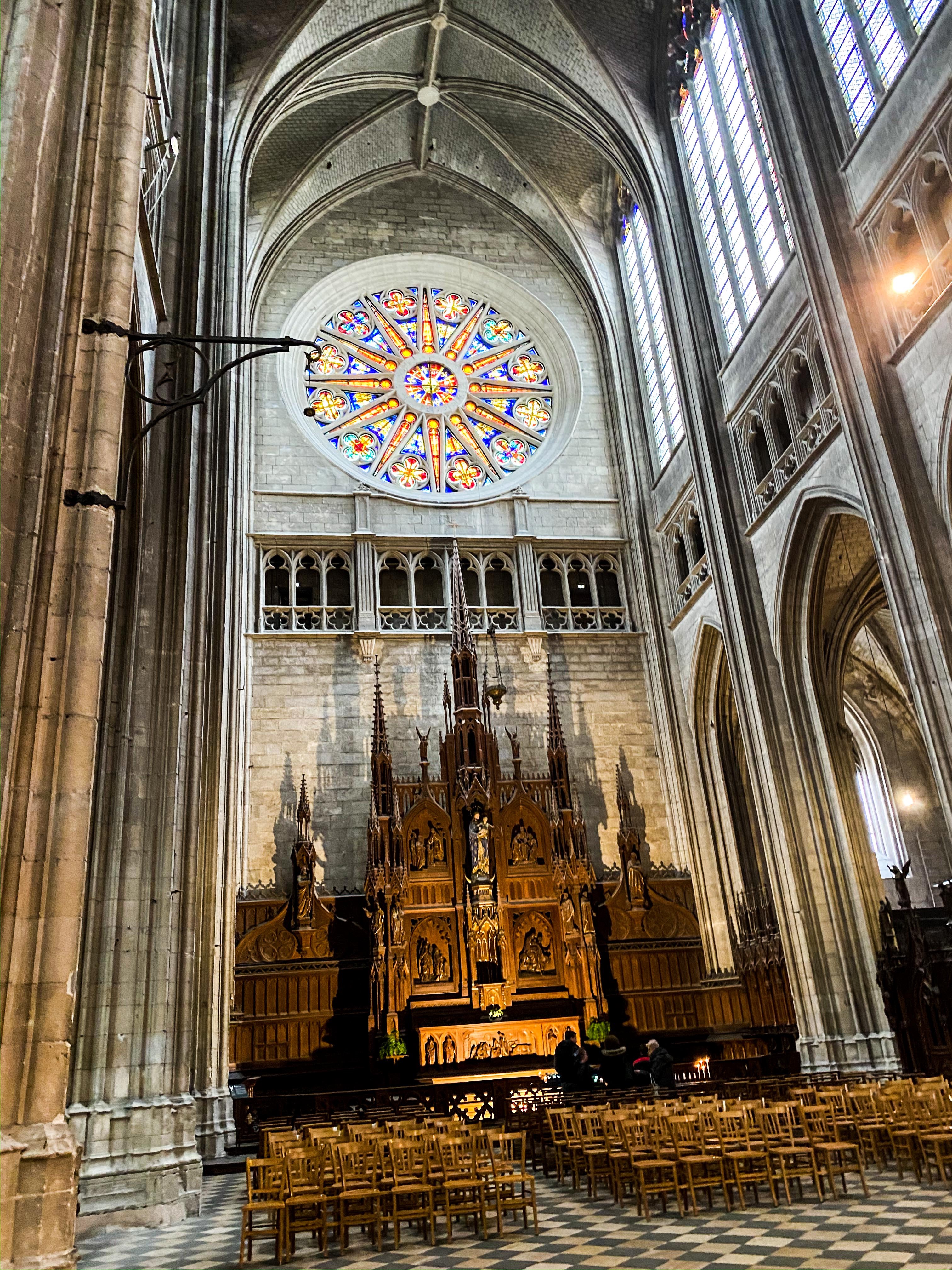
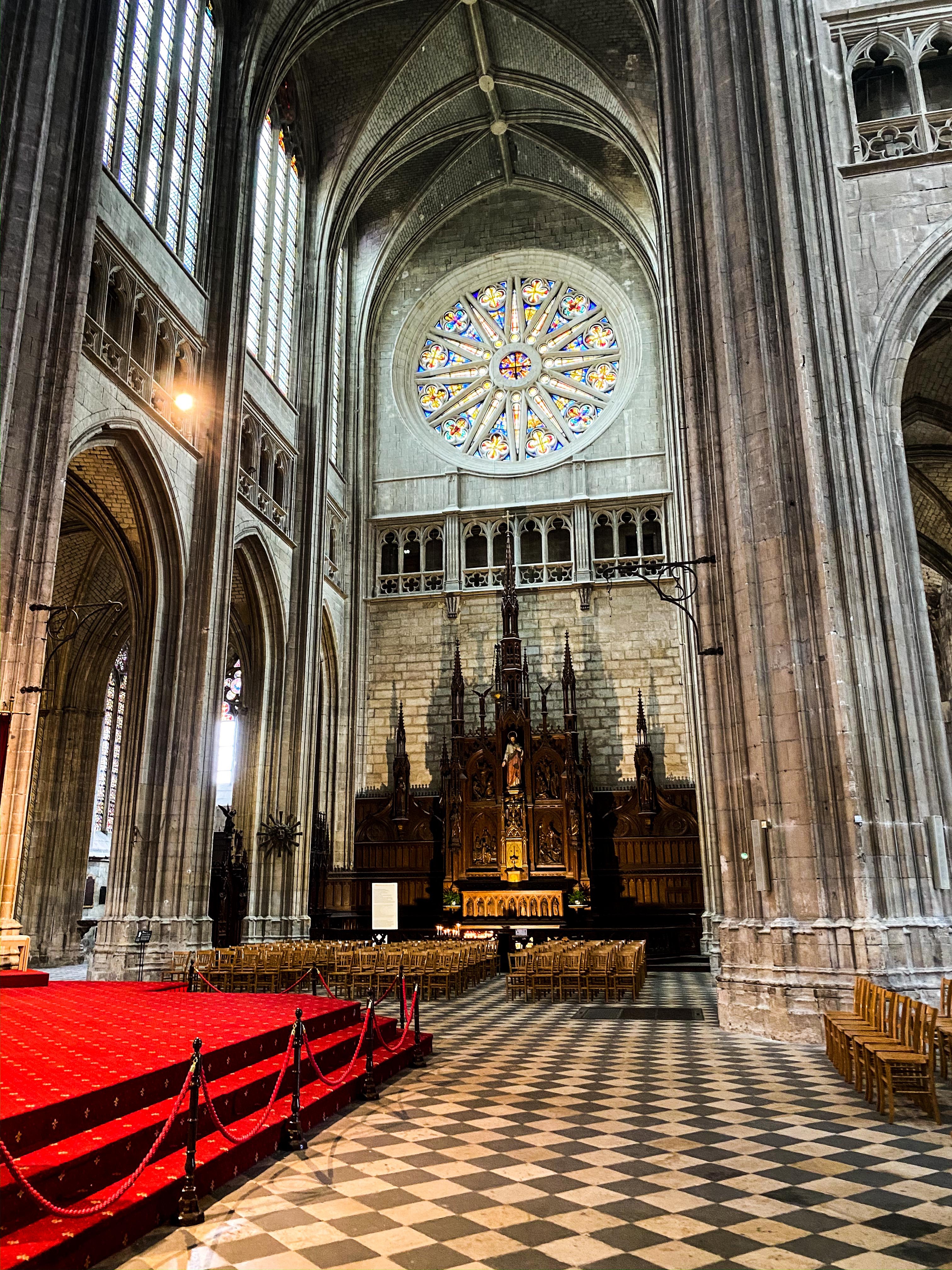
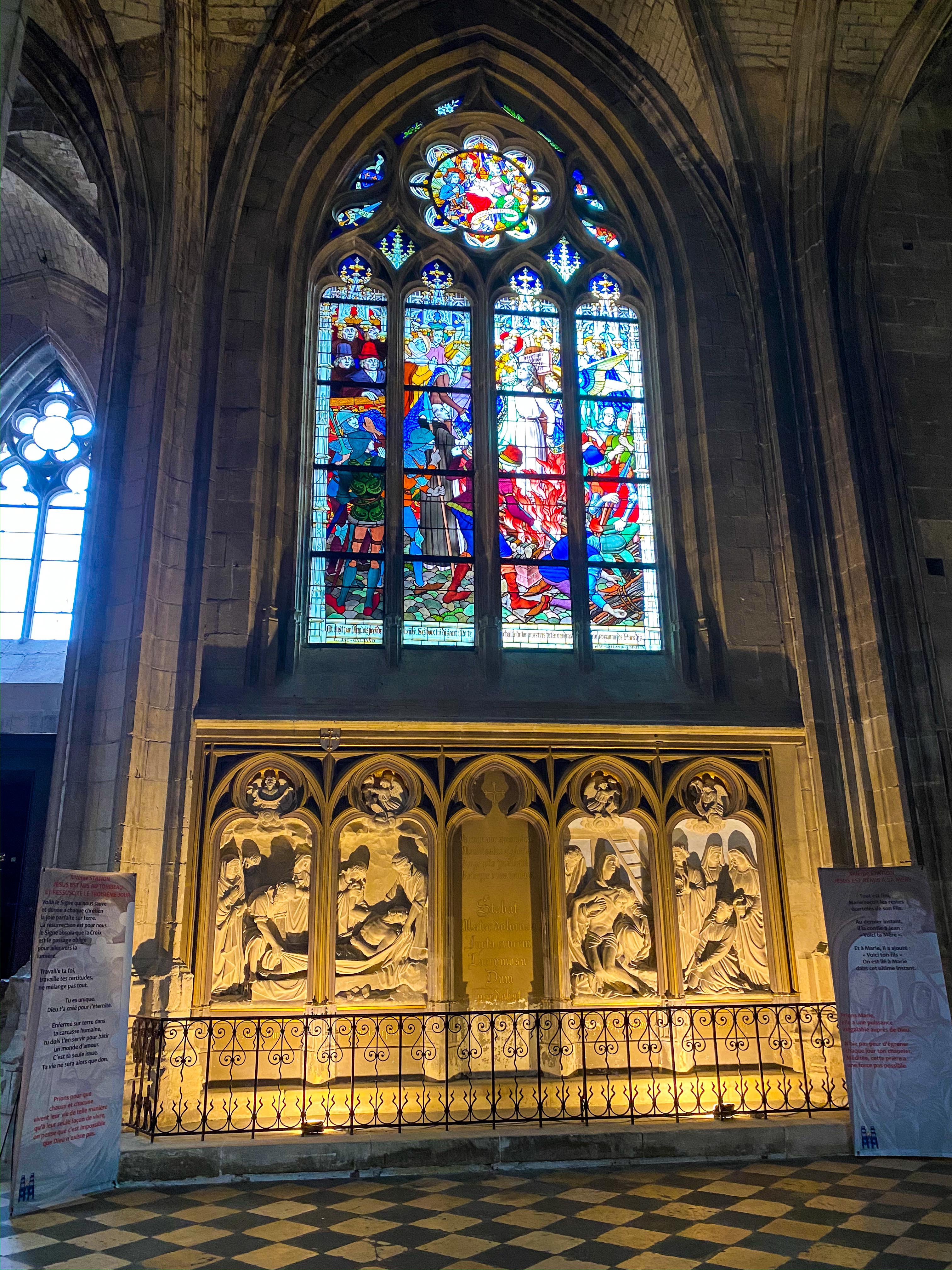
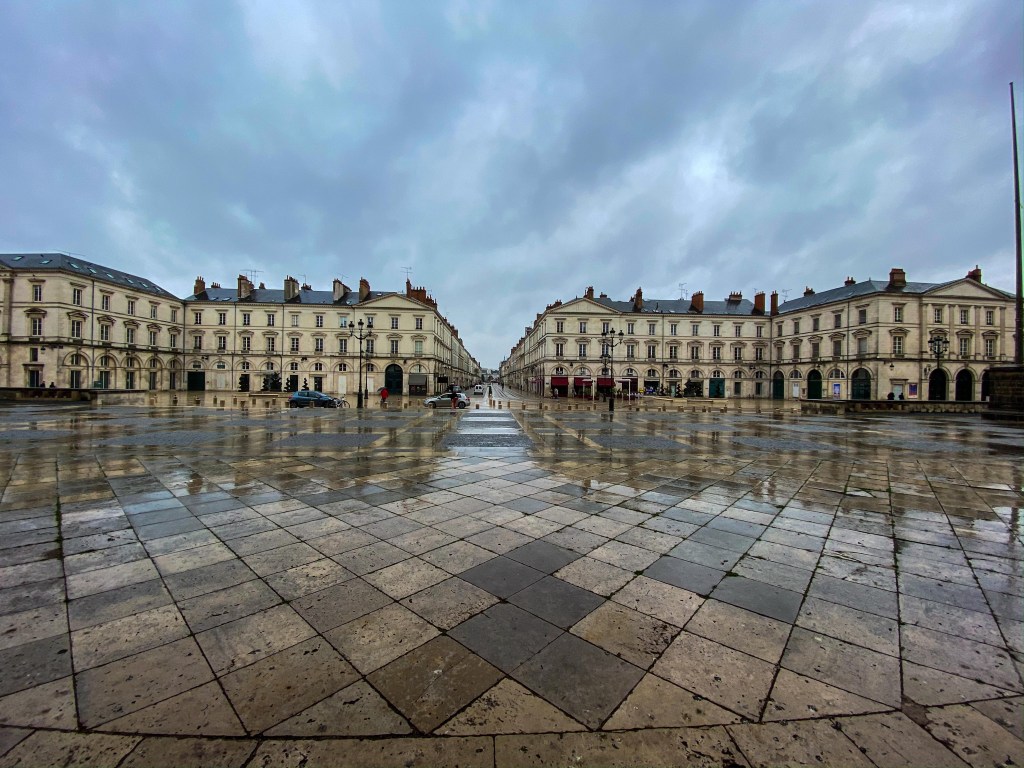
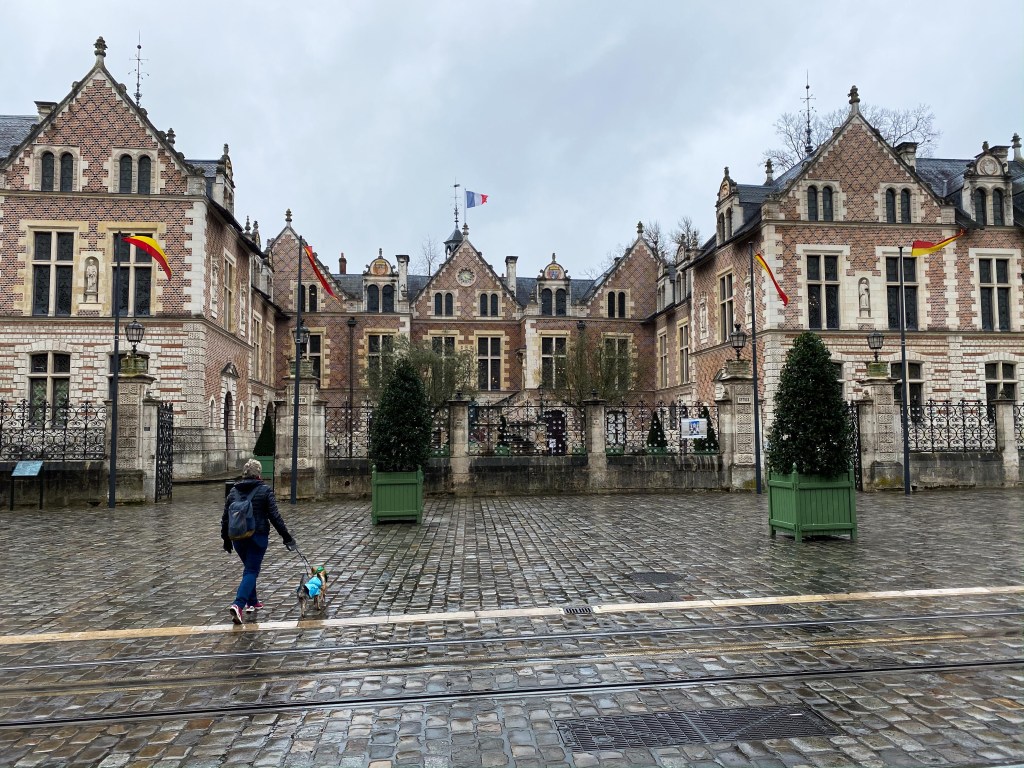
The street around the centre of Orleans were full of beautiful buildings, but unfortunately the weather was awful and it was cold and very wet so it curbed our exploring of the city.
Joan of Arc
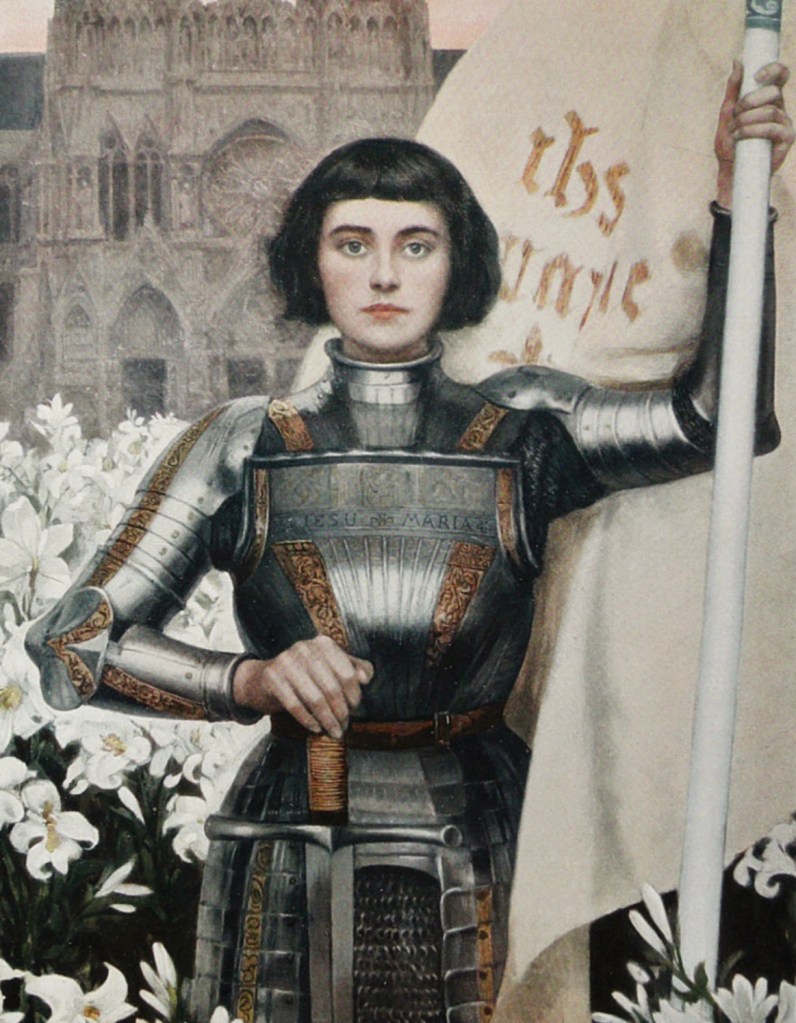
Joan of Arc – or as she is know in France “Jeanne d’Arc” – and also nicknamed “The Maid of Orléans” is considered a heroine of France for her role during the Lancastrian phase of the Hundred Years’ War, and was canonized as a Roman Catholic saint. She was born to Jacques d’Arc and Isabelle Romée, a peasant family, at Domrémy in northeast France. Joan claimed to have received visions of the archangel Michael, Saint Margaret, and Saint Catherine of Alexandria instructing her to support Charles VII and recover France from English domination late in the Hundred Years’ War. The unanointed King Charles VII sent Joan to the Siege of Orléans as part of a relief army. She gained prominence after the siege was lifted only nine days later. Several additional swift victories led to Charles VII’s consecration at Reims. This long-awaited event boosted French morale and paved the way for the final French victory.
On 23 May 1430, she was captured at Compiègne by the Burgundian faction, a group of French nobles allied with the English. She was later handed over to the English and put on trial by the pro-English bishop Pierre Cauchon on a variety of charges. After Cauchon declared her guilty, she was burned at the stake on 30 May 1431, dying at about nineteen years of age.
In 1456, an inquisitorial court authorized by Pope Callixtus III examined the trial, debunked the charges against her, pronounced her innocent, and declared her a martyr. In the 16th century she became a symbol of the Catholic League, and in 1803 she was declared a national symbol of France by Napoleon Bonaparte. She was beatified in 1909 and canonised in 1920.


 Mutts on Tour