A little background on the city of Burgos
Burgos is a city in the northern part of Spain and is a city which is not necessarily at the top of anyone’s list if you ask them to name prominent and well-known Spanish cities. Lying almost directly to the north of Madrid, it is one of the historical capitals of Castile and is now the capital of the province of Burgos in the community of Castile & León, with a population of slightly under 200,000. Steeped in history, Burgos has been the focus of many wars, is the birthplace and final resting place of the 11th century hero ‘El Cid’, and more recently was the base of General Franco’s nationalist government in the Spanish Civil War.
Although the winters in Burgos are cold due to the altitude (856m) and distance from the coast, summers are pleasant and warm, with daytime temperatures in the mid 20’s celcius. Mind you on Tuesday it was 33 degrees and we very nearly melted in the sun. Thankfully it went back down to 24 degrees on Wednesday which is a perfect temperature for sightseeing. The city is served by an airport, a railway station with links to Paris, and a bus station, it also has good motorway links with Madrid to the south and with Bilbao and San Sebastian to the north-east.
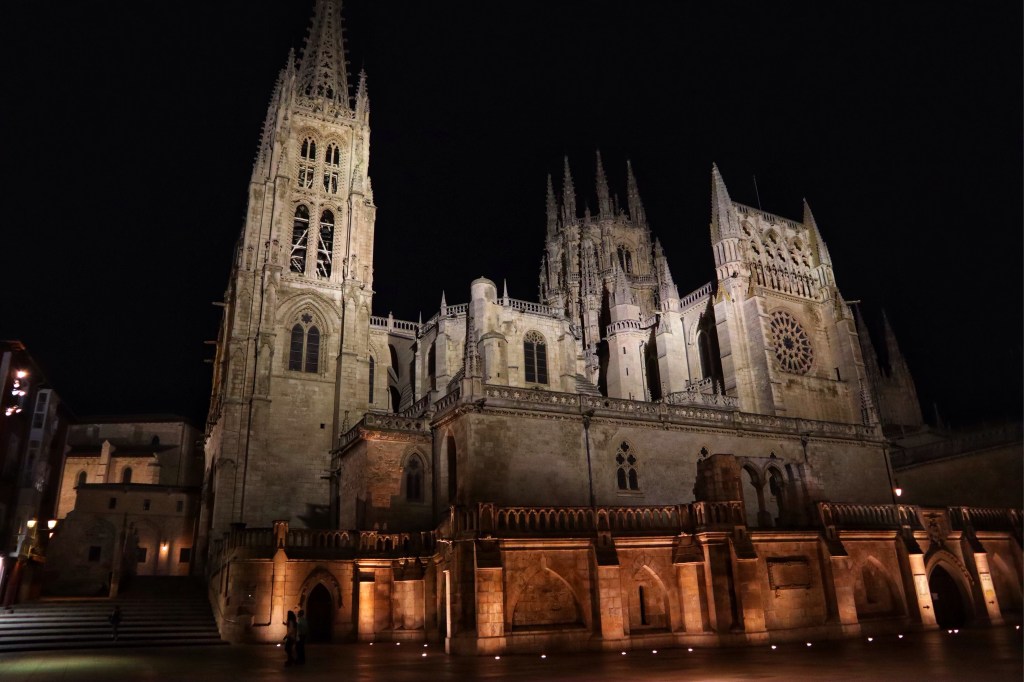
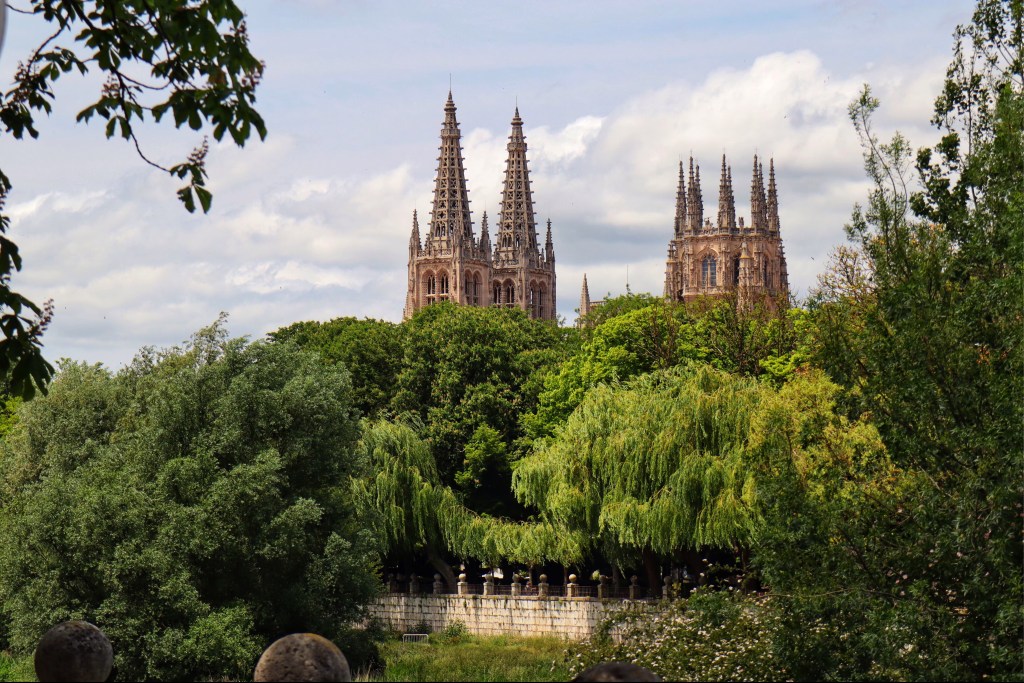
Burgos is mainly known for its quantity and quality of its gothic churches, but by far the most famous and dominant of these is the world renowned cathedral of Our Lady of Burgos. In contrast to its gothic past, however, Burgos is now a leader amongst European cities in the field of sustainable mobility and transportation, winning various awards – amongst them the Energy Globe Award in 2008 (the Nobel sustainability awards) – and boasts a free bicycle loan system, 100% clean public transport and is striving towards a car-free city centre.
While in Burgos you may see backpackers walking through the city. These are just some of the hundreds of pilgrims that cross through Burgos on their journey through the Camino de Santiago every year. The Camino, which is the walk of Saint James, is a Christian pilgrimage to the northwestern Spanish region of Galicia on the Atlantic Ocean. The remains of the apostle Saint James are believed to be buried there.
Burgos is picture book city packed with Gothic and renaissance architecture. These lovely 15th and 16th-century buildings are built with local white limestone, which gives the Burgos cityscape its own regal character. Here in Burgos you can visit the resting place of several kings and queens and see where Christopher Columbus was granted a royal audience in the 15th century.
The Cathedral of Santa Maria
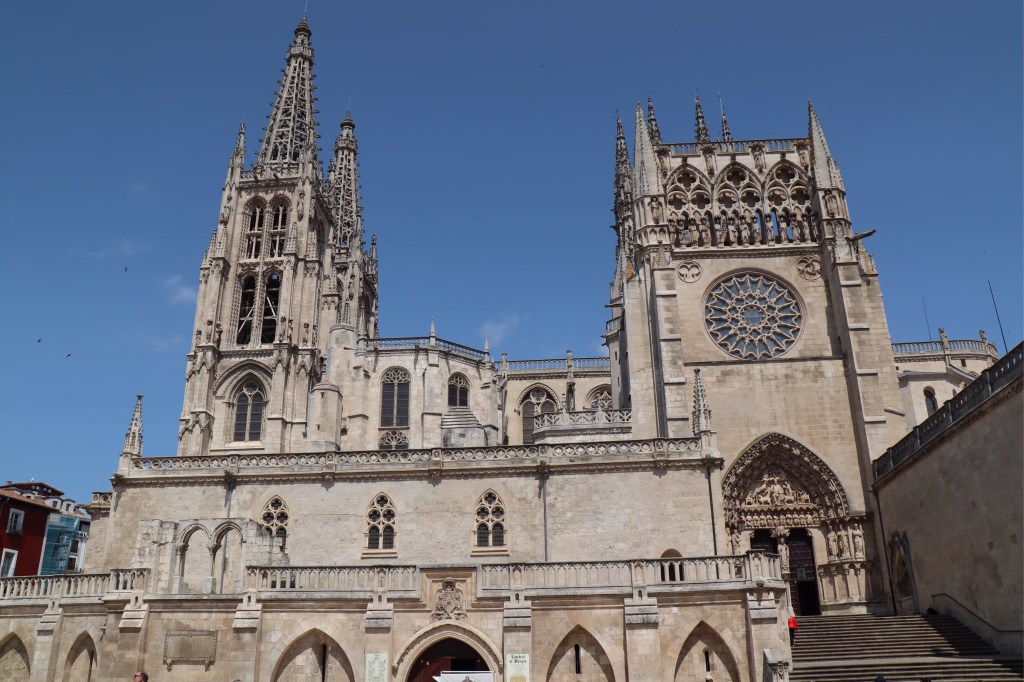
Burgos’ 13th-century Cathedral of St. Mary is UNESCO-listed, and stands out as the only cathedral in Spain to earn this status without being grouped with other buildings. No matter which direction you approach this wonderful cathedral there is something beautiful to look at, whether it’s the medieval carvings on the Door of the Coronería or the stunning octagonal tower on the east side.
The official name of the cathedral is Santa Iglesias Catedral Basilica Metropolitana de Santa Maria de Burgos. Its construction began in 1221, following French Gothic patterns. It went through major changes in the 15th and 16th centuries: the spires of the main facade, the Chapel of the Constable and dome of the transept, elements of advanced Gothic which give the temple its unmistakable profile. The last works of importance (the Sacristy or the Chapel of Saint Thecla) were constructed in the 18th century, in which the Gothic portals of the main facade were also modified. The style of the cathedral is Gothic, although it has several decorative Renaissance and Baroque elements as well. The construction and renovations were made with limestone extracted from the quarrys of the nearby town of Hontoria de la Cantera.
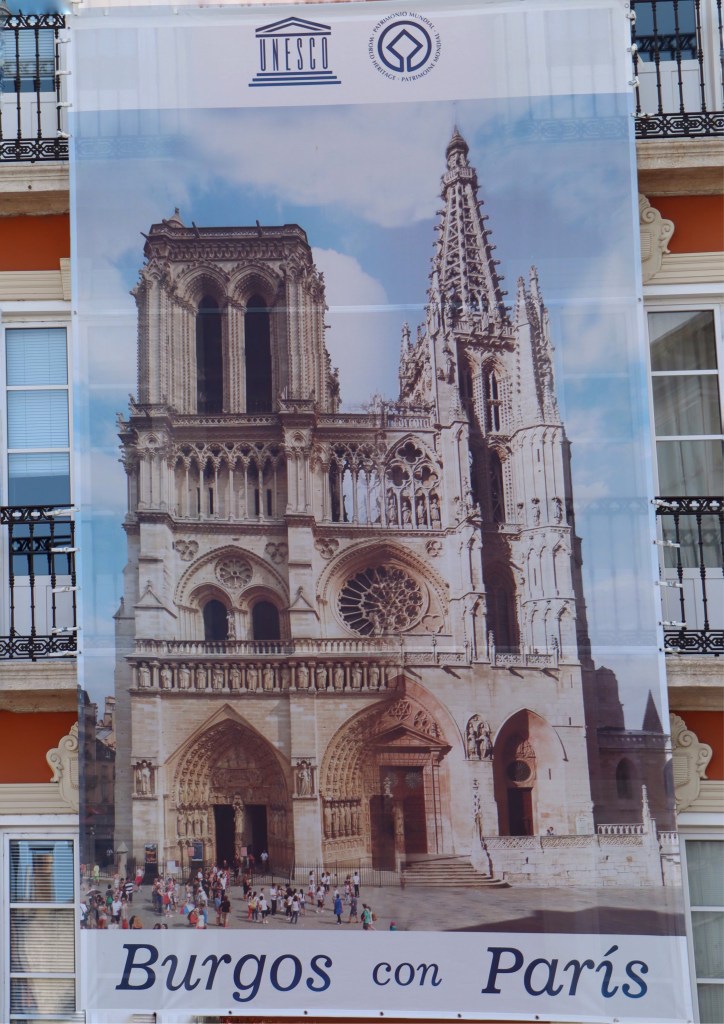
The cathedral is hugely reminiscent of Notre Dame in Paris and a lovely sign of solidarity between the two cities and cathedrals hangs on the Plaza Santa Maria in front of the cathedral.
There are numerous architectural, sculptural and pictorial treasures within this great cathedral, such as:
There are numerous architectural, sculptural and pictorial treasures inside, such as:
- The Gothic-Plateresque dome, raised by Juan de Colonia in the 15th century.
- The Chapel del Constable, of Isabelline Gothic style, which is the work of the Colonia family, Diego de Siloé and Felipe Bigarny.
- The Spanish-Flemish Gothic altarpiece by Gil de Siloé in the Chapel of Saint Anne.
- The stalls of the choir Renaissance Plateresque work by Bigarny.
- The Renaissance Golden staircase by Diego de Siloé.
- The tomb of El Cid and his wife Doña Jimena.
- The Papamoscas, articulated statue that opens his mouth to give the chiming of the hours.


Parks
Most of the parks in the city of Burgos can be found along the river Arlanzón. Indeed, the banks of the river itself constitute a green corridor along the city. In total, there are nearly 3 square miles of parks in Burgos and one tree for every 3 inhabitants


The most famous bridge in Burgos, the bridge of San Pablo was built in the 13th century across from where the medieval gates of San Pablo used to stand. The bridge is lined with statues of Castilian noblemen from the Middle Ages, the most famous of whom was El Cid. His statue can be found at the northern end in the middle Plaza del Cid. El Cid, born Rodrigo Díaz de Vivar, was a Castilian nobleman who became known for his prowess on the battlefield. His nickname, El Cid Campeador, literally translates to champion, or more specifically, the lord-master of military arts. His body now lies in Burgos Cathedral. The arch of Santa Maria is an imposing stone relic from 14th century Burgos that immortalizes some the city’s greatest as well as its patron saint, the Virgin Mary. Crossing the bridge of the Arlanzon River and walking towards the Burgos Cathedral will take you to this triumphal gateway. Visitors will need to pass through this arch to enter the Plaza de San Fernando, which houses the cathedral. The arch’s façade was transformed in the 16th century to include the likenesses of numerous important citizens. Some of the more famous people on the cathedral’s exterior are the Emperor Charles Quint (Carlos I,) El Cid, Diego Porcelos- the city’s founder, and Nuno Rasura and Lain Calvo- two important figures in the courts of Castile.


A famous traditional food of Burgos is Morcilla de Burgos, a pig’s-blood sausage (black pudding), is a staple country food known across the Iberian peninsula. Spiced with onions and herbs its most noticeable content is rice (often mistaken for fat) which makes it one of the lightest and healthiest products of its kind. I tasted it and it was quite nice, if it just didn’t look like black pudding! Tradition says it must be “salty, smooth and piquant” and I can confirm that indeed it was.
Another famous must-try in Burgos cuisine is the Queso de Burgos. It is a white, soft cheese that is often greasy because of its whey content. Originally made with sheep’s milk, it is now made with cow milk or a mixture of milks. I think we had it on our burgers the other night and it was pretty awful!
Burgos by night


We had to get the tablets for the dogs to re-enter Ireland so we found a lovely vet in the old city and we are still getting over the price!
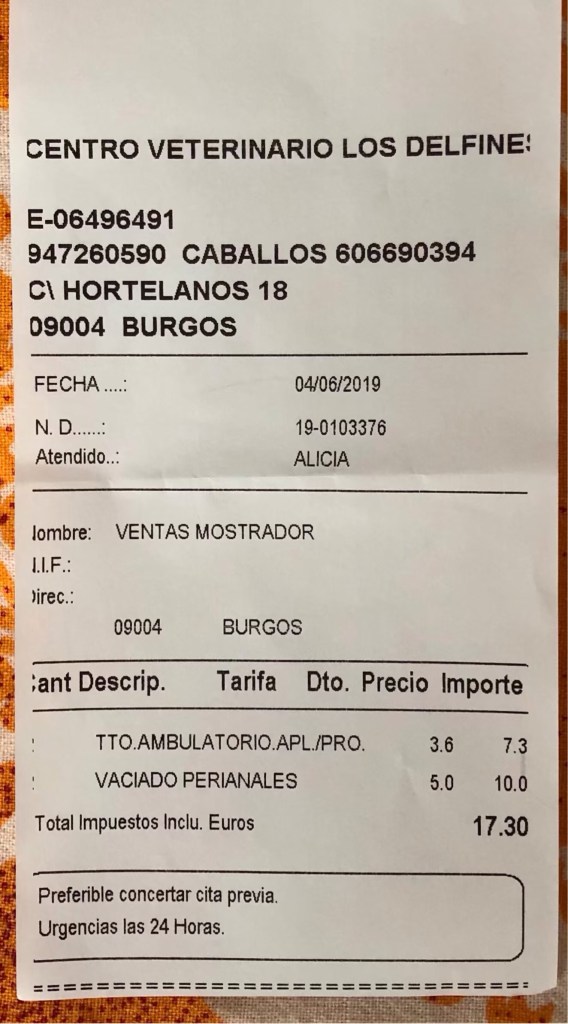
Happy dogs and owners!


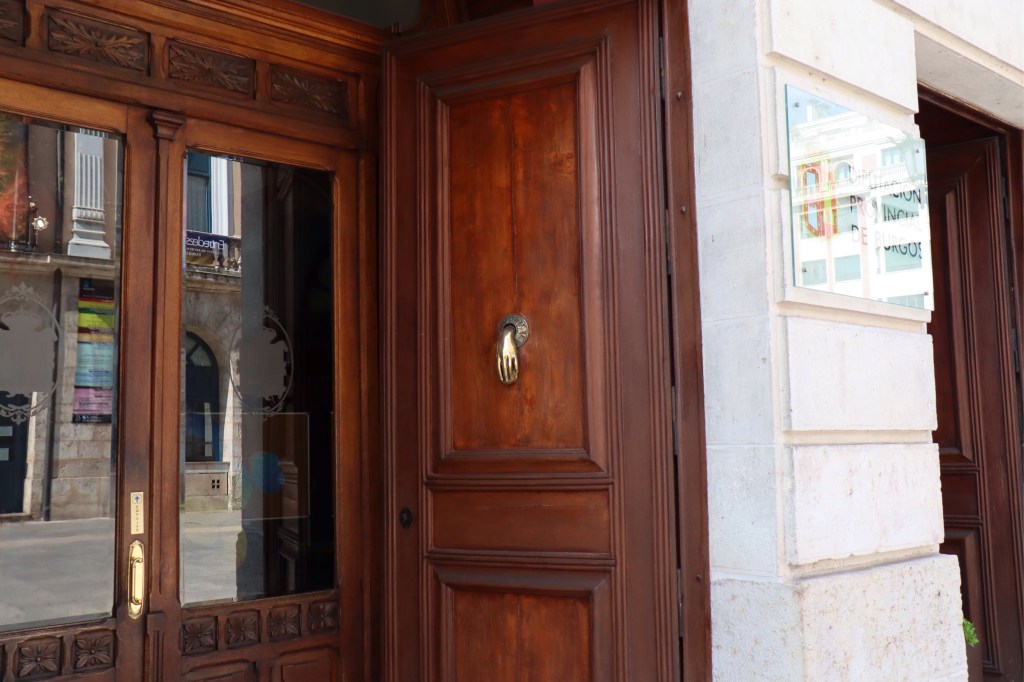
What a great door knocker!!
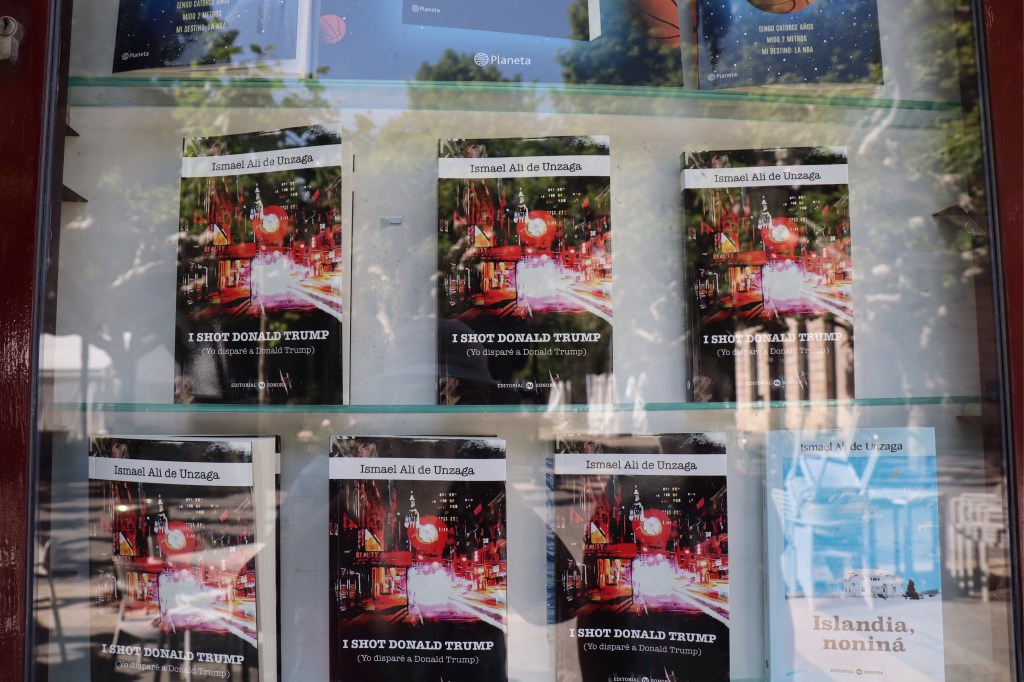
This book was actually for sale in one of the book shops we passed!
A wonderful city with so much to see and so nice to just wander around. Although there were quite a few tourists, they were mainly pilgrims (peregrinos) and they were just strolling around also so there was none of the manic photo snapping and selfies you get in other major cities – except of course for me!! We had a lovely hotel right beside the Cathedral and it was so nice to walk out the door each morning and gaze at the wonderful Cathedral. Highly recommend a visit to Burgos.

 Mutts on Tour