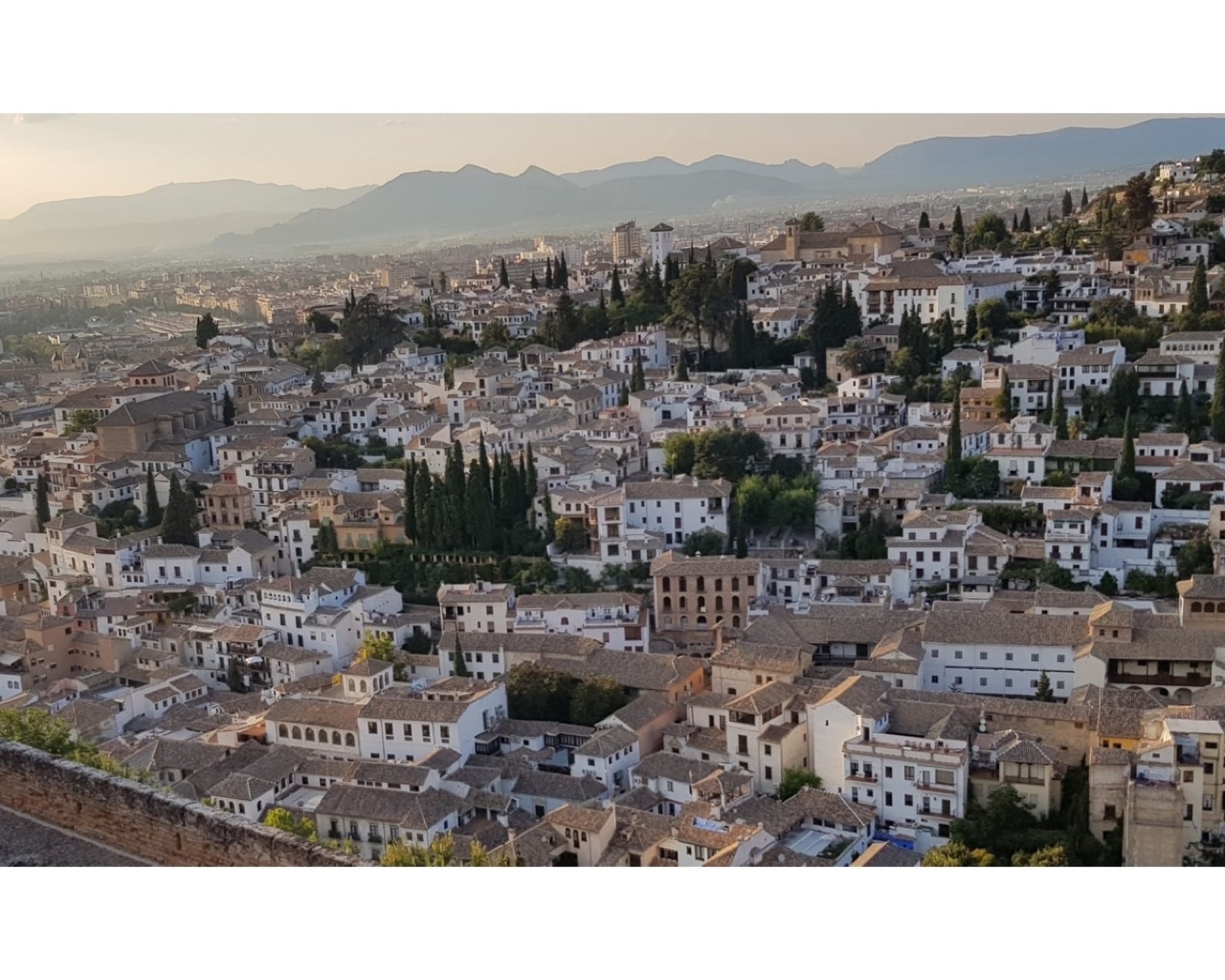
What another amazing city. We are staying a stone’s throw from the Alhambra….. well when I say a stone’s throw it’s more a giant slingshot up an awful steep hill that goes up and up and up 🏔
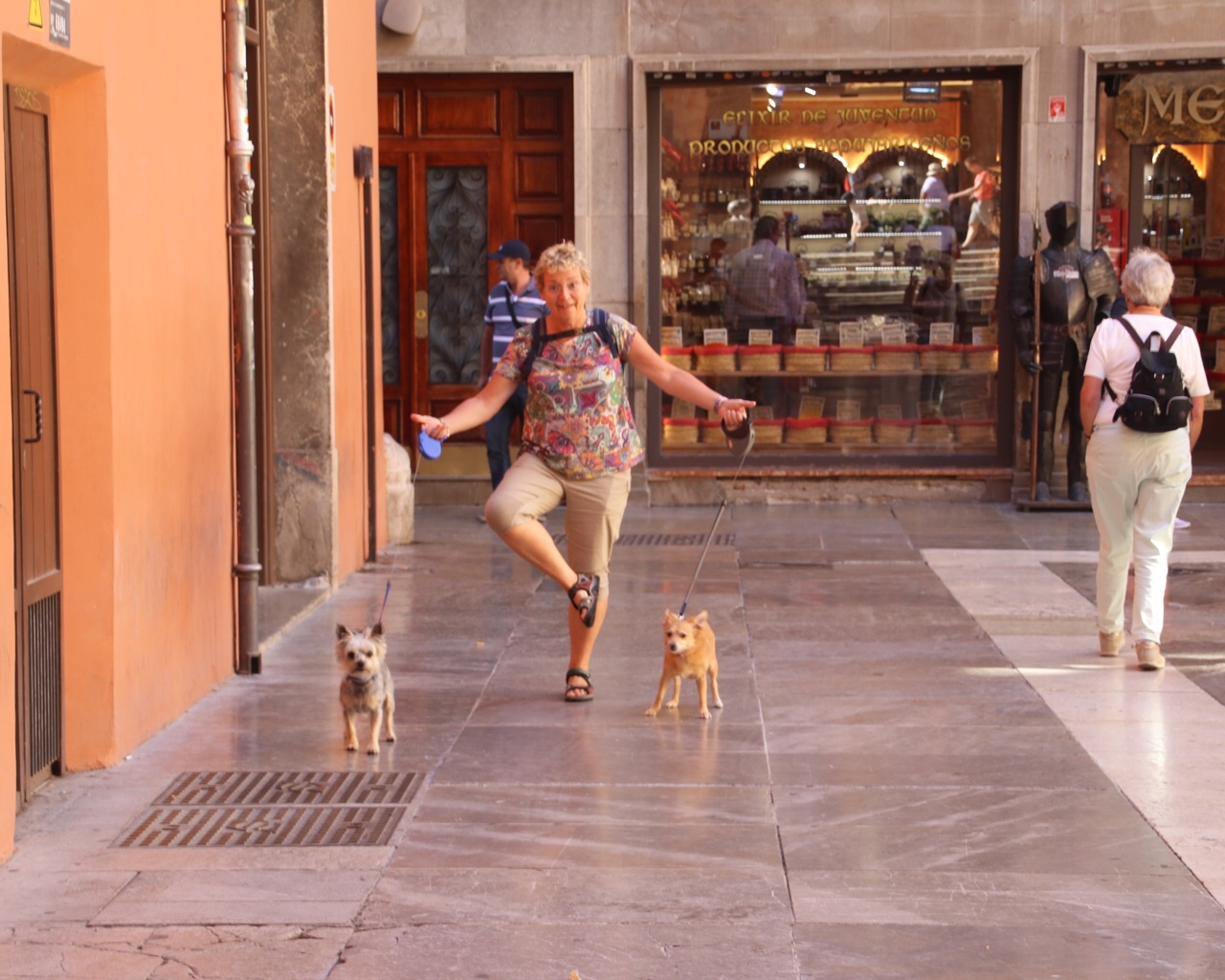
Sheila has attempted 3 times in the past to visit the Alhambra and today she finally did it. I had visited some years ago so I was on dog duty. We did decide to walk her up to the palace and never noticed the No Perros signs. So when we recovered from the climb up we were happily wandering around the grounds while Sheila was looking for her tour group when we met a security man who told us no dogs and then proceeded to bend down and pet them and let me wander off with them again. I just love Spain 😎
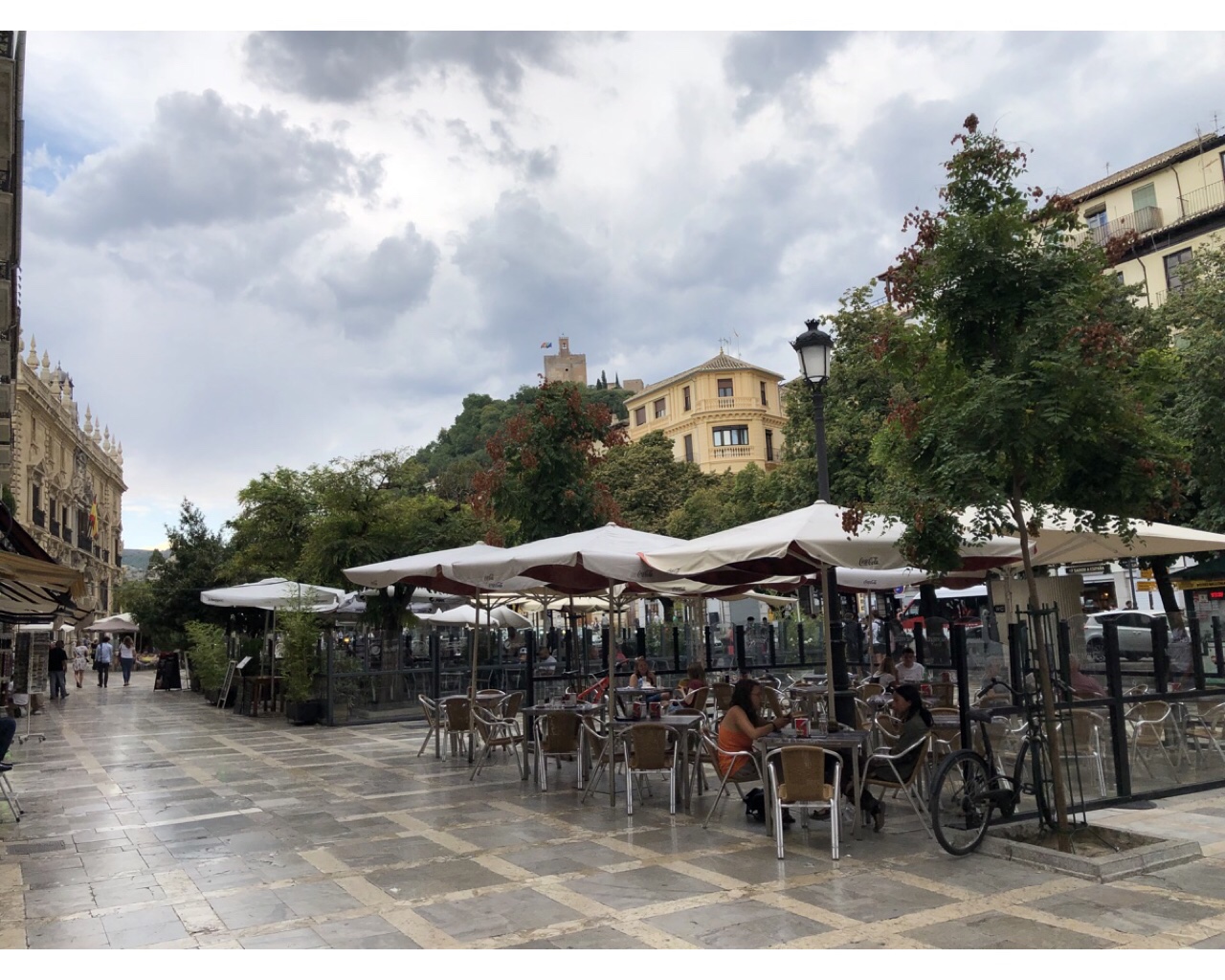
Sheila had a three hour tour of the Alhambra and took all the photos and they will be posted separately. Me and the dogs wandered back down into the town for a walk in the rain and thunder 😜
Visit to the Cathedral
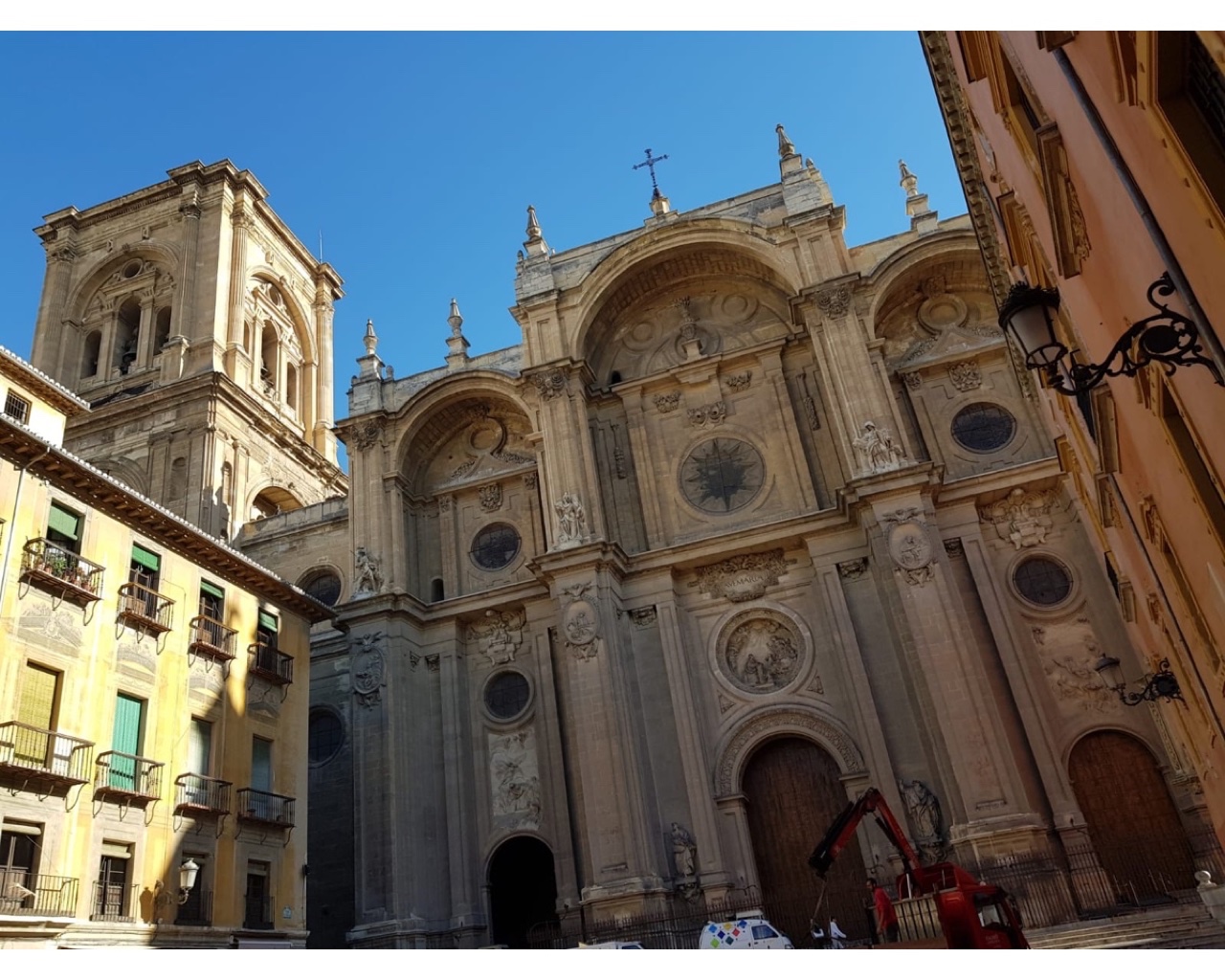
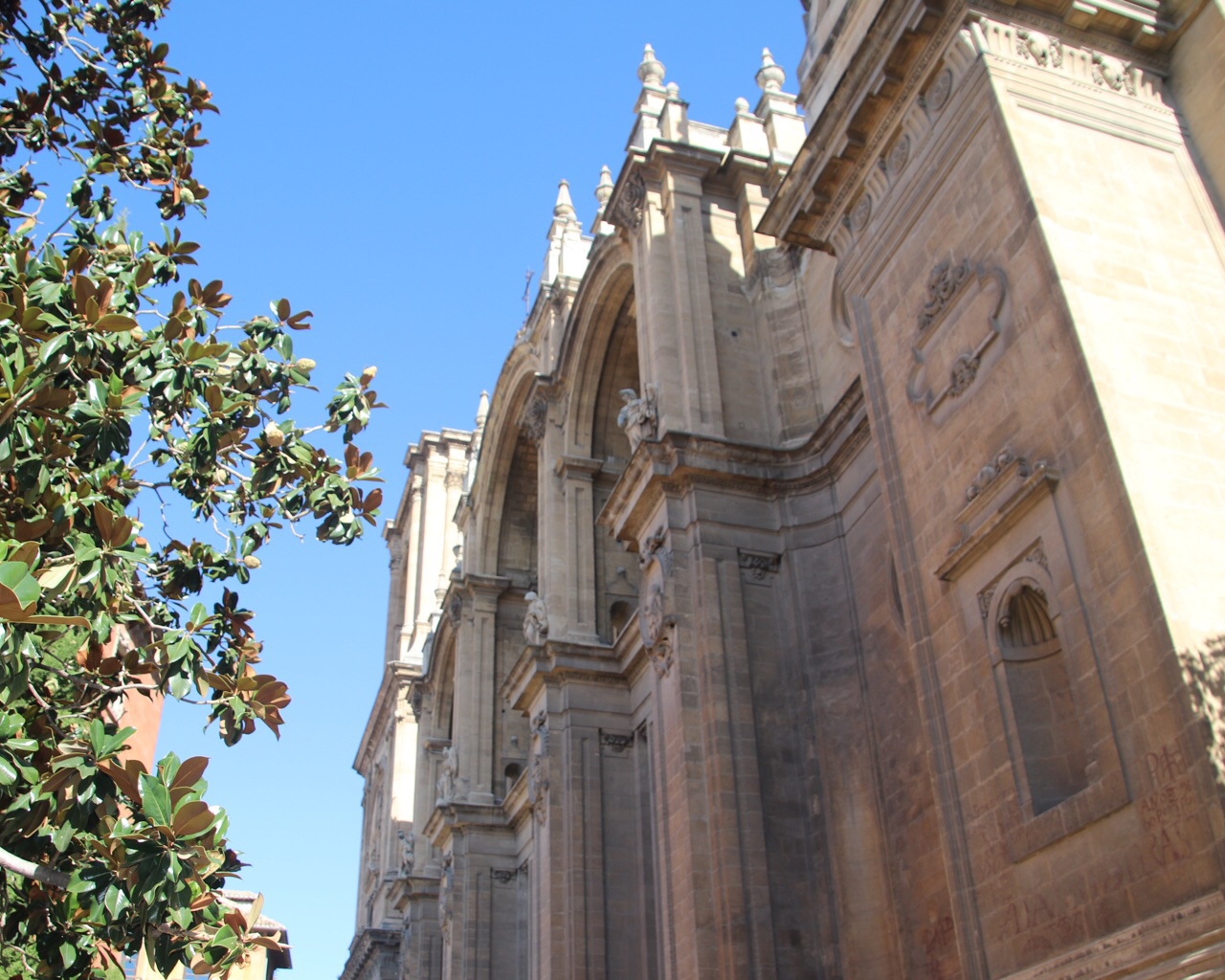
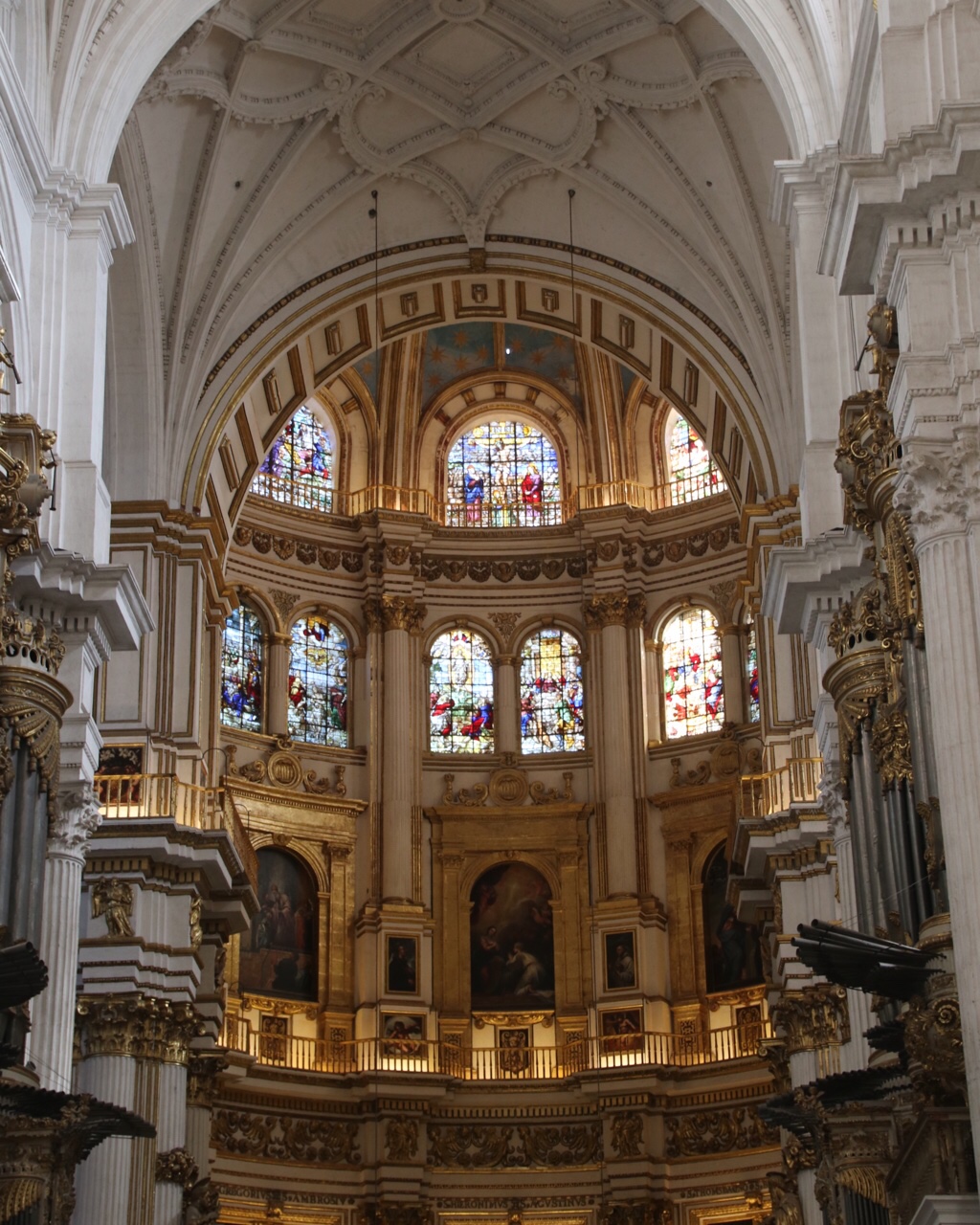
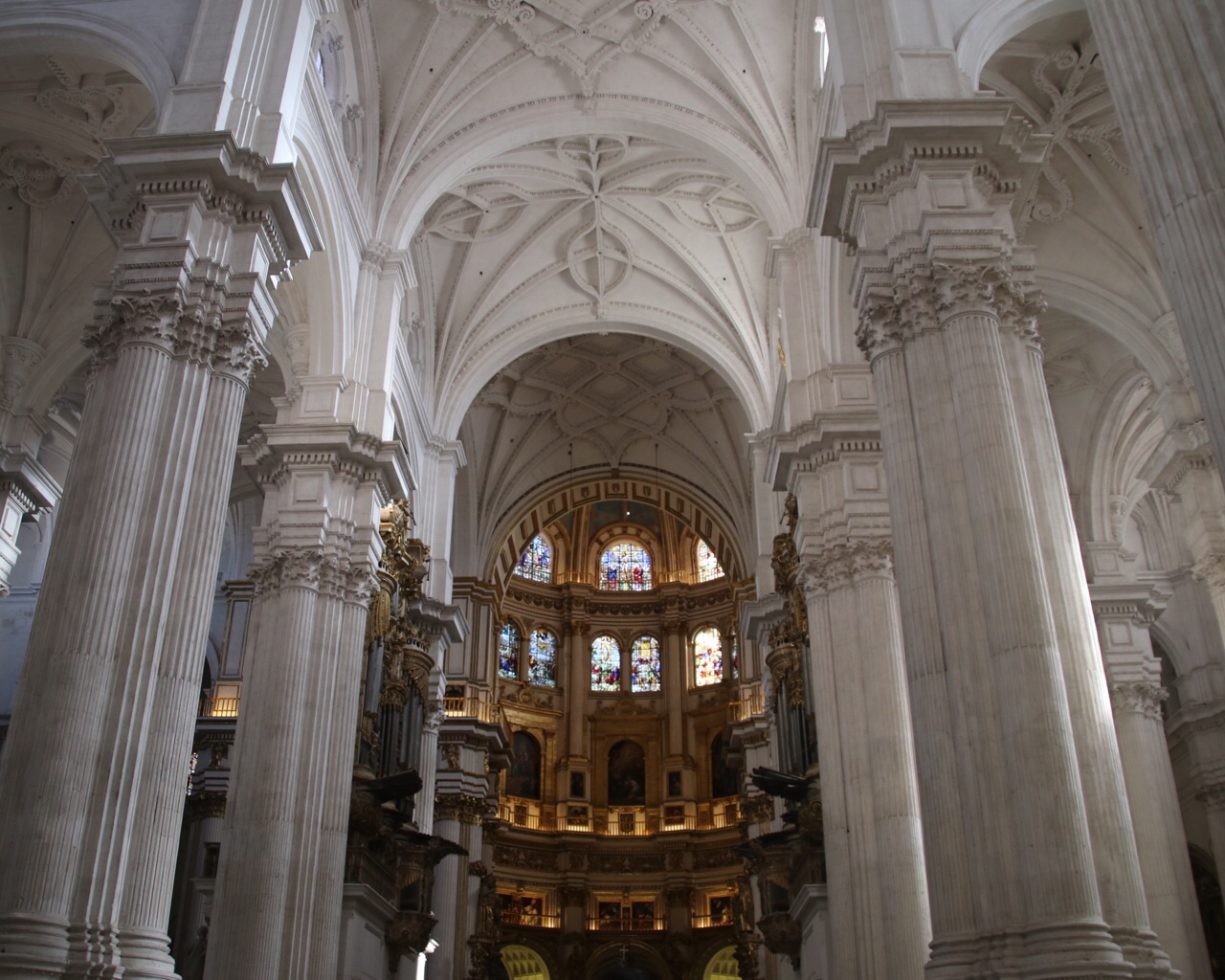
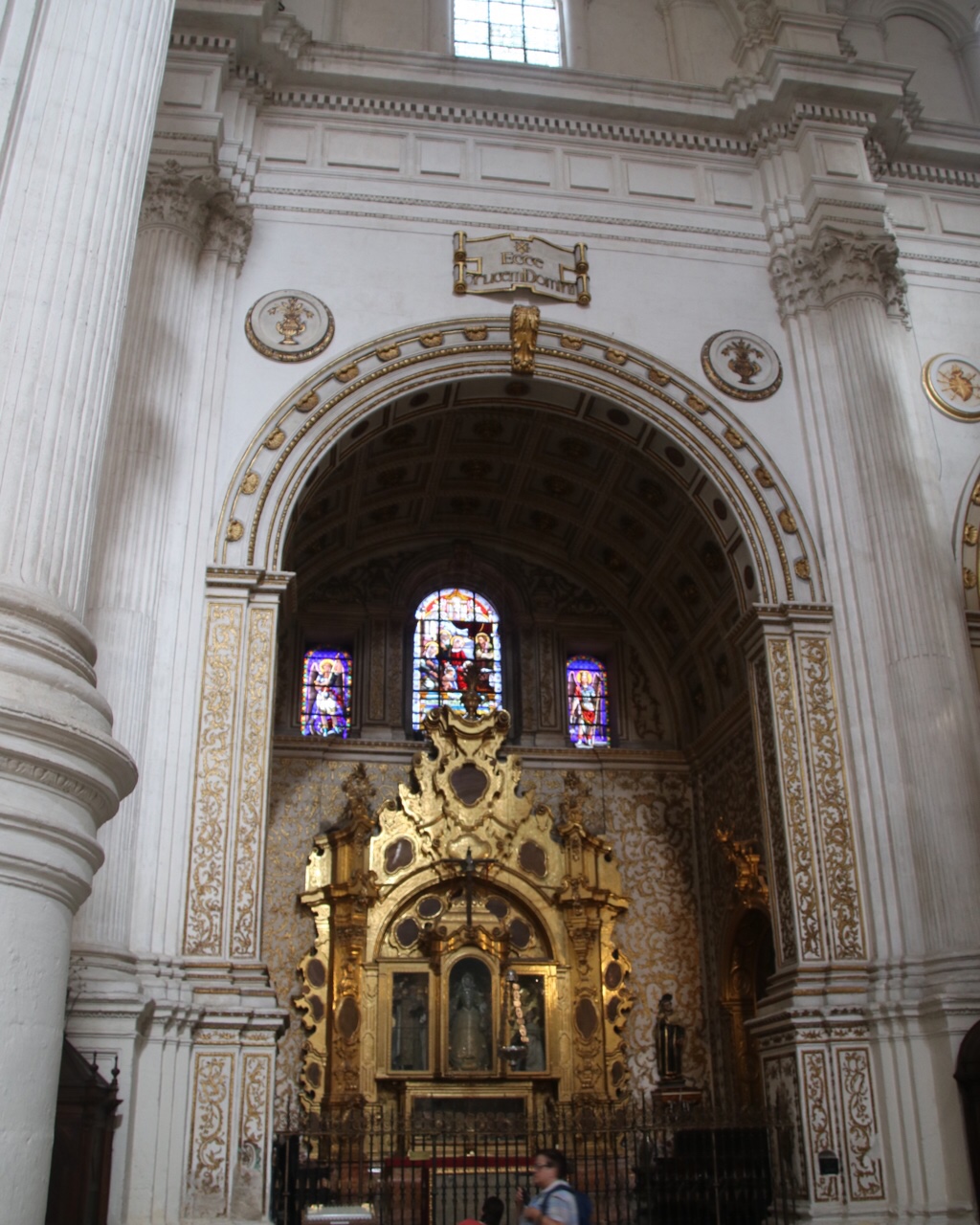
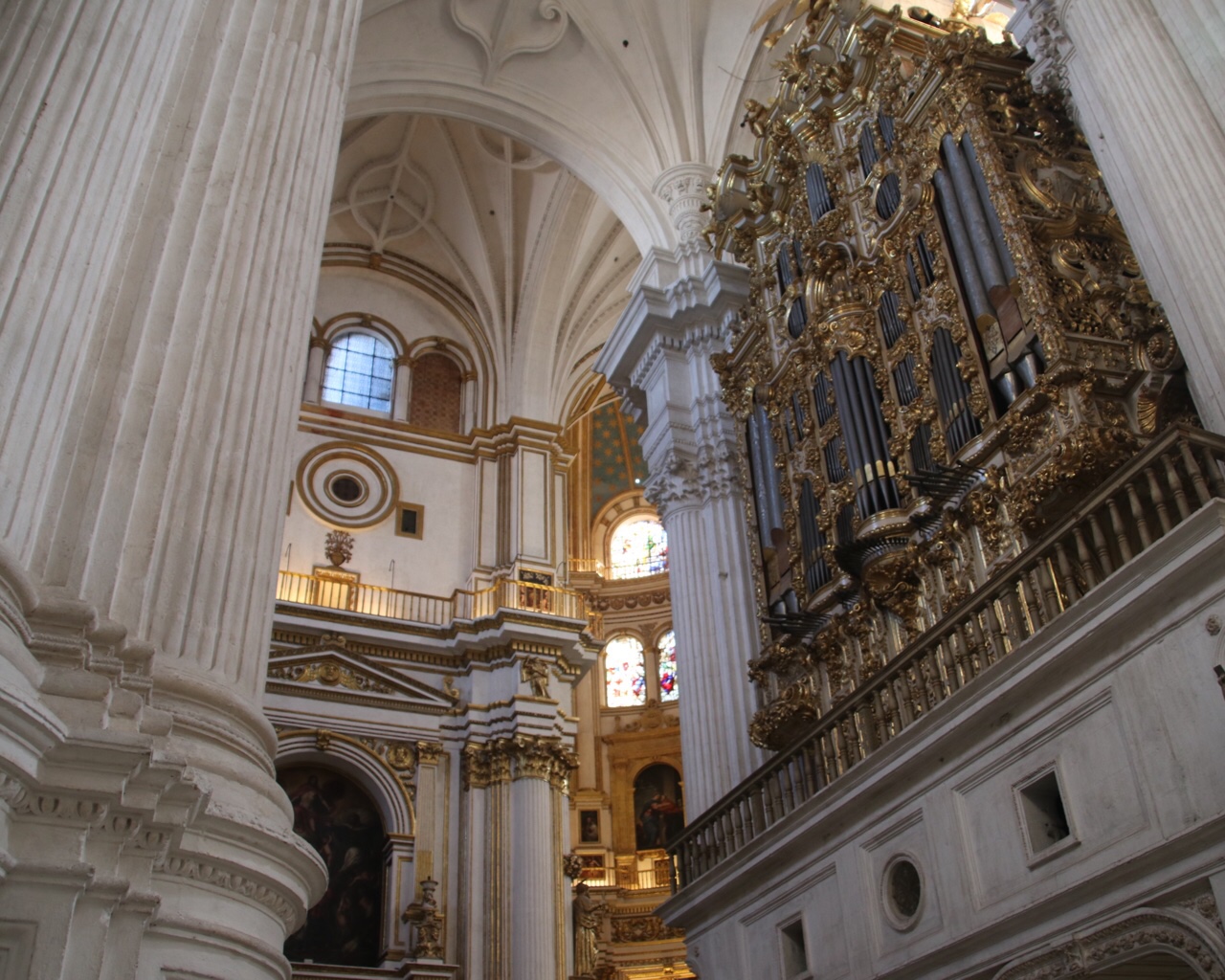
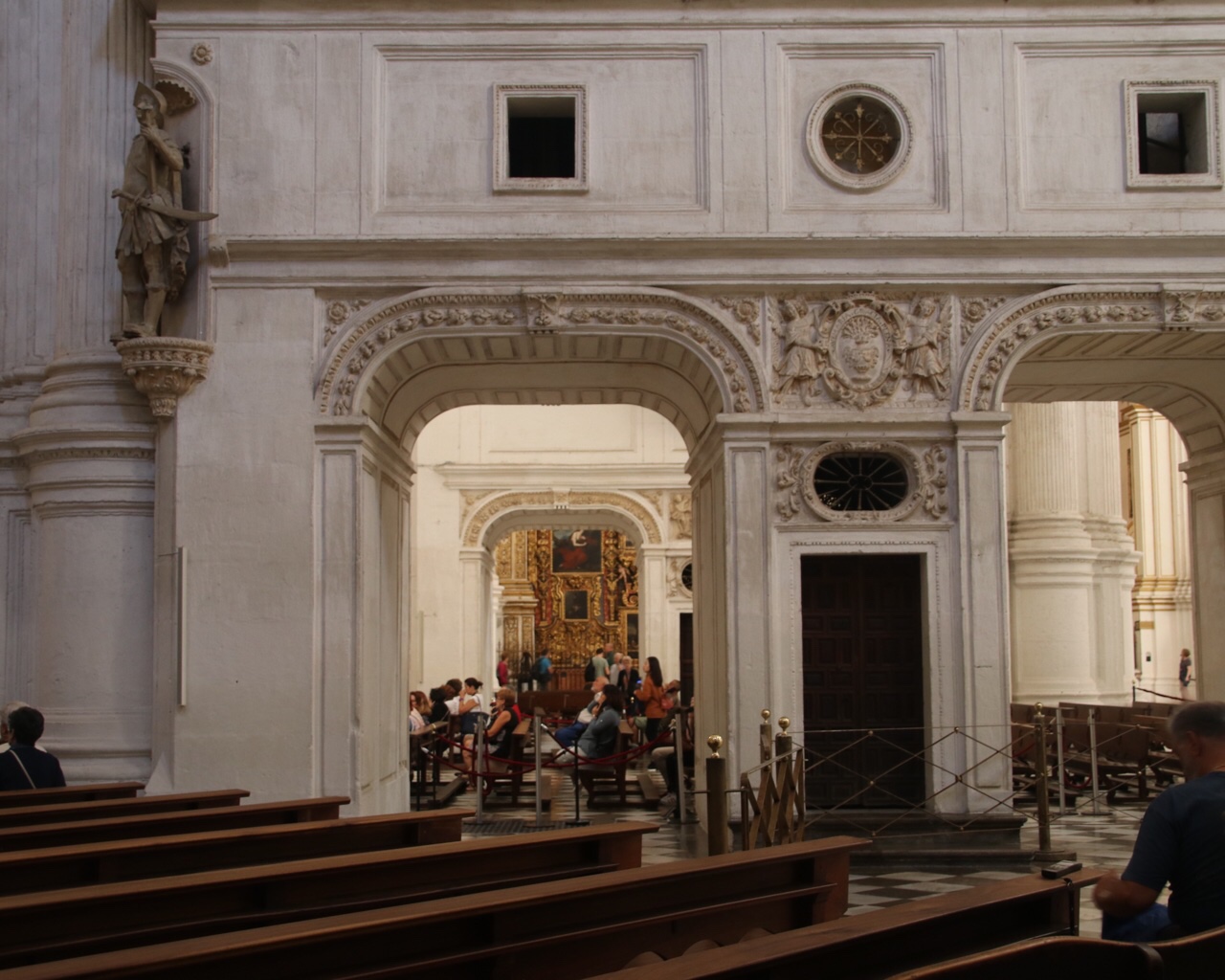
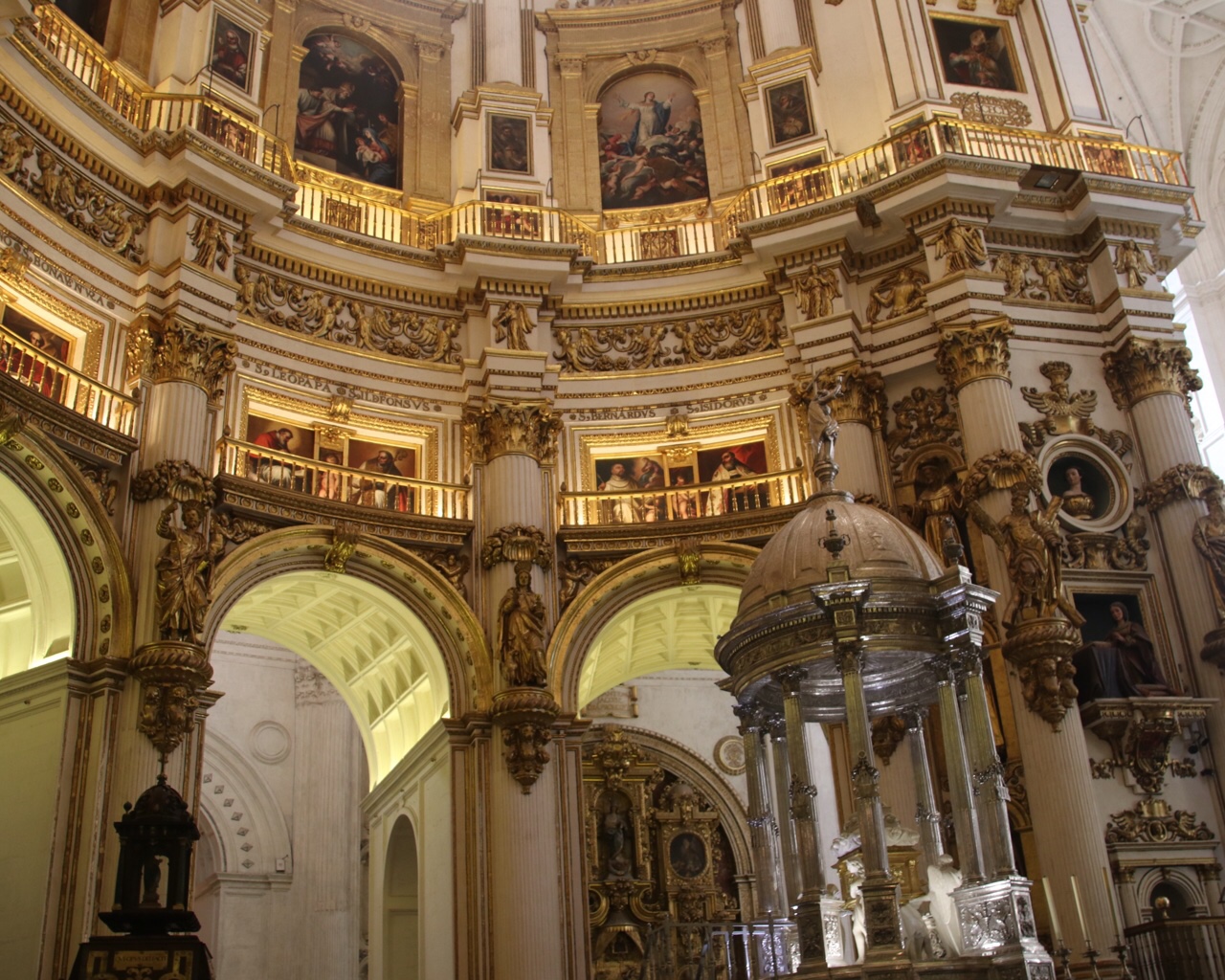
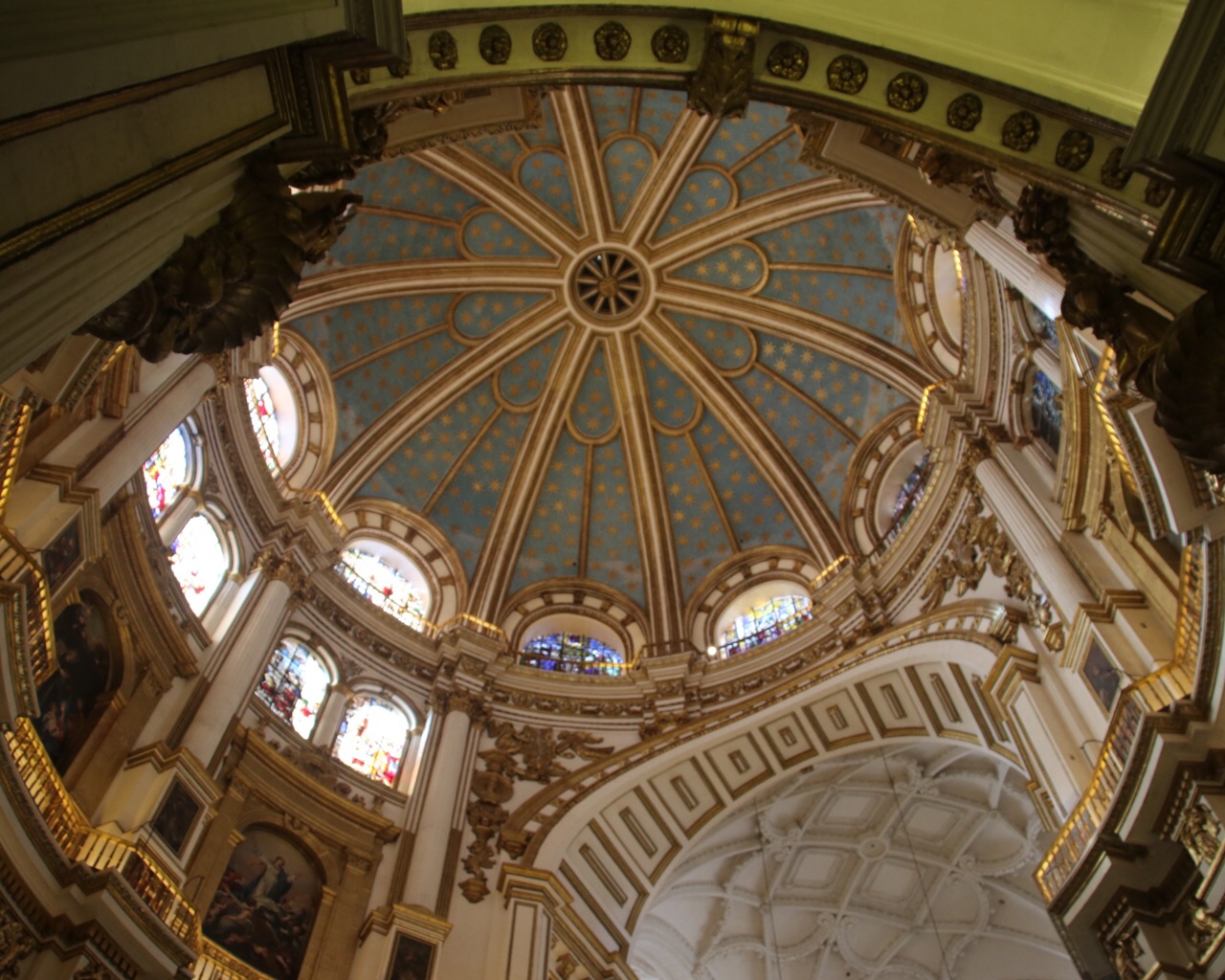
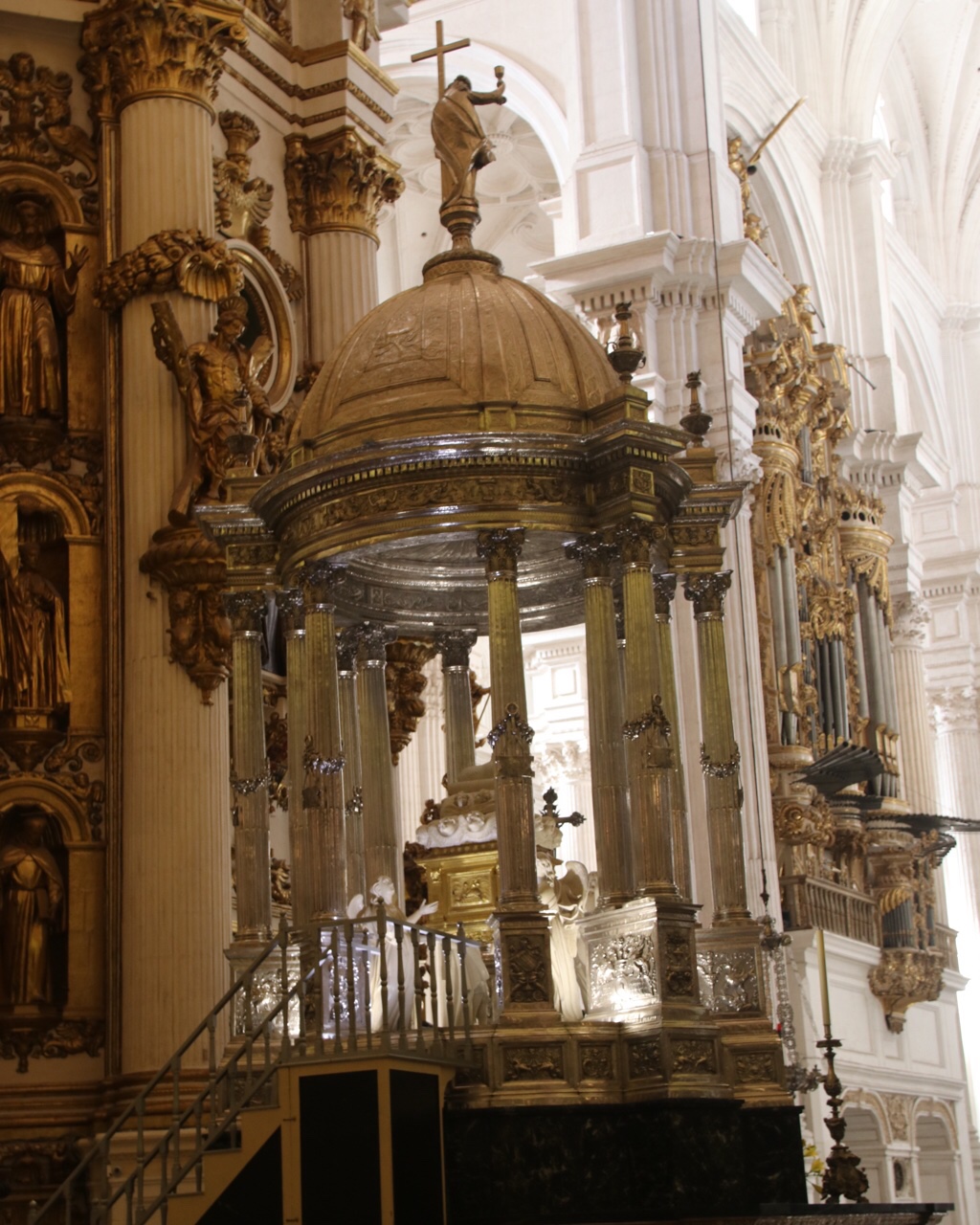
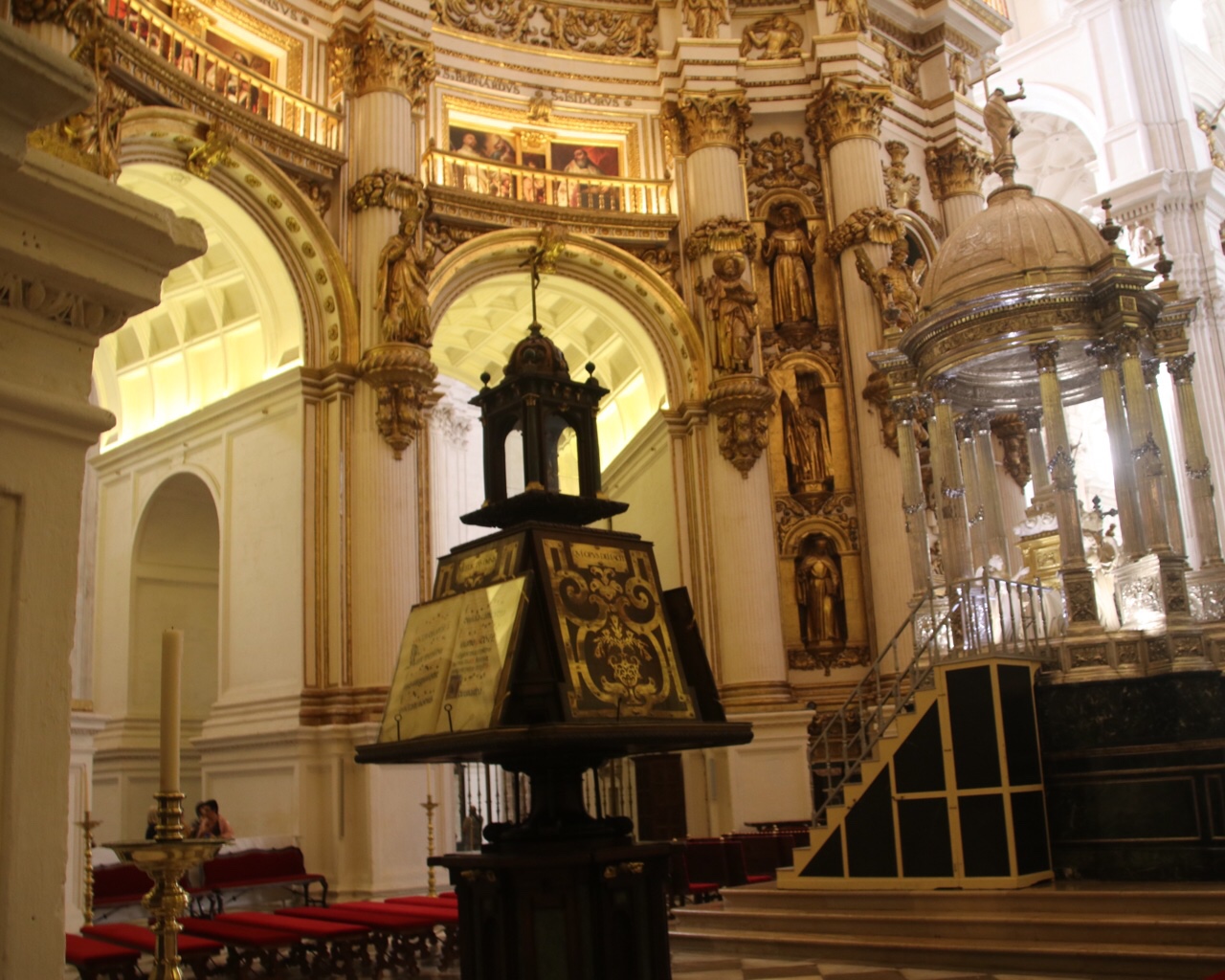
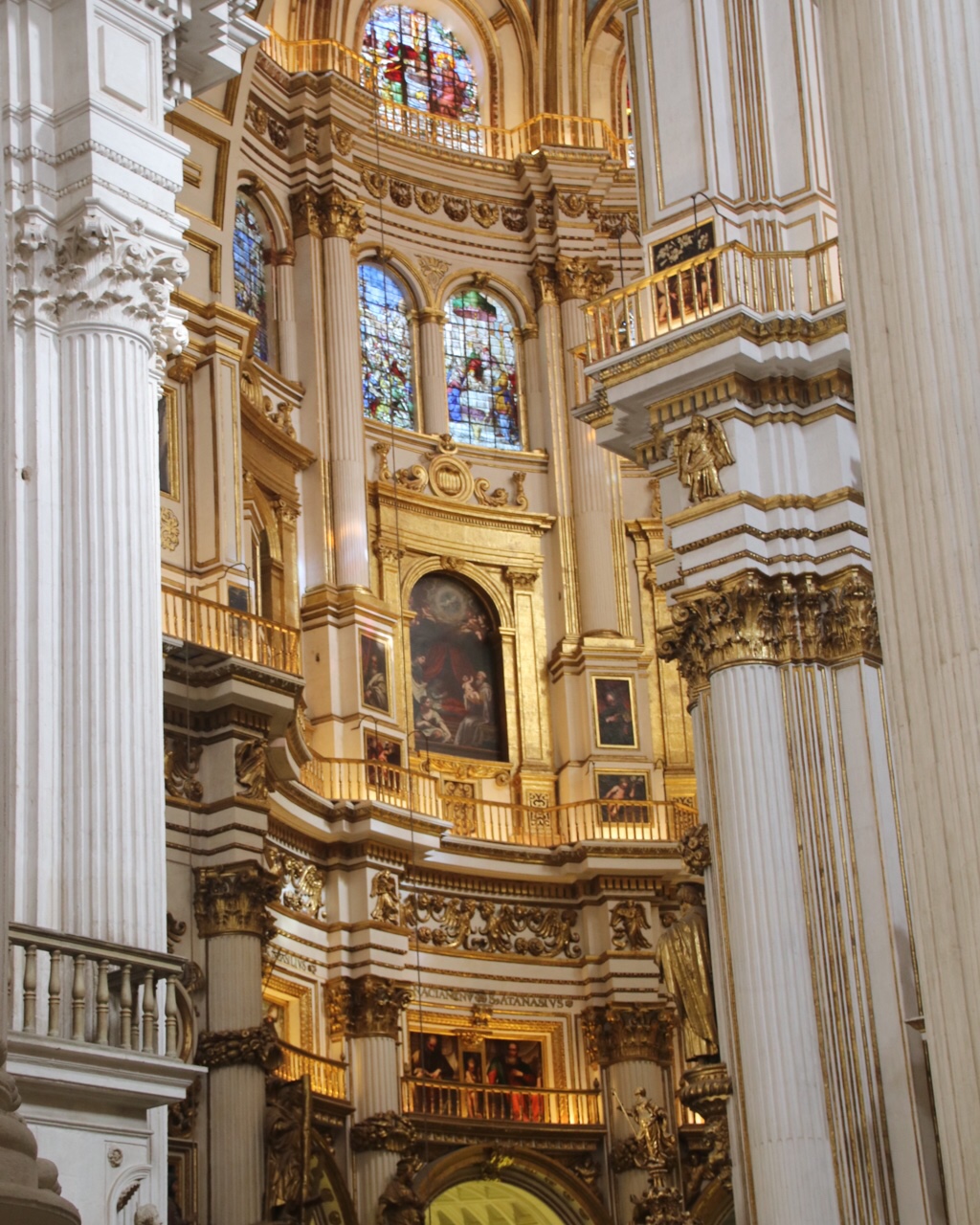
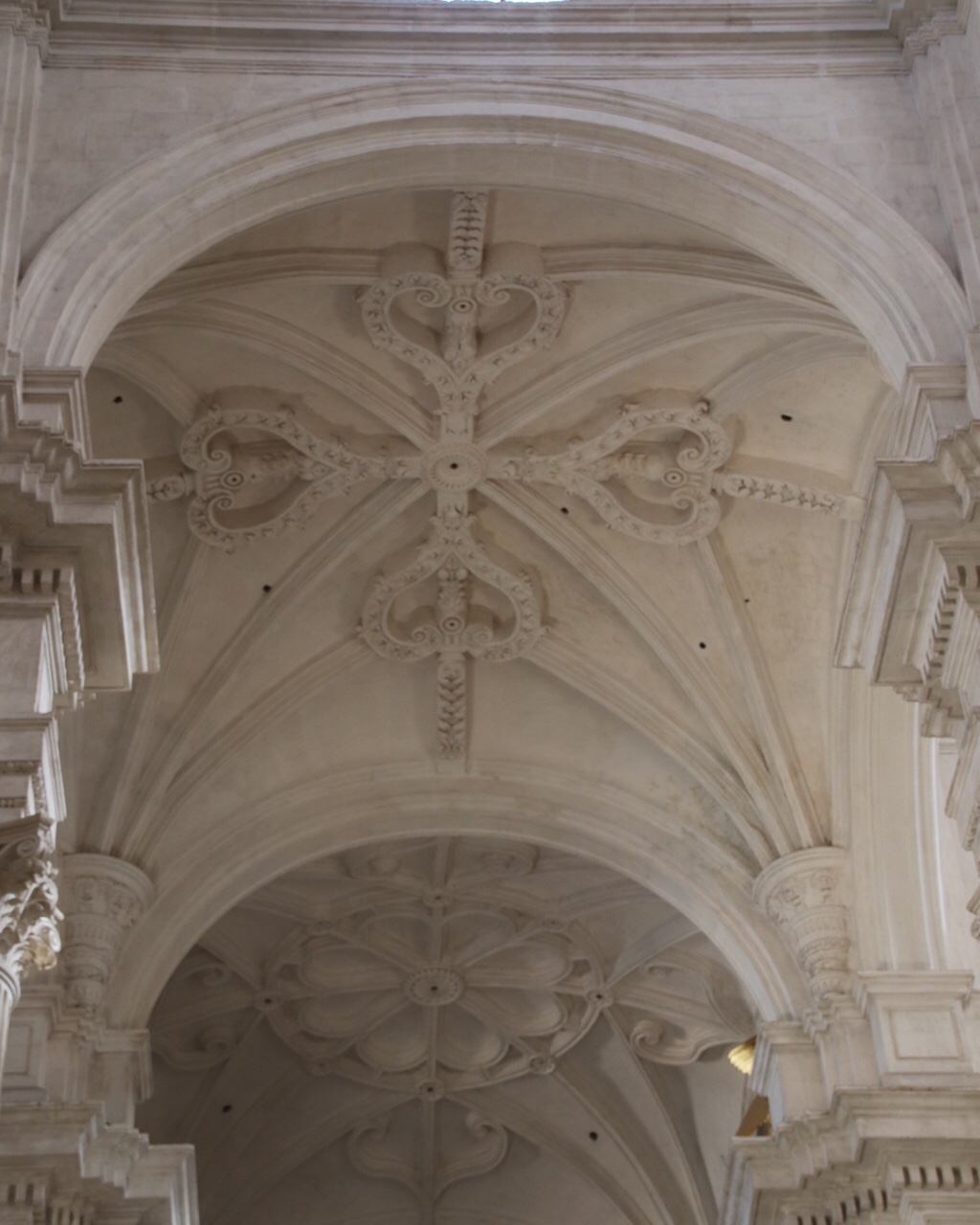
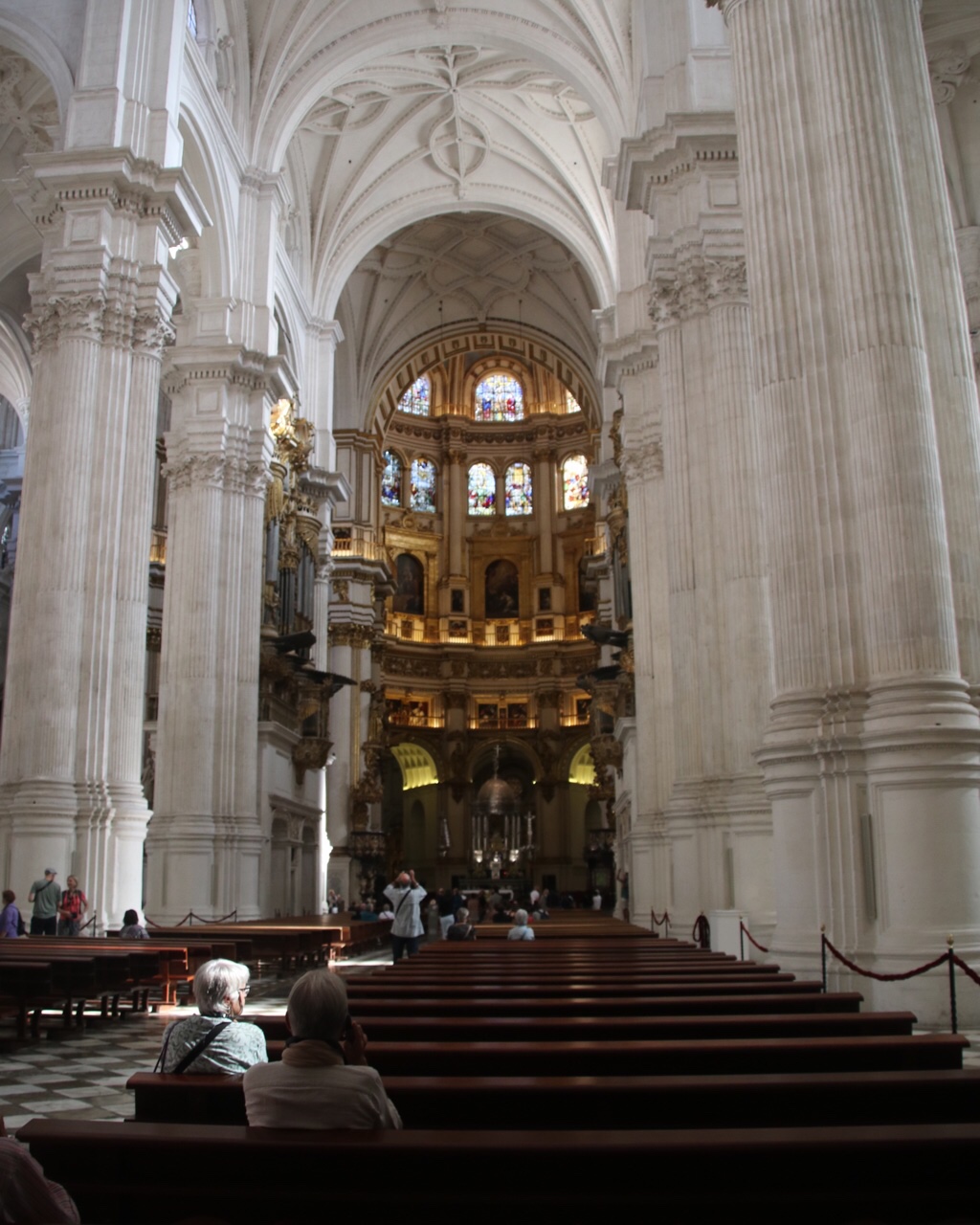
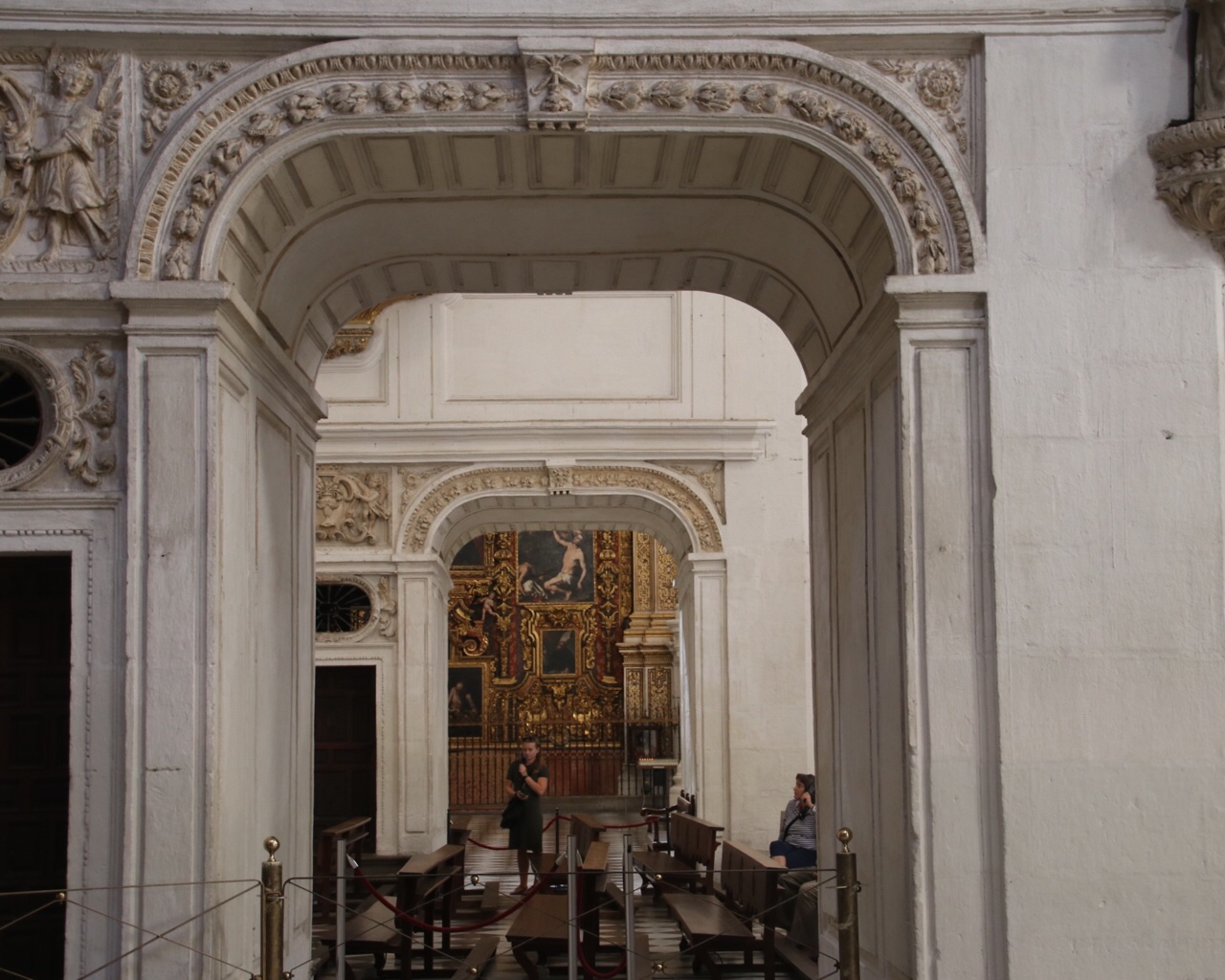
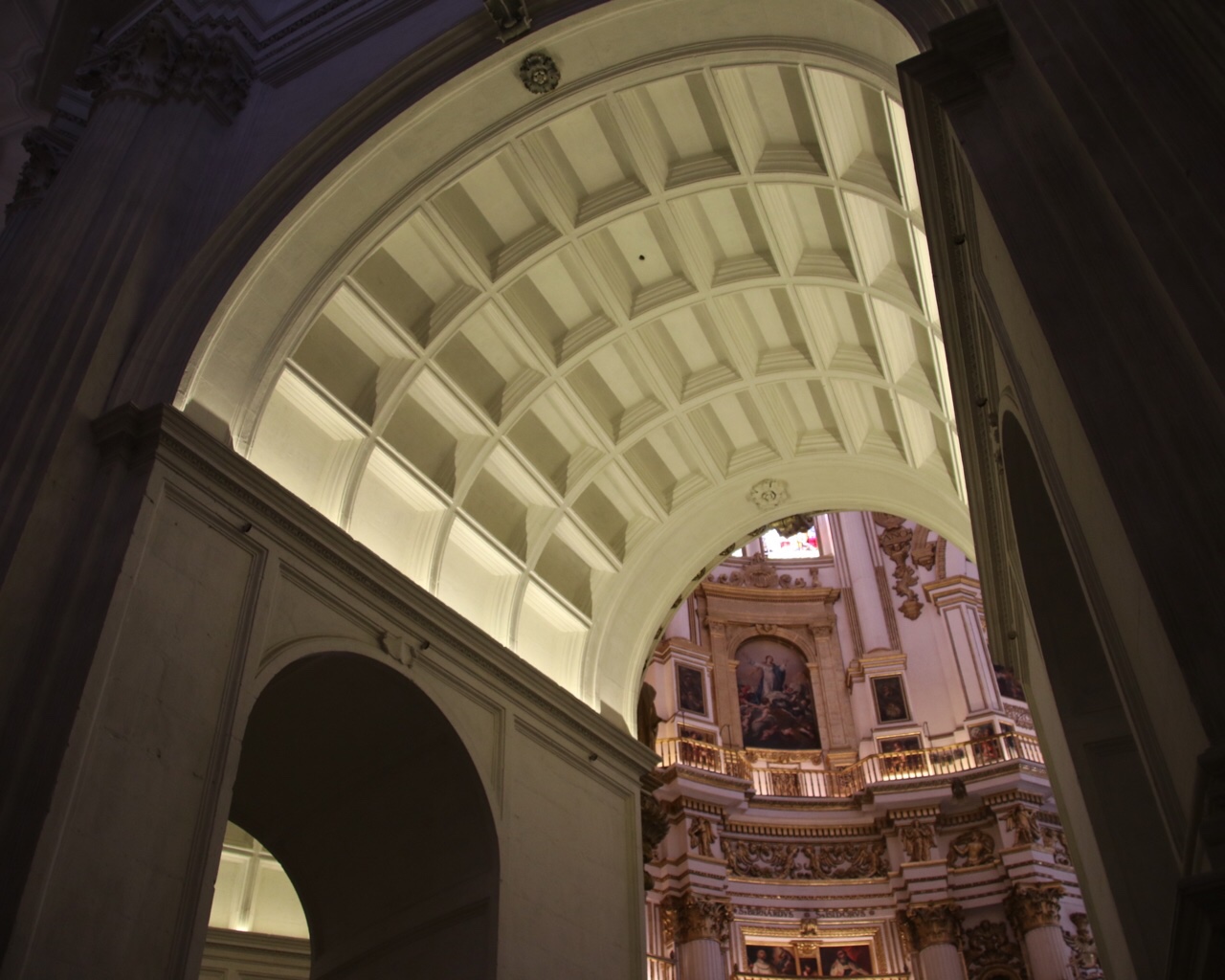
Granada Cathedral, or the Cathedral of the Incarnation is a Roman Catholic Church. Unlike most cathedrals in Spain, construction was not begun until the sixteenth century, after acquisition of the Nasrid kingdom of Granada from its Muslim rulers in 1492. While its earliest plans had Gothic designs, such as are evident in the Royal Chapel of Granada, most of the church’s construction is in Spanish Renaissance style. Foundations for the church were laid by the Enrique Egas starting from 1518 to 1523 on top of the site of the city’s main mosque; by 1529, Egas was replaced by Diego de Siloé who worked for nearly four decades on the structure from ground to cornice, planning the triforium and five naves instead of the usual three. Most unusually, he created a circular capilla mayor (principal chapel) rather than a semicircular apse, perhaps inspired by Italian ideas for circular ‘perfect buildings’.
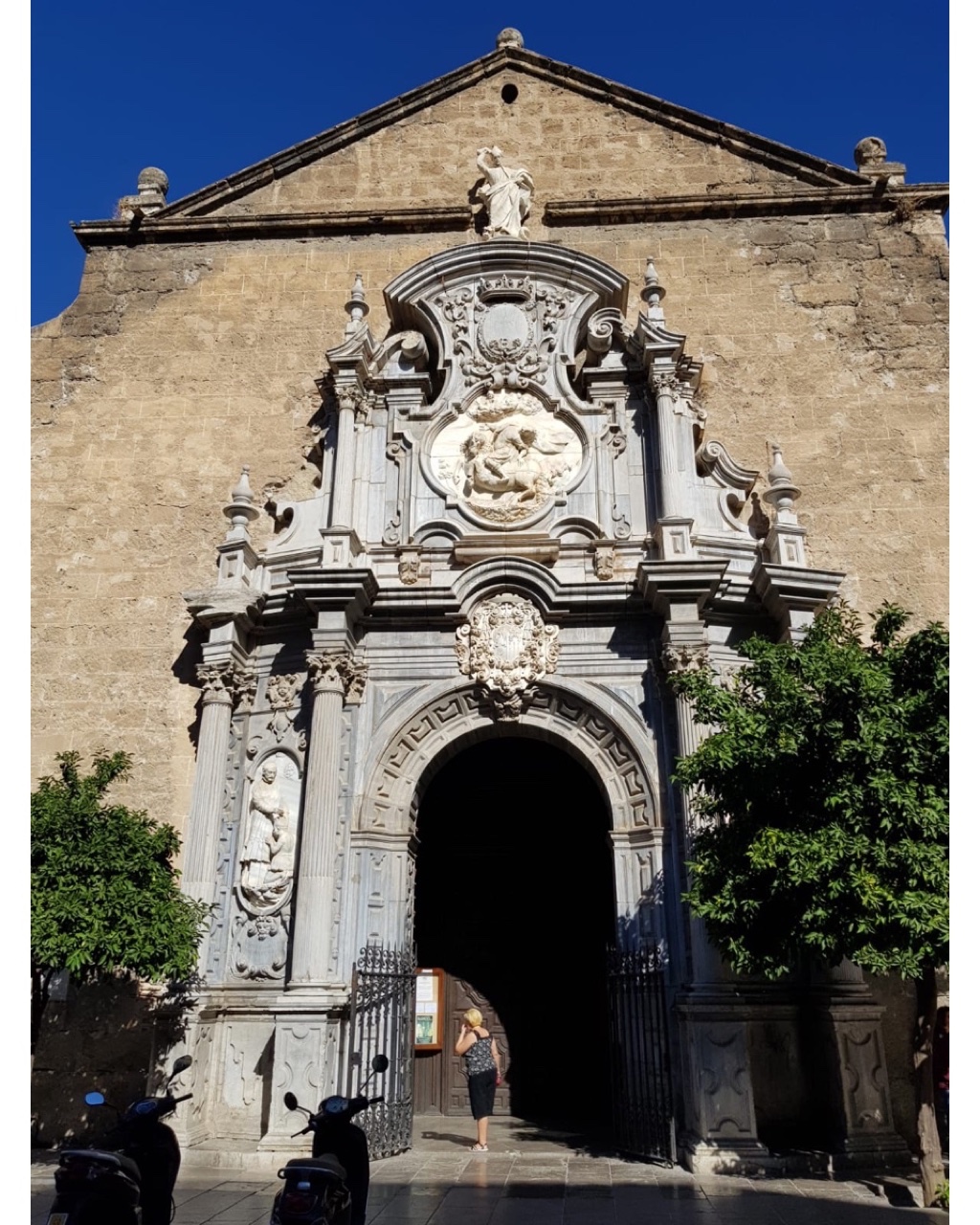
Subsequent architects included Juan de Maena (1563–1571), followed by Juan de Orea (1571–1590), and Ambrosio de Vico (1590–?). In 1667 Alonso Cano, working with Gaspar de la Peña, altered the initial plan for the main façade, introducing Baroque elements. The cathedral took 181 years to build. It would have been even grander had the two 81-meter towers included in the plans been built; however, the project remained incomplete for various reasons, among them financial.
The Cathedral had been intended as the royal mausoleum by Charles I of Spain, but Philip II of Spain moved the site for his father’s and subsequent kings’ tombs to El Escorial outside of Madrid.

 Mutts on Tour