Also on Sunday we visited Castrillo de los Polvazares, a beautiful villages just outside Astorga with it’s cobbled streets and houses of stone and red clay and bright coloured gates and windows. It looked like something out of a John Wayne movie. The only thing that looked odd were the cars parked outside the houses instead of horses 😜
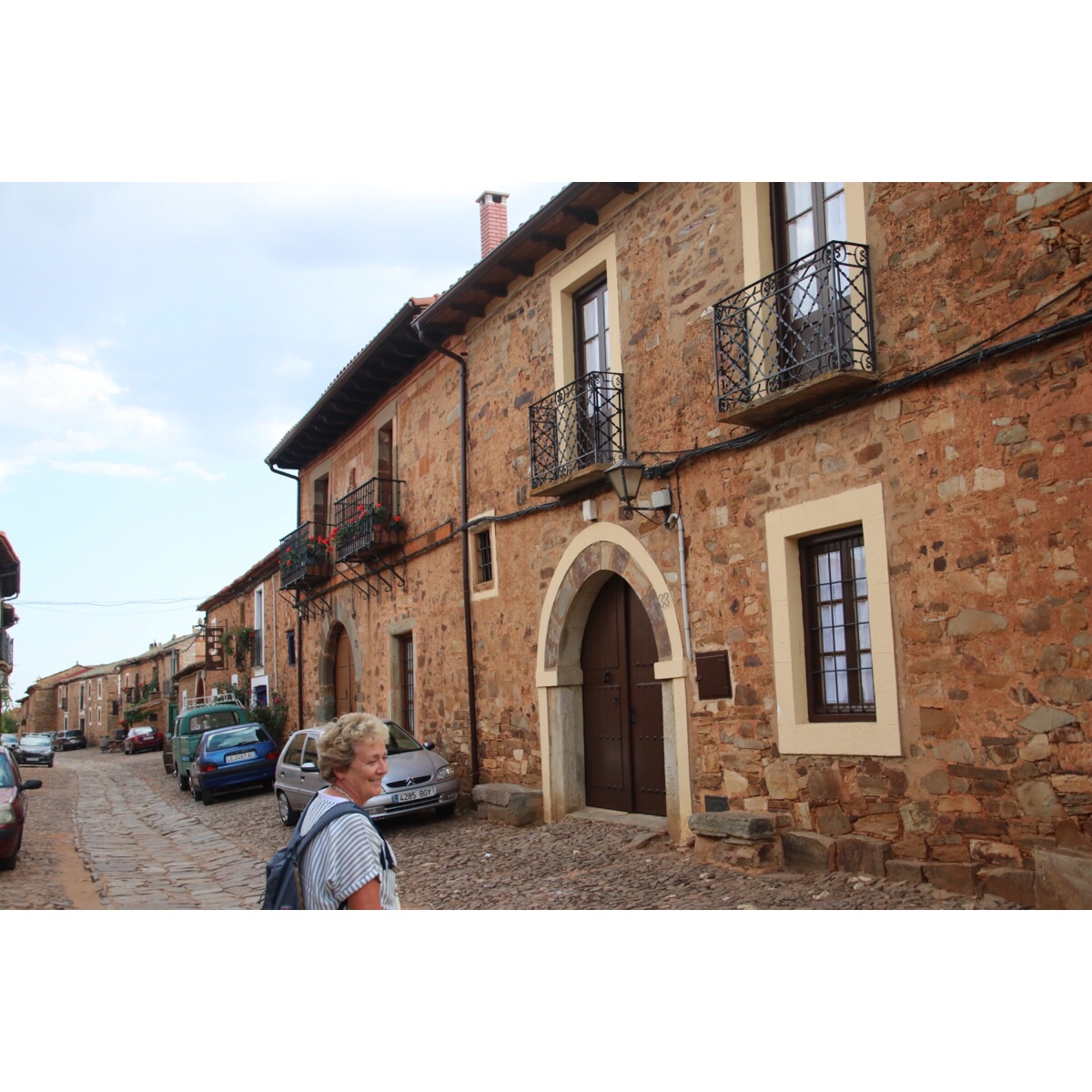 Castrillo de los Polvazares is the most representative town in the Maragata region due to its perfect state of conservation. Like other towns of the maragatería, Castrillo has the houses built in stone, but unlike the rest, the roadway built in stone is preserved in perfect condition.
The town is practically preserved in its original state. All the houses are built in stone, and the streets are not asphalted, but paved. Since 1980 it has been declared by the Council of Ministers as a Historic-Artistic Site of great monumental value.
The inhabitants of Castrillo de los Polvazares were traditionally maragatos arrieros. These merchants traded with wines, fish, and many other goods. The houses, called “arrieras houses”, were built for these activities with great entrance doors to access the inner courtyards which were the centre of business for these merchants.
The town originally was in a different location. It was destroyed by floods, and was rebuilt in the sixteenth century in its current location.
The maragatos arrieros enjoyed great power and influence in the area between the 16th and 19th centuries. The Maragata region is located at a strategic point in the communications of the interior of the peninsula and Galicia. The maragatos carried salted fish inside the Galician coast, and when they returned to their land they were laden with sausages and dry products. The decline of the maragatos arrieros began with the arrival of the railway to Astorga in 1866. The main economic activity of the town at present is based on tourism and handicrafts.


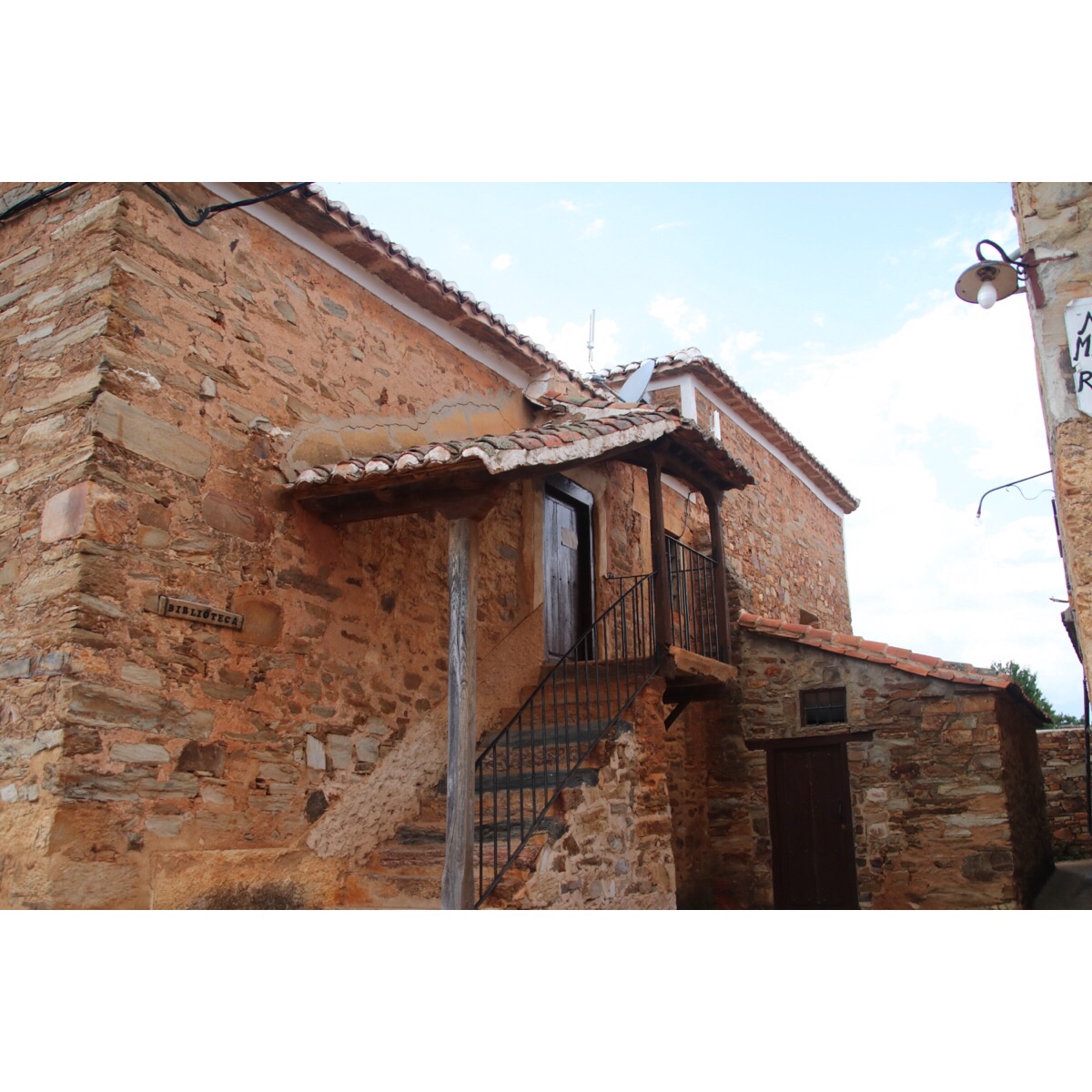
This is the local library…… don’t think you’ll be getting free WiFi there 😜
It was a lovely town to visit and finished off a wonder trip to Astorga. Now, where did I leave my horse…..

 Mutts on Tour