We had planned to visit this famous aqueduct which was on our route leaving Avignon, just before Nimes – again this was another of our neighbour Eamonn’s recommendations and we had studied it’s history with great interest. However, following a serious navigational error I landed us on the motorway and the next exit for to turn back would have been 37kms further on and taken too long and also it was lashing rain so we unfortunately had to leave this visit, but we can visit it when we are back in this neck of the woods again.
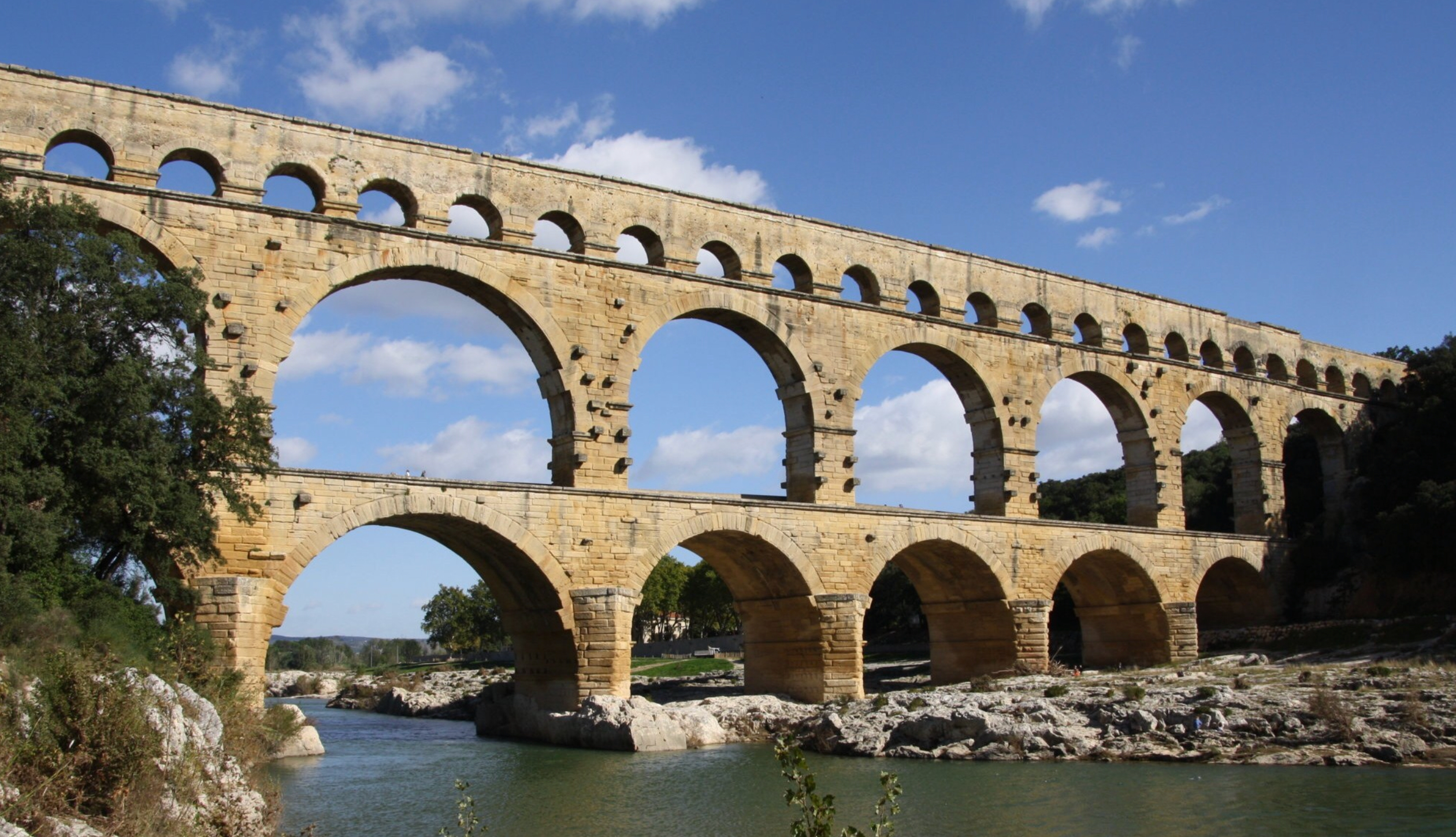
But I have decided to include the history of the aqueduct as it is fascinating and will include a “borrowed” photo 😝
The Pont du Gard is an ancient Roman aqueduct that crosses the Gardon River near the town of Vers-Pont-du-Gard in southern France. The Pont du Gard is the highest of all elevated Roman aqueducts, and, along with the Aqueduct of Segovia, one of the best preserved. It was added to UNESCO’s list of World Heritage Sites in 1985 because of its historical importance.
The aqueduct bridge is part of the Nîmes aqueduct, a 50-kilometre system built in the first century AD to carry water from a spring at Uzès to the Roman colony of Nemausus (Nîmes). Because of the uneven terrain between the two points, the mostly underground aqueduct followed a long, winding route that called for a bridge across the gorge of the Gardon River.
The bridge has three tiers of arches, stands 48.8 m high, and descends a mere 2.5 centimetres – a gradient of only 1 in 18,241 – while the whole aqueduct descends in height by only 12.6 m over its entire length, which is indicative of the great precision that Roman engineers were able to achieve, using simple technology. The aqueduct formerly carried an estimated 40,000 m3 (8,800,000 imp gal) of water a day to the fountains, baths and homes of the citizens of Nîmes. It may have been in use as late as the 6th century, with some parts used for significantly longer, but a lack of maintenance after the 4th century led to clogging by mineral deposits and debris that eventually choked off the flow of water.
After the Roman Empire collapsed and the aqueduct fell into disuse, the Pont du Gard remained largely intact, due to the importance of its secondary function, as a toll bridge. For centuries the local lords and bishops were responsible for its upkeep, in exchange for the right to levy tolls on travellers using it to cross the river, although some of its stones were looted and serious damage was inflicted on it in the 17th century. It attracted increasing attention starting in the 18th century, and became an important tourist destination.

 Mutts on Tour